Securing employment in the United States requires more than just professional experience — it demands a document that strictly adheres to American cultural and technical hiring standards. The resume format for US job applications is fundamentally different from resumes used in Europe, Asia, or the Middle East. American hiring managers and Applicant Tracking Systems (ATS) expect a specific structure, tone, and level of detail that reflects your value as a professional, not just your history. A single deviation from these norms can result in immediate rejection, regardless of how qualified you are.
This guide provides a definitive breakdown of the US resume standard for 2026. We will dissect the anatomy of a winning document, explore the three primary layout styles, analyze ATS compatibility in depth, and provide actionable frameworks for tailoring your content to the American job market. Whether you are a fresh graduate building your first resume, a career changer pivoting industries, or an international professional targeting US roles, understanding the complete process of writing a resume in 2026 is the first step toward career success.
Free Resume Builder
Don’t let a weak resume decide your future.
Thousands of people are getting rejected — not because they’re bad, but because their resume doesn’t speak for them. Make a resume that actually gets shortlisted.
Your next job is closer than you think.
Start in 2 minutes.
No complicated forms. Just pick a template, fill details, And Apply.
Apply Now Your Job →The Anatomy of a Standard US Resume
The American resume is a marketing document, not a biography. Its primary function is to secure an interview, not to recount every job held since graduation. Consequently, the standard US resume is concise — typically one to two pages — and focused heavily on achievements and quantifiable results that prove you can solve the employer's problem.
Unlike the Curriculum Vitae (CV) used in academic or international contexts, which can be unlimited in length, the US resume is strategic and highly selective. Every section must earn its place. If you want to understand where a US resume ends and a CV begins, read our detailed comparison of how to make a winning CV in 2026.
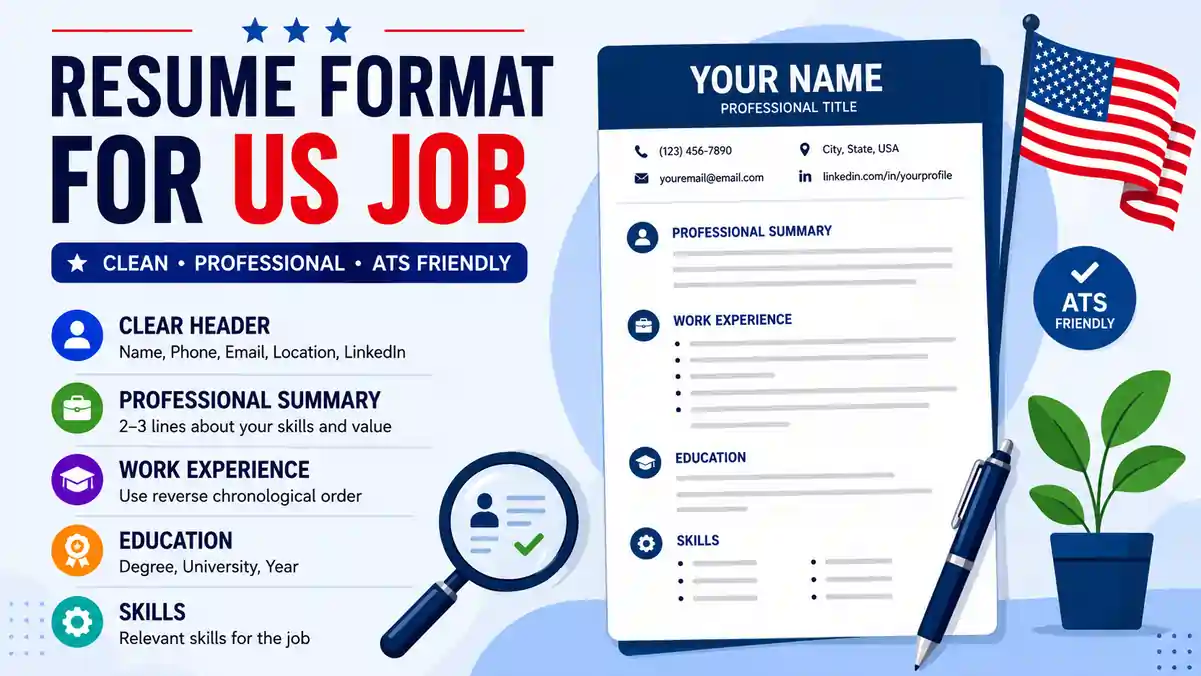
The standard US resume structure includes these core components arranged in a logical hierarchy:
- Contact Information: Name, city/state, phone number, professional email, LinkedIn URL, and portfolio or GitHub link if relevant. Full street addresses, birth dates, and photos are not standard and can introduce bias.
- Professional Summary: A 3–4 line hook replacing the outdated "Objective" statement — focused on what you offer, not what you want.
- Work Experience: Reverse-chronological work history with bullet points focused on quantified results.
- Education: Degree, institution, and location. Include GPA only for recent graduates with a 3.5 or above.
- Skills: A curated mix of hard and soft skills directly relevant to the job description.
- Optional Sections: Certifications, Projects, Volunteer Work, Languages — include only if they add relevant value.
To understand exactly what belongs in each section and why, explore our complete guide on the 10 essential resume sections in 2026. Every section must work together to pass both automated systems and human review.
Choosing the Right Layout Strategy
While content is paramount, the visual arrangement of your document dictates how quickly a recruiter can extract that content. There are three primary resume formats recognized in the US market. Selecting the wrong one can undermine your professional narrative before a single line is read. For a complete overview of all formats, visit our dedicated guide on all major resume formats.
The Reverse-Chronological Format
This is the gold standard and the most widely accepted resume format for US job applications. It lists work experience starting with the most recent role and moving backward in time. American recruiters prefer this format because it provides an immediate, scannable view of career progression — showing stability, upward mobility, and a clear employment timeline. It is the safest and most effective choice for the vast majority of applicants.
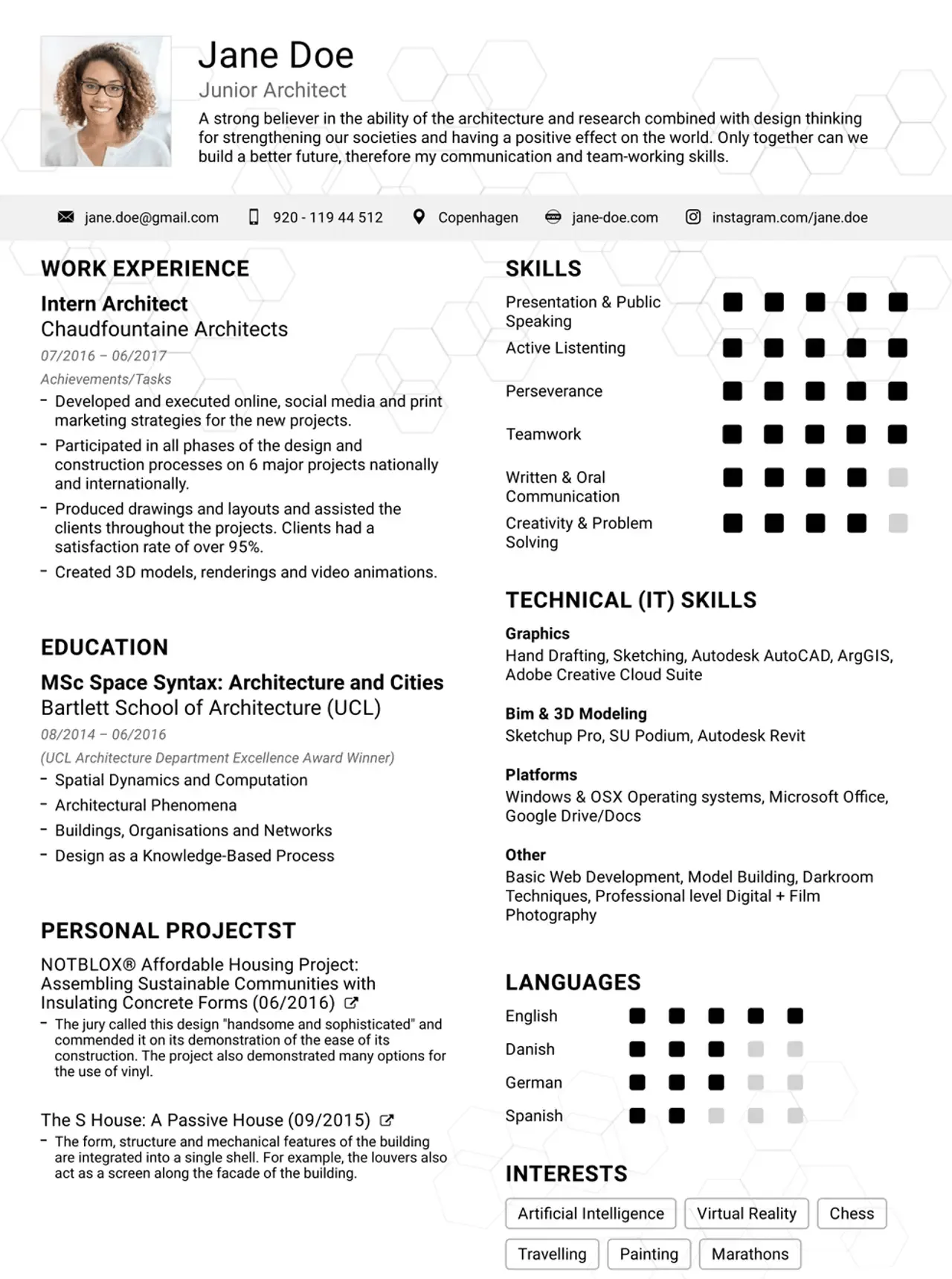
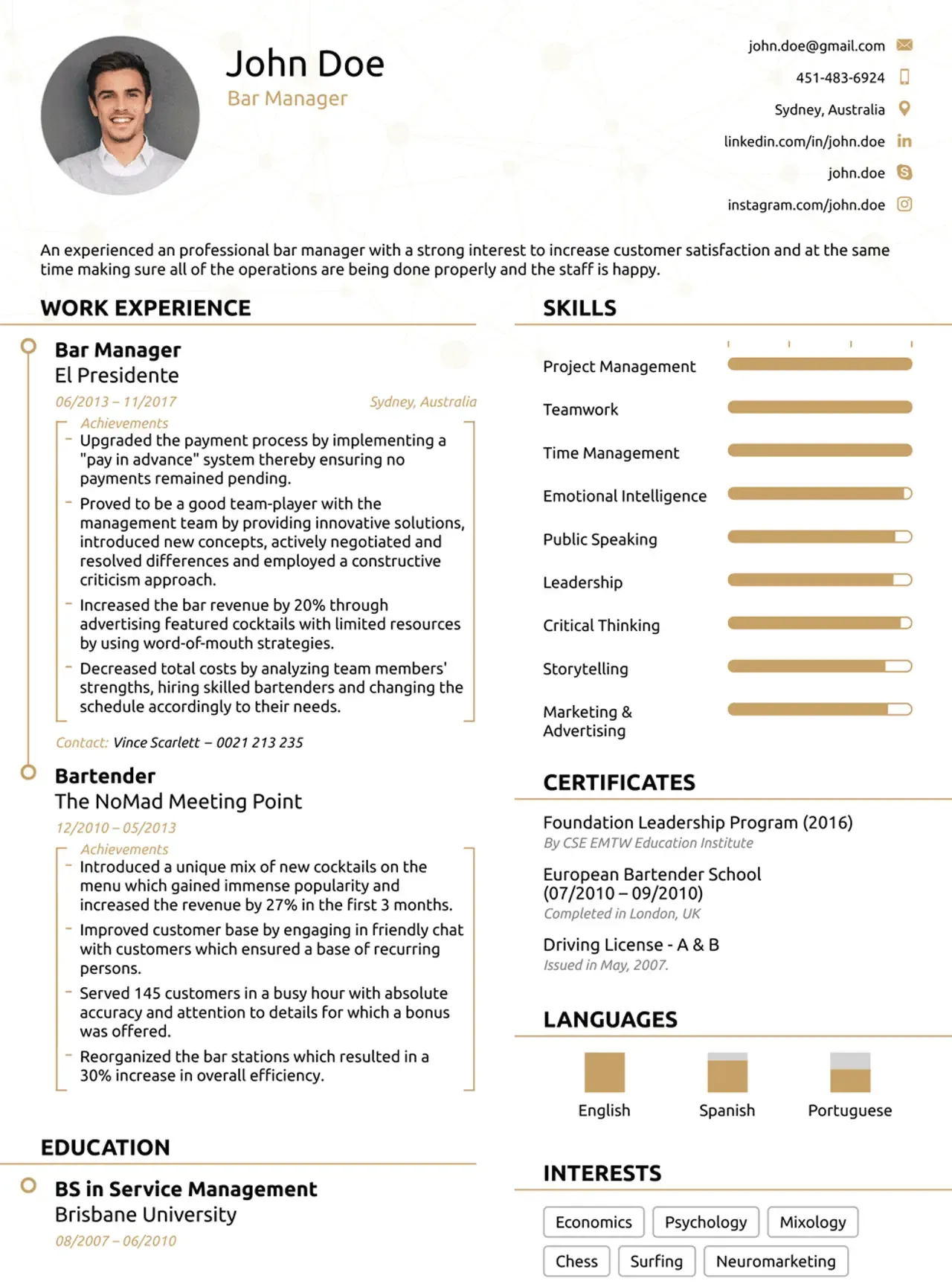
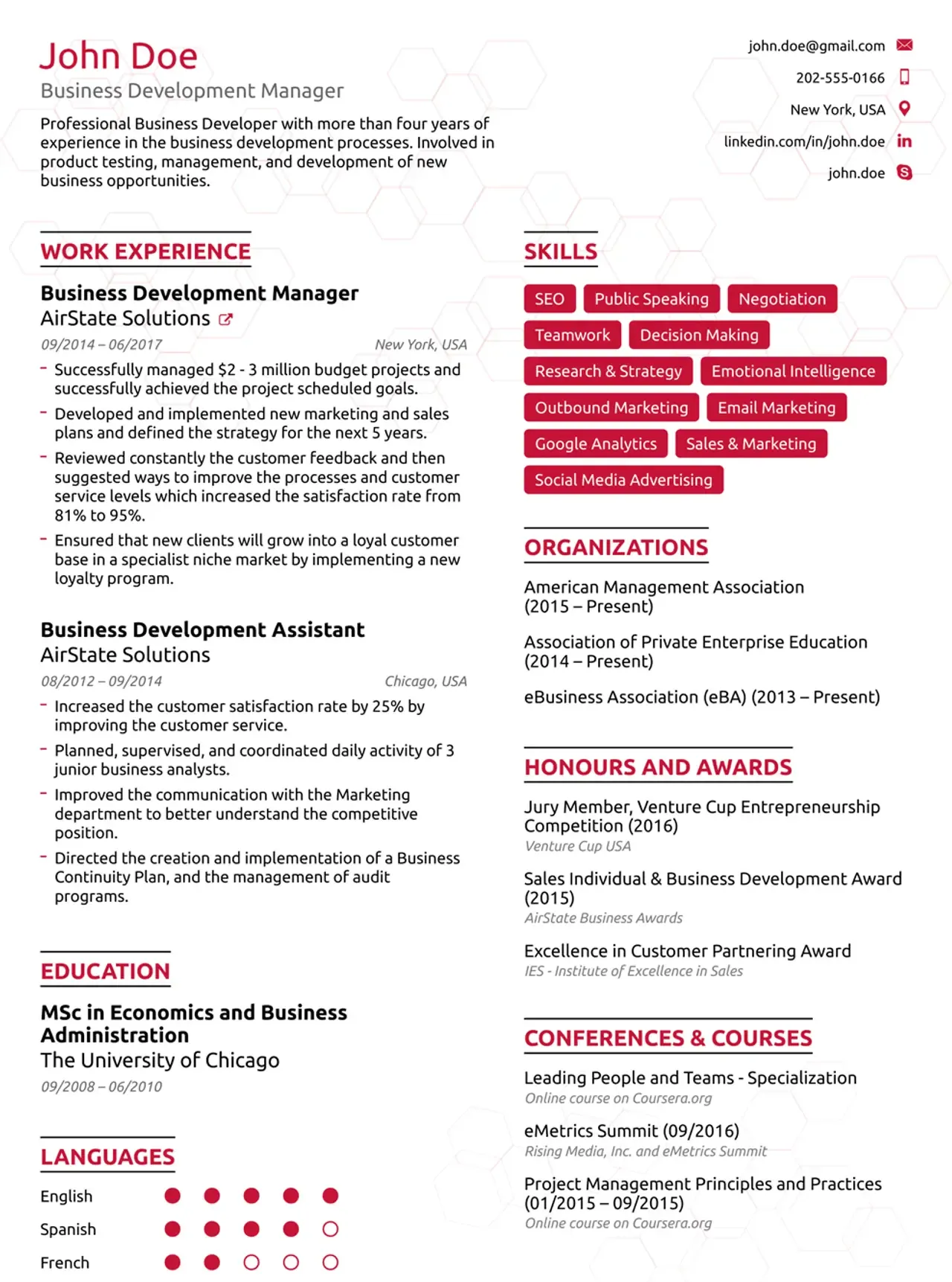
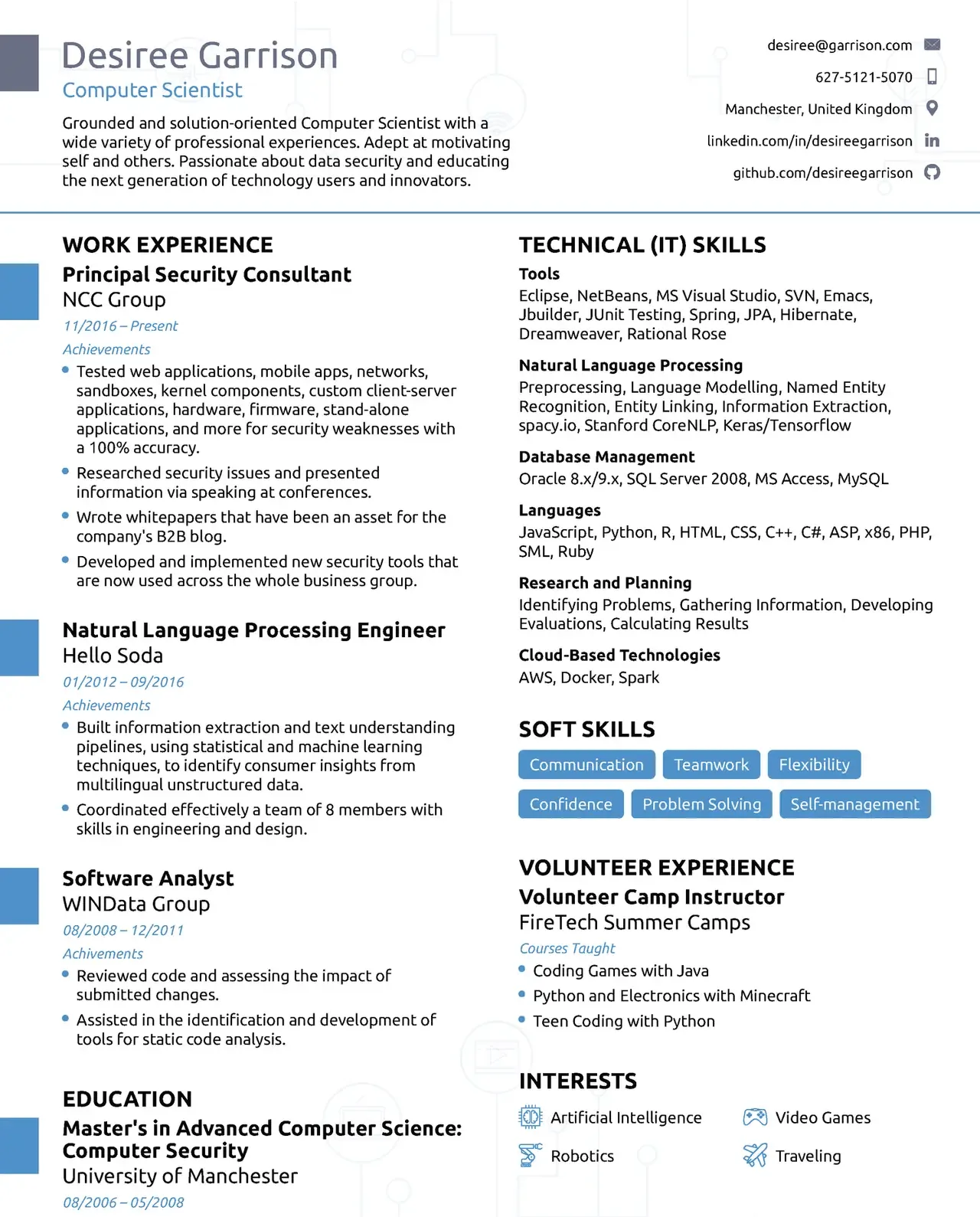
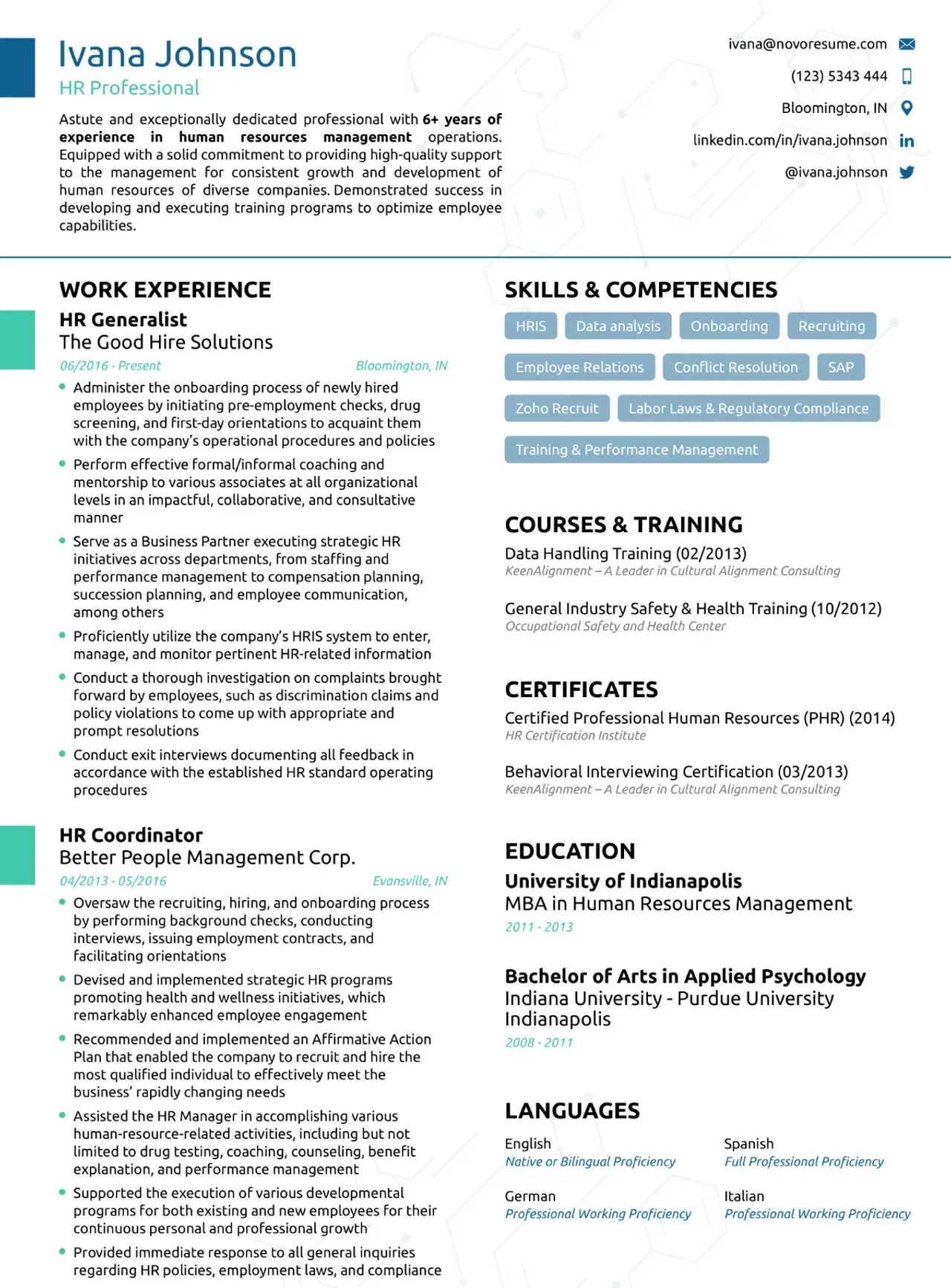
Best for: Candidates with a continuous work history in a specific field, those targeting a role similar to their current position, and anyone with no significant employment gaps.
For a deep dive into this format with examples, see our complete guide on the reverse-chronological resume format for 2026.
The Functional (Skills-Based) Format
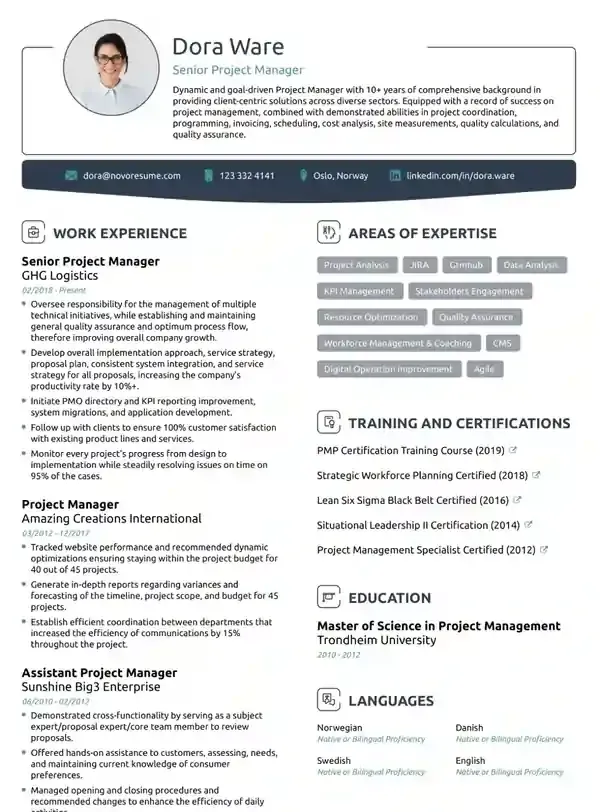
This format groups experience by skill set rather than by job title or date, emphasizing what you can do rather than where you did it. It allows candidates to highlight transferable skills without drawing immediate attention to unrelated job titles or gaps.
Important caveat: The functional format is frequently viewed with skepticism by US recruiters and ATS software. It is often associated with candidates attempting to conceal employment gaps or a lack of relevant experience. Use this format only as a last resort. Even then, a hybrid approach is almost always a safer option. For specific guidance, read our guide on the functional resume format and when it does — and does not — work.
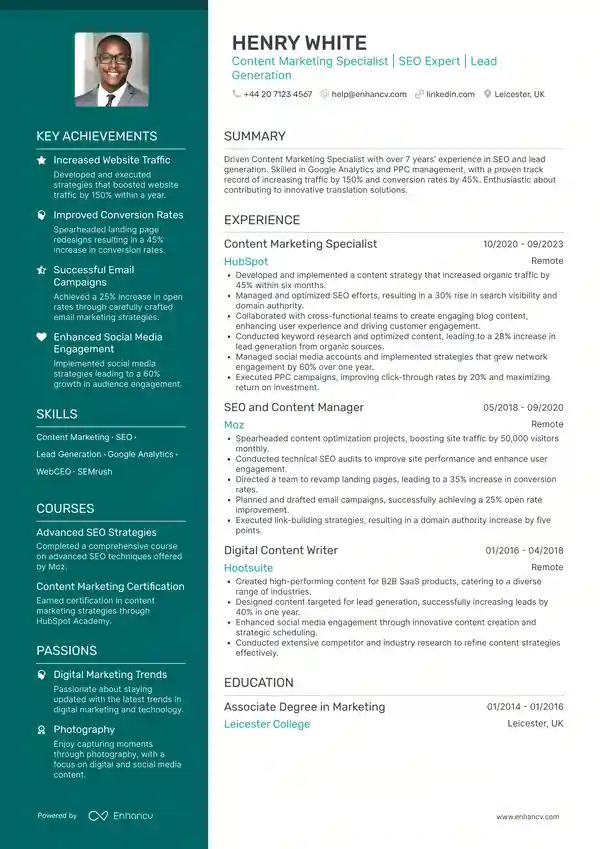
The Combination (Hybrid) Format
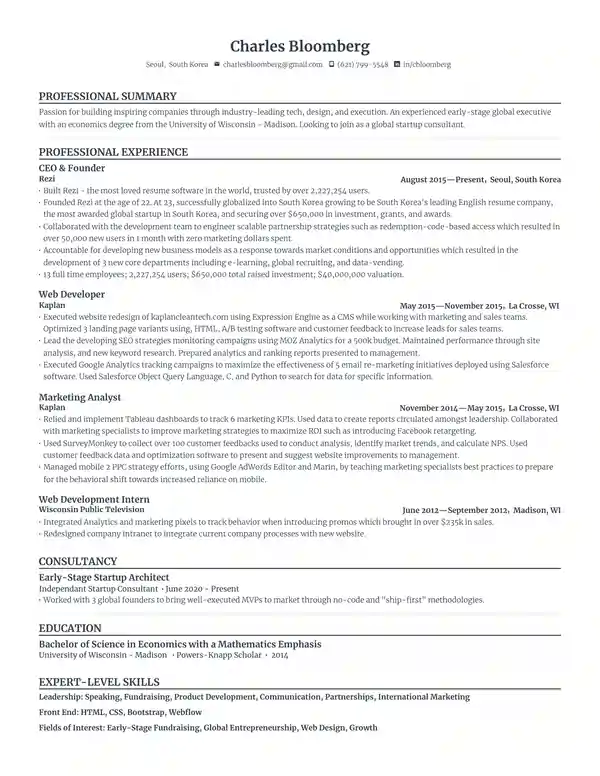
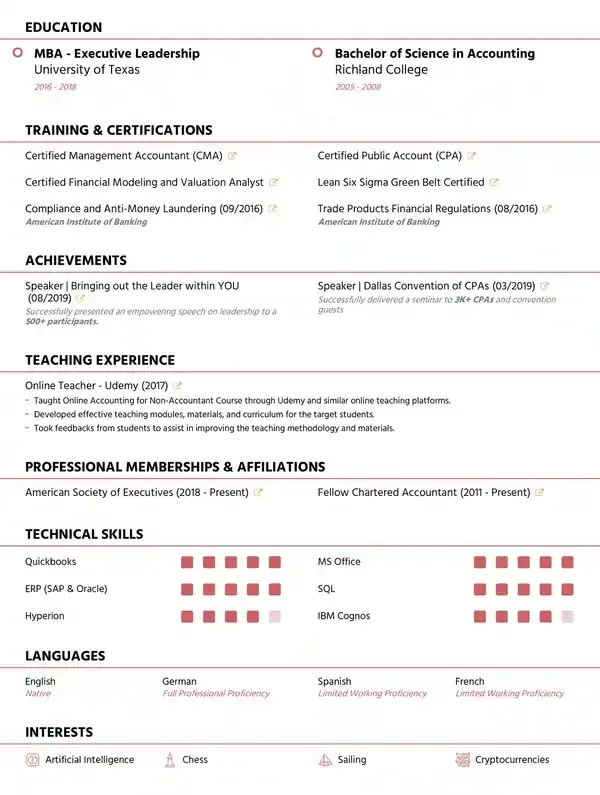
The hybrid format merges the best elements of both approaches. It opens with a skills summary section to immediately showcase your competencies, followed by a reverse-chronological work history that provides the timeline recruiters demand. This format is excellent for senior executives, technical specialists, and career changers with genuinely transferable skills.
Best for: Senior professionals, career changers, and technical experts such as software engineers and data scientists who need to highlight a specific technology stack. For a complete guide with examples, see our article on the combination resume format.
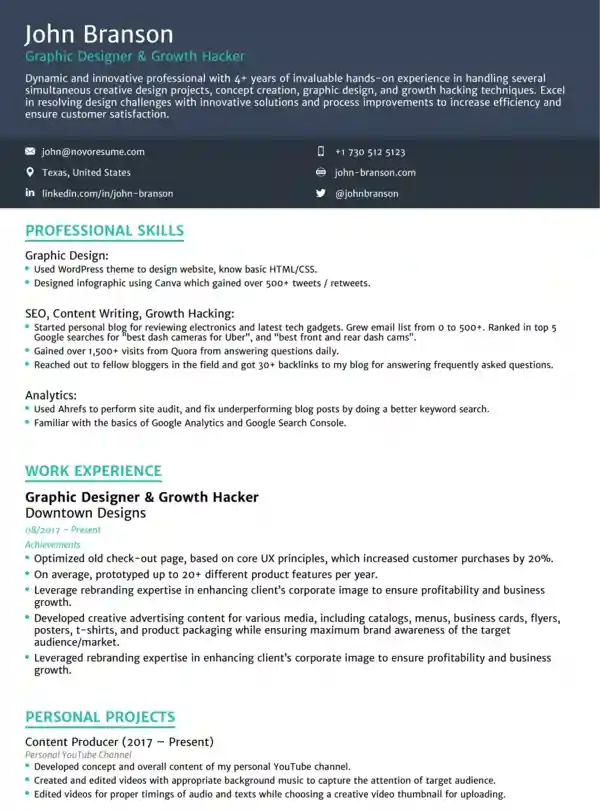
Resume Format Comparison
| Feature | Reverse-Chronological | Functional | Combination/Hybrid |
|---|---|---|---|
| Primary Focus | Work History & Progression | Skills & Abilities | Skills + Work History |
| ATS Compatibility | Excellent | Poor to Moderate | Good (if structured correctly) |
| Recruiter Preference | High — Standard | Low — Skeptical | Medium to High |
| Ideal Candidate | Traditional career path | Major gaps / Career change | Senior / Tech / Specialized |
| Risk Factor | Low | High | Medium |
If you are specifically targeting tech roles in the US, our guide on the tech industry resume format for 2026 provides a more targeted breakdown of what American tech employers expect to see.
Section-by-Section Breakdown and Best Practices
Once you have selected your layout, every section must be crafted with precision. Each part of the US resume serves a specific strategic purpose, and getting even one section wrong can cost you the interview.
1. Contact Information: The Header
Your header should be clean and immediately scannable. Place your full name in a larger font (18–22pt) at the very top. Below it, list your city and state only — for example, "Austin, TX." Do not include your full street address; this is considered outdated and unnecessary in the US market.
Include a professional email address in the format firstname.lastname@gmail.com, your LinkedIn profile URL (customized to linkedin.com/in/yourname), and any relevant portfolio, GitHub, or personal website link. Critically, do not include a photo, your date of birth, marital status, religious affiliation, or national ID number. These are strictly discouraged in the US to prevent hiring bias. For a complete guide on this section, read our article on how to show contact information on your resume in 2026.
2. Professional Summary: Your Elevator Pitch
Replace the outdated "Objective" statement — which tells employers what you want — with a powerful "Professional Summary" that tells them what you bring. This section should be 3–4 lines maximum and immediately communicate your level, expertise, and unique value proposition.
Proven formula: + + + .
Strong example: "Senior Software Engineer with 7+ years of experience building scalable SaaS products for US fintech companies. Led backend architecture migration that reduced system latency by 42%. Proficient in Python, Node.js, and AWS, with a track record of delivering under tight deadlines in Agile environments."
For more examples tailored to different roles, see our detailed guide on writing a powerful profile summary for your resume.
3. Work Experience: The Core of Your Resume
This is the most critical section of any US resume. List your roles in reverse-chronological order. For each position, include the job title, company name and location, dates of employment (month and year), and 3–5 bullet points describing your achievements.
The golden rule for US resumes is to focus on results, not just responsibilities. Avoid listing daily duties. Instead, use the achievement-first formula: "Accomplished as measured by , by doing ."
Weak: "Responsible for managing a sales team."
Strong: "Led a 10-person sales team to exceed annual targets by 25%, generating $2M in new revenue through a structured client acquisition framework."
Use strong action verbs — Spearheaded, Orchestrated, Optimized, Negotiated, Deployed — and quantify your impact with numbers, percentages, and dollar amounts wherever possible. For guidance on writing powerful bullet points, read our complete guide on resume work experience and how to showcase resume achievements that impress US recruiters.
If you are a fresh graduate or have limited formal work experience, you can supplement this section with relevant projects. Our guide on how to list projects on a resume shows you how to do this effectively.
4. Education
Place this section after work experience unless you are a recent graduate with limited professional history. Include the degree type, major, university name, and location. If you graduated more than five years ago, omit your graduation year entirely to avoid age bias — a genuine concern in the US hiring market.
Include your GPA only if it is 3.5 or above and you graduated within the last two years. For international candidates targeting US roles, it is helpful to note the US equivalent of your degree if it is not immediately recognizable, for example: "Bachelor of Engineering, Computer Science — equivalent to US Bachelor's Degree."
5. Skills and Certifications
This section is vital for ATS keyword matching. List hard skills (technical abilities, software platforms, programming languages, tools) alongside relevant soft skills. Mirror the exact terminology used in the job description — if the job posting says "Project Management," use that exact phrase, not a synonym.
Group your skills logically: Technical Skills, Certifications, Languages. Avoid listing generic soft skills like "hard worker" without any context; these are meaningless to a US recruiter. Demonstrate those qualities through your bullet points instead. For a comprehensive list of in-demand skills, explore our guide on key skills for a resume and personal skills for a resume.
6. Optional but Powerful Sections
Depending on your background and target role, these additional sections can significantly strengthen your US resume:
- Certifications: PMP, CPA, CFA, AWS, Google Analytics — these carry significant weight in the US market.
- Projects: Especially valuable for tech professionals and recent graduates. See how to list them in our guide on projects on a resume.
- Volunteer Work: Common in the US and viewed positively as it demonstrates community engagement and transferable leadership skills.
- Languages: List proficiency levels clearly (Native, Fluent, Conversational).
- Interests: Include only if directly relevant to the role. For guidance, see our article on interests for a resume.
ATS Optimization: The Hidden Gatekeeper
Before a human ever reads your resume, it almost certainly passes through an Applicant Tracking System (ATS). These software platforms scan, parse, and rank resumes based on keywords, formatting, and structure. According to industry data, over 75% of resumes are rejected by ATS before a recruiter ever sees them. If your resume format for US job applications is not ATS-friendly, you are invisible.
Our most detailed resource on this topic is our step-by-step guide on how to build an ATS-friendly resume. Below is a focused summary of the core rules.
ATS Formatting Rules
- File Type: Submit .pdf or .docx. PDF preserves formatting; .docx is historically safer for older ATS parsers. Follow the job posting instructions if they specify a format.
- Font: Use clean, standard fonts — Arial, Calibri, Helvetica, or Roboto — at 10–12pt for body text.
- Layout: Use a single-column layout. Avoid text boxes, columns, tables for content, headers/footers, and graphics. Many ATS parsers cannot read text inside these elements, causing critical information to be lost entirely.
- Section Headings: Use standard, recognizable headings: "Work Experience," "Education," "Skills," "Certifications." Non-standard headings confuse the parser.
- No Graphics for Skills: Stars, progress bars, and icons for skill levels cannot be read by ATS. Always use plain text labels — "Proficient in Python" not a five-star rating.
For a comprehensive checklist of what to fix, read our article on 11 ATS formatting mistakes that cost candidates interviews, and our guide on the optimal ATS resume format for 2026.
ATS Keyword Strategy
Keywords are the currency of the ATS. You must mirror the exact language used in the job description. If the posting uses "Project Management," do not substitute "Managing Projects." The ATS often performs exact-phrase matching. However, do not stuff keywords unnaturally — the document must still read clearly for the human recruiter who will review the shortlisted candidates.
The most effective method is to copy the job description into a text analyzer, identify the top 10–15 keywords, and ensure they appear naturally in your summary, experience, and skills sections. Use our free ATS resume checker to test your document before submitting, and review our guide on 5 proven ways to get your resume past ATS in 2026.
Once your resume passes ATS, the human review begins. Our guide on what makes a good resume look good to recruiters will help you ensure your document impresses on both levels.
Tailoring Your Resume for Specific US Industries
While the core US resume structure remains consistent, different industries have specific expectations. A one-size-fits-all approach will underperform. Tailoring your resume for every application is not optional — it is a requirement. Our complete guide on how to tailor your resume for every job application in 2026 provides a step-by-step framework for this process.
Technology and Engineering
Focus heavily on the Skills section. List programming languages, frameworks, cloud platforms, and tools prominently. Include a Projects section if you are early in your career, detailing GitHub repositories, open-source contributions, or freelance builds. Quantify performance improvements, system uptime, or code efficiency wherever possible. Our dedicated guide on the tech industry resume format for 2026 goes deeper into this. For engineers applying to top US companies, also review our guide on how to get a job at Google.
Business and Finance
Quantification is non-negotiable. Every bullet point should ideally include a financial metric — revenue generated, costs reduced, ROI achieved, or percentage growth delivered. The tone should be conservative, professional, and strictly results-oriented. Avoid flashy design elements entirely. For finance roles specifically, review our guide on accountant resume format for 2026 as a reference for tone and structure.
Healthcare and Nursing
Healthcare often blurs the line between a resume and a CV. Include detailed licensing information, certifications, clinical hours, and specific specializations. Always check the specific requirements of the institution or hospital. For nursing roles in particular, our article on nursing interview questions and answers for 2026 can help you prepare the full application package.
Creative Fields
While creativity is expected, the resume itself should remain clean and ATS-readable. A subtle color accent or unique font is acceptable, but prioritize text parsability over visual flair. Your portfolio link is more important than your resume design. Ensure it is prominently placed in your header. Review our analysis of 6 reasons why resume visual design matters to find the right balance.
Career Changers
If you are switching industries to target US roles, the combination format is your best ally. Lead with a strong skills summary that bridges your previous experience to your new target role. Emphasize transferable skills and any relevant upskilling or certifications. For a full strategy, read our guides on career change resume format, transferable skills on a resume, and the complete career change resume guide for 2026.
US Resume for International Applicants
If you are an Indian or international professional targeting US jobs — whether remote, on-site, or with visa sponsorship — there are additional considerations beyond the standard format rules.
- Do not include a photo. This is the most common mistake made by international applicants accustomed to European or Asian resume norms.
- Clarify your degree equivalency. If your degree is from an Indian university, add a brief note: "B.Tech in Computer Science — equivalent to US Bachelor's Degree."
- Include a US-accessible phone number or WhatsApp. If you are applying remotely, note your availability in the US time zones you can work in.
- Specify remote-readiness. If applying for remote US roles, your summary should explicitly mention your remote work setup and communication tools.
- Localize your language. American English spellings and idioms are preferred. Avoid British English in a US-targeted document.
For a complete strategy on building a resume specifically for international opportunities, our guide on how to write an international resume in 2026 covers every nuance in detail. If you are a professional from India working toward global roles, also explore our article on building a standout resume for a global remote job.
Common Mistakes to Avoid on a US Resume
Even highly experienced professionals make these critical errors when formatting for the US market. Avoiding them can be the difference between rejection and an interview call. For a complete proofreading process before you submit, see our guide on resume proofreading tips to catch mistakes before you apply.
Including a Photo
In the US, photos on resumes are strictly prohibited in most industries. They can trigger anti-discrimination laws under EEOC guidelines and lead to immediate rejection by screeners trained to flag them. Unless you are applying for an acting or modeling role, never include a headshot.
Using an "Objective" Statement
Objective statements are a relic. They focus on what the candidate wants — "Seeking a challenging role to grow my skills" — rather than what the employer needs. Replace every Objective with a Professional Summary that leads with your value proposition.
Writing "References Available Upon Request"
This phrase wastes valuable real estate on your resume. US employers assume references are available. Remove it entirely and use that space for an additional achievement bullet point instead.
Including Personal Information
Do not include your marital status, number of children, religious affiliation, political views, caste, or national ID number. The US Equal Employment Opportunity Commission (EEOC) actively discourages this information to prevent discrimination. Keep the focus strictly on your professional merit.
Resume Length Issues
One page for 0–5 years of experience. Two pages for 5–15 years of experience. Beyond two pages only for senior executives or academics with extensive publications. Never add filler content to pad length — a tight, focused resume always outperforms a verbose one.
Using Two-Column Layouts or Canva Templates
Many visually attractive templates — including popular Canva designs — fail ATS parsing entirely. The system scrambles content from multi-column layouts, causing critical information to be lost or misread. Always prioritize a clean single-column layout. For more details, read our guide on are Canva resumes ATS-friendly in 2026 and our comparison of ResumeEra vs Microsoft Word resumes.
Not Tailoring for Each Application
Sending one generic resume to 50 jobs is the least effective strategy. US hiring managers can instantly recognize a non-tailored resume, and ATS systems will rank it poorly against candidates who mirror the job description language. Always customize. Read our guide on how to tailor your resume to any job description for a repeatable system.
Building Your US Resume: Tools and Resources
You do not need to pay for a premium resume builder to create a professional, ATS-friendly US resume. ResumeEra.xyz offers a completely free resume builder with no hidden fees, no paywall, and no forced subscriptions — something most competing platforms cannot claim. You can even build and download your resume without signing up in minutes.
If you are comparing your options, we have created detailed, honest comparisons against every major platform:
- ResumeEra vs Zety 2026
- ResumeEra vs Novoresume 2026
- ResumeEra vs ResumeGenius
- ResumeEra vs Resume.io
- ResumeEra vs Enhancv
- ResumeEra vs Kickresume
- ResumeEra vs All Major Resume Builders 2026
Once your resume is ready, test it before applying. Our free ATS resume checker scans your document for keyword gaps and formatting issues before the real ATS does.
After Your Resume: Preparing for the US Interview
A great resume gets you the interview — but you must be ready for what comes next. US hiring processes often include multiple rounds: a recruiter screen, a technical or skills round, a behavioral interview, and a final round with senior leadership. Prepare thoroughly using these resources:
- Most common US job interview questions
- Common interview questions and answers for 2026
- Behavioral interview questions and answers
- Situational interview questions and answers
- 16 proven tips to ace your job interview
- 35 smart questions to ask at an interview
Also ensure you have a strong cover letter ready. A tailored cover letter remains a competitive differentiator in the US market, especially for senior roles. Our guide on how to write a cover letter that gets you hired in 2026 gives you a complete framework.
People Also Ask
What is the standard length for a US resume?
One page for candidates with under five years of experience. Two pages for those with five to fifteen years of experience. Beyond two pages only for senior executives or academics. A concise, focused resume always outperforms a padded one regardless of experience level.
Do I need to include a photo on my resume for US jobs?
No. Including a photo is strongly discouraged in the US. It violates anti-discrimination norms under EEOC guidelines and can result in immediate rejection. The only exceptions are acting, modeling, and select public-facing roles where appearance is a verified job requirement.
What file format should I submit for a US job application?
PDF is the most widely accepted format as it preserves your layout across all devices and operating systems. If the job posting specifically requests .docx, follow that instruction. Ensure the file is not password-protected and that all text is selectable — not embedded in an image.
How far back should I list work experience on a US resume?
List the last 10 to 15 years of relevant experience. Positions older than this can be summarized in a brief "Early Career" line or omitted entirely if they are not relevant to the target role. Relevance always outweighs completeness on a US resume.
Should I include my GPA on a US resume?
Only if you are a recent graduate within the past two years and your GPA is 3.5 or higher. Once you have meaningful work experience, your professional achievements carry far more weight than academic grades in the US market.
Can I use a functional resume format for US jobs?
Technically yes, but it is strongly discouraged. US recruiters are trained to view functional resumes with skepticism as they are associated with concealing employment gaps. The reverse-chronological or hybrid format will almost always produce better results. See our detailed analysis of the functional resume format.
What is the difference between a resume and a CV in the US?
In the US, a resume is a concise, 1–2 page document tailored for a specific job application. A CV (Curriculum Vitae) is a comprehensive multi-page document used primarily in academic, medical, or scientific contexts, detailing publications, research, and academic history. For most corporate US jobs, only a resume is required. Understand the full difference in our guide on how to make a winning CV in 2026.
How do I optimize my resume for ATS?
Use standard section headings, a single-column layout, no graphics or text boxes, keywords mirrored from the job description, and save as .pdf or .docx. Test your document using our free ATS resume checker before submitting. For a complete checklist, read ATS-friendly resume format for beginners.
Conclusion
Mastering the resume format for US job applications in 2026 is one of the most high-leverage investments you can make in your career. It requires the right balance of strategic formatting, compelling achievement-focused content, and technical optimization for automated systems. By adhering to the reverse-chronological standard, focusing on quantifiable results, avoiding cultural pitfalls like photos and personal information, and tailoring every application to the specific job description, you position yourself as a credible, serious candidate in one of the world's most competitive job markets.
Your resume is not a static record — it is a living marketing tool that must evolve as your career grows. Review it regularly, update it after every achievement, and test it against ATS systems before every application. Start by building your optimized US-format resume today using ResumeEra's free resume builder with no hidden fees, test it with our free ATS checker, and prepare for your interview with our complete library of US job interview questions and answers. The right resume opens doors that credentials alone cannot.
Free Resume Builder
Don’t let a weak resume decide your future.
Thousands of people are getting rejected — not because they’re bad, but because their resume doesn’t speak for them. Make a resume that actually gets shortlisted.
Your next job is closer than you think.
Start in 2 minutes.
No complicated forms. Just pick a template, fill details, And Apply.
Apply Now Your Job →Frequently Asked Questions
Q: Is a two-column layout safe for US job applications?
No. Single-column layouts are the safest option. Many ATS systems can misread two-column resumes, causing information to appear out of order or be skipped entirely. Although some modern ATS platforms handle two-column designs correctly, a single-column format provides the highest level of compatibility and readability across all hiring systems. To improve visual appeal, focus on clean typography, consistent spacing, and clear section headings.
Q: How should I handle employment gaps on a US resume?
Be honest and strategic. For shorter gaps, using years instead of exact months can reduce emphasis on the time between roles. For longer gaps, consider adding a Career Break section that briefly explains how you spent the time, such as freelancing, learning new skills, caregiving responsibilities, volunteering, or professional development. Highlight any relevant achievements or skills gained during that period.
Q: Should I list salary expectations on my US resume?
No. Salary expectations and compensation discussions should be reserved for later stages of the hiring process. Including salary information on your resume can reduce your negotiating flexibility and may negatively impact your application before you have an opportunity to discuss your qualifications.
Q: What if I don't have enough experience to fill one page?
A concise resume is better than a lengthy document filled with unnecessary information. If you have limited work experience, strengthen your resume with academic projects, internships, volunteer work, certifications, coursework, personal projects, and transferable skills that demonstrate your potential and qualifications.
Q: Can I use AI tools to help write my US resume?
Yes, but use them carefully. AI tools can help improve wording, organize content, and create stronger bullet points. However, all information must accurately reflect your actual experience and accomplishments. Generic AI-generated content often lacks the specificity and credibility that recruiters expect to see.
Q: How often should I update my US resume?
Update your resume whenever you complete a major project, receive a promotion, earn a certification, develop a new skill, or achieve a significant accomplishment. Keeping your resume current ensures you are prepared to apply for new opportunities at any time.
Q: What font size should I use on a US resume?
Use 10–12pt font for body text, 12–14pt for section headings, and 18–22pt for your name. Professional fonts such as Arial, Calibri, Helvetica, and Roboto are widely accepted because they are easy to read and ATS-friendly. Avoid decorative or difficult-to-read fonts.
Q: Should I include a cover letter with my US resume?
Yes, especially when a job posting requests one or allows you to submit it. A well-written cover letter provides context about your experience, explains your interest in the role, and allows you to highlight qualifications that may not be fully captured in your resume.
Why Trust Resumeera for Resume Format For US Job : Complete Guide for American Jobs?

written by (Sharukh Khan + AI)
Co-Founder & Career Expert
The insights shared here are based on real ATS screening experience, resume shortlisting patterns, and hands-on work with job seekers.
- ✔ Certified expertise in resume & ATS optimization
- ✔ Practical hiring exposure through active consultancy work
- ✔ Resume strategies tested against real job shortlisting
- ✔ Updated with current hiring and ATS trends
![Resume Objective Examples: 100+ Real examples [how to write]](/JobPost/uploads/blog/articles/227/featured_resume-objective-examples_6a36129e674a9.webp)