In 2026, a strong resume is your ticket to standing out in a competitive job market driven by AI screening and skills-based hiring. With over 99% of Fortune 500 companies using Applicant Tracking Systems (ATS), your resume must be optimized for both machines and human recruiters. Focus on quantifiable achievements, relevant keywords, and transferable skills like AI literacy and adaptability to get past filters and land interviews.
This ultimate guide covers everything: from choosing the best format to tailoring for ATS, with real examples, templates, and 2026 trends.
Quick Summary: Key Steps to Build a Winning Resume in 2026
-
Choose the reverse-chronological format (still the top choice for 90%+ of roles).
-
Optimize for ATS: Use standard headings, keywords from the job description, and simple layouts.
-
Start strong: Include a professional summary highlighting achievements and skills.
-
Quantify work experience: Focus on results (e.g., "Increased sales by 30%") over duties.
-
Highlight skills: Mix hard (technical) and soft skills, emphasizing AI tools and adaptability.
-
Keep it concise: 1 page for most; 2 pages max for seniors.
-
Add optional sections: Certifications, projects, or languages to differentiate.
-
Pair with a cover letter: Still essential in 2026.
Pro Tip: Tailor your resume for every application—skills-first hiring is a major 2026 trend.
novoresume.com
Example of a clean, reverse-chronological resume format popular in 2026
#1. Choose the Right Resume Format for 2026
Three main formats exist, but trends favor ATS-friendly designs.
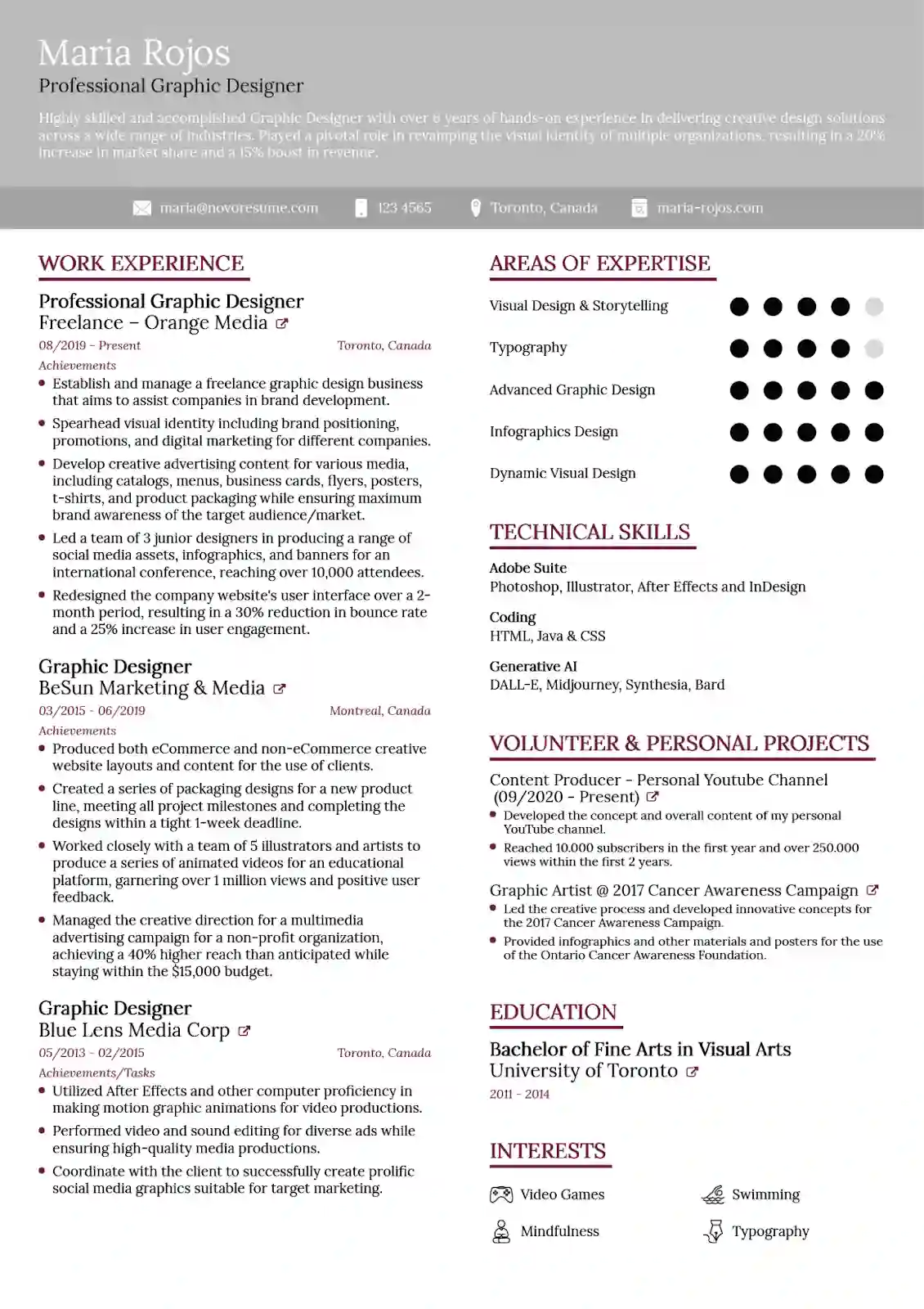
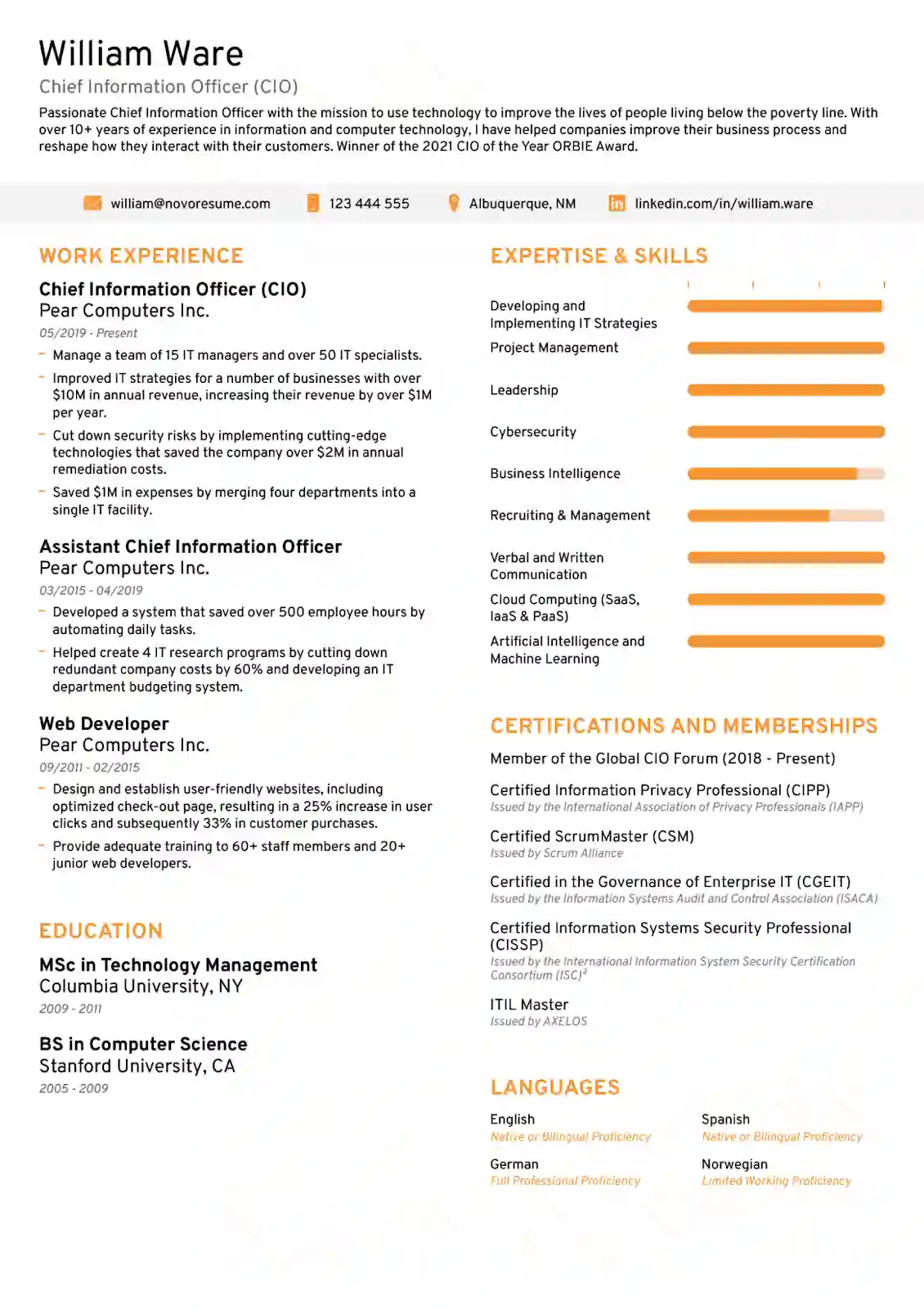
Reverse-Chronological:
Most popular (recommended for 99% of cases). Lists experience newest to oldest—ideal for showing career progression.
MAKE YOUR REVERSE CHRONOLOGICAL RESUME IN 2 MINUTE
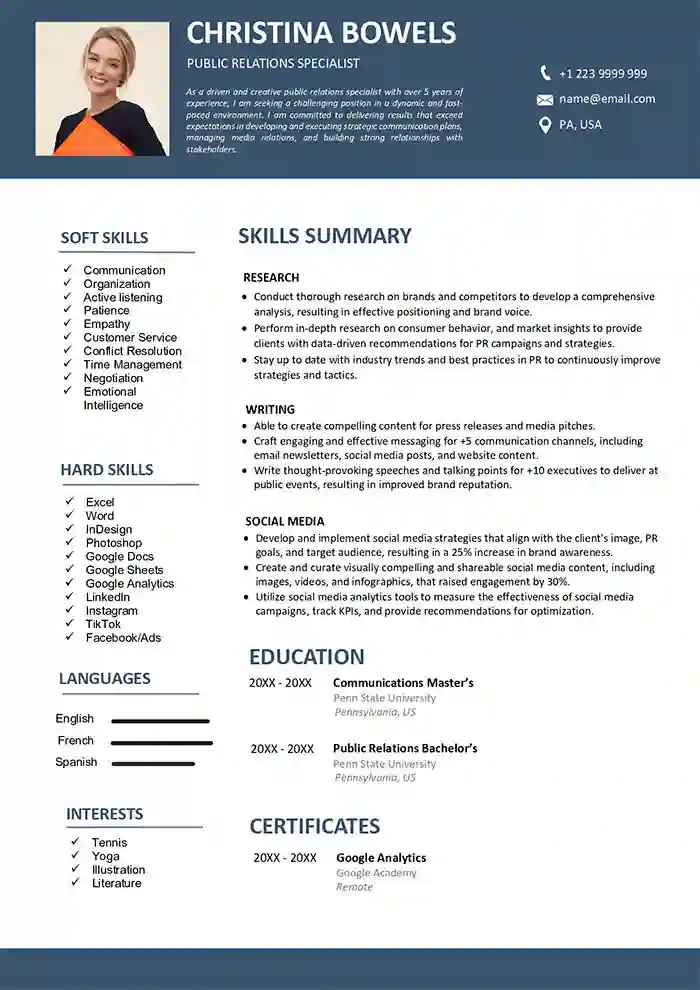
Functional (Skills-Based):
Emphasizes skills over experience. Best for career changers or gaps.
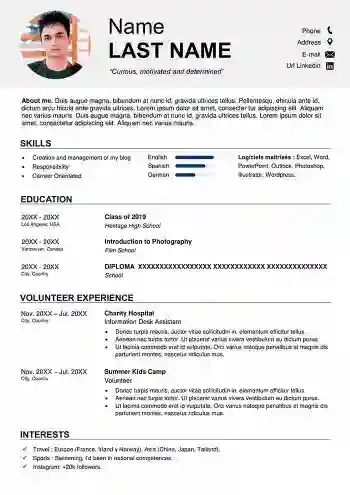
MAKE YOUR REVERSE FUNCTIONAL RESUME IN 2 MINUTE
Combination (Hybrid):
Balances skills and chronology. Great for mid-career professionals with diverse expertise.
In 2026, reverse-chronological remains dominant for ATS compatibility and recruiter preference.
resumekraft.com
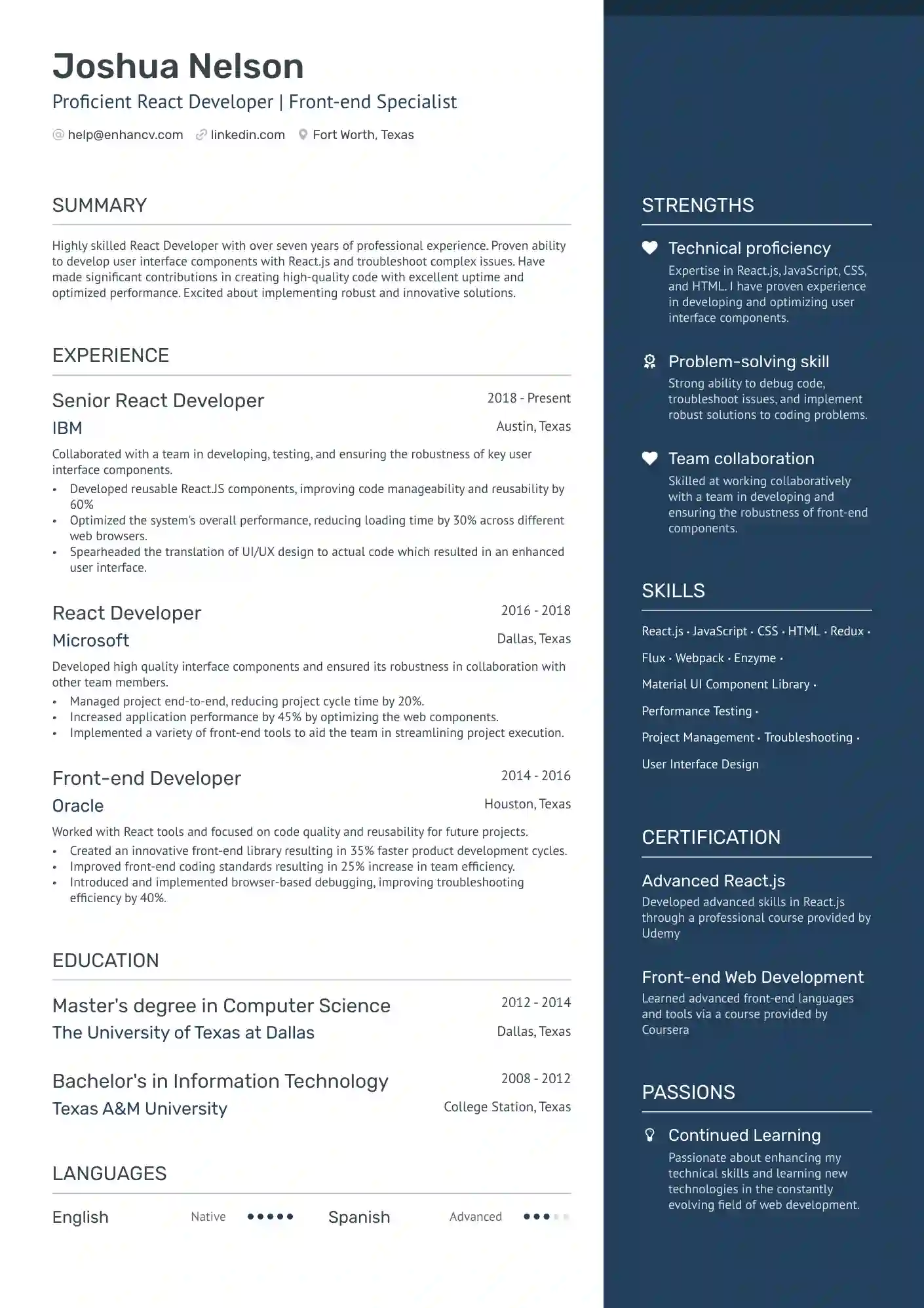
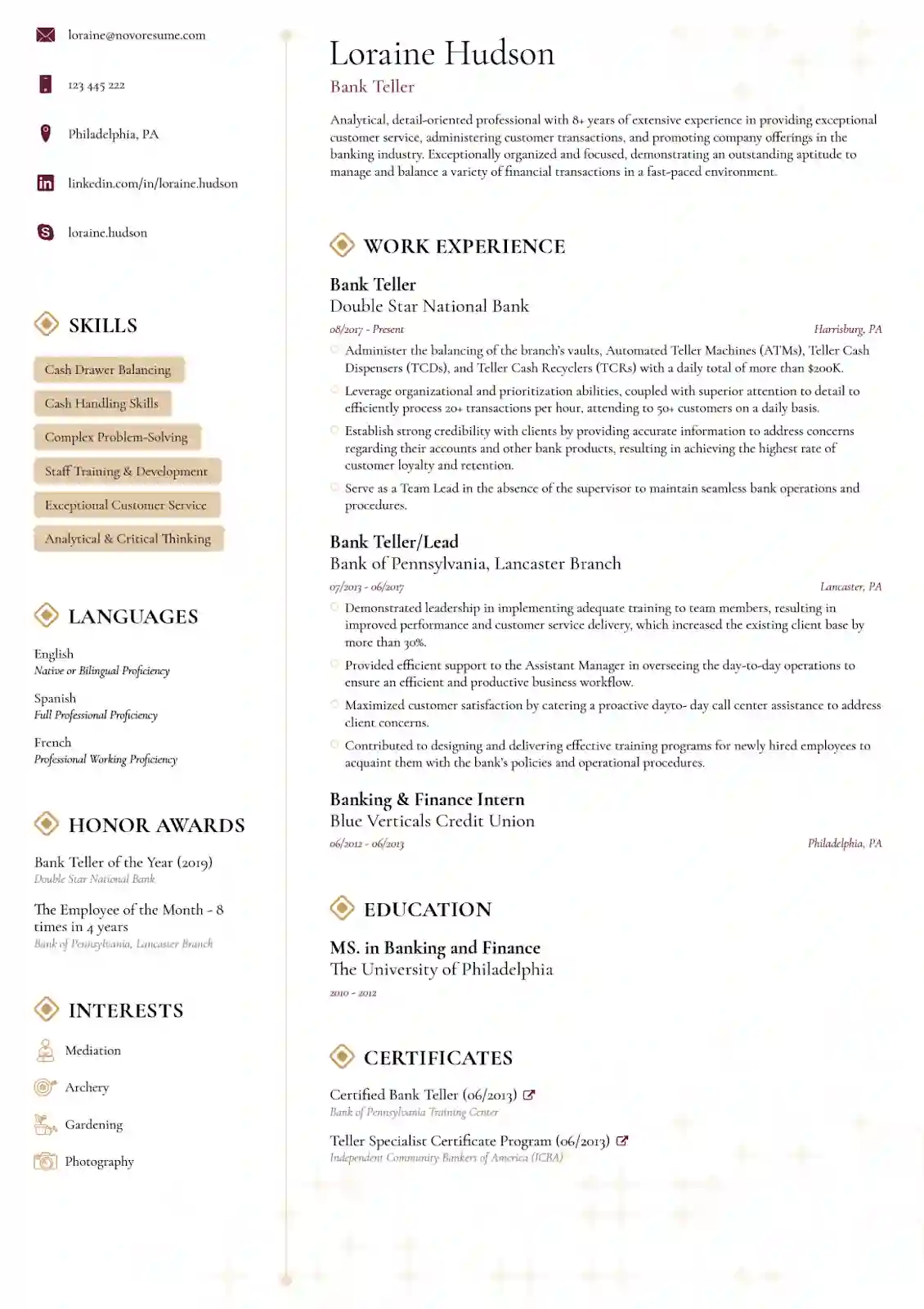
MAKE YOUR HYBRID RESUME IN 2 MINUTE
Modern resume template with subtle design elements—ATS-safe yet visually appealing
Best Layout Practices for 2026
-
One-page preferred (two pages only for 10+ years experience).
-
1-inch margins, 11–12 pt font (e.g., Calibri, Arial).
-
PDF format (unless .docx requested) to preserve layout.
-
Minimal graphics—avoid tables, images, or fancy headers that confuse ATS.
resumeworded.com
ATS-friendly layout example: Simple, scannable, and keyword-optimized
#2. Add Professional Contact Information
Place this at the top—make it easy for recruiters to reach you.
Must-Include:
-
Full name (bold, larger font).
-
Professional email (e.g., firstname.lastname@gmail.com).
-
Phone number.
-
Location (city, state; optional for remote roles).
-
LinkedIn URL (customized).
Optional (2026 Trend):
Portfolio link, GitHub, or personal site.
Avoid:
Photos (unless industry norm), age, or unprofessional details.
resumegenius.com
Clean contact section example—professional and concise
#3. Write a Powerful Resume Summary or Objective
Recruiters spend ~7 seconds scanning—hook them here.
Summary (for experienced):
3–4 sentences on achievements, skills, and value.
Objective (for entry-level/changers):
Focus on goals and transferable skills.
2026 Tip:
Incorporate keywords like "AI-driven" or "digital transformation."
Good Summary Example:
"Data Analyst with 5+ years optimizing processes using Python and SQL. Increased efficiency by 40% at XYZ Corp through AI-integrated dashboards. Seeking to leverage analytics expertise in dynamic tech environments."
blog.theinterviewguys.com
Summary vs. Objective comparison—choose based on experience level
#4. Master the Work Experience Section
Core of your resume—focus on achievements, not responsibilities.
-
Reverse-chronological order.
-
Job title, company, dates, location.
-
4–6 bullets per role.
-
Start with action verbs; quantify results.
Example Bullets:
"Led team of 10 to deliver project 20% under budget, boosting revenue by $150K."
"Implemented AI tool reducing processing time by 35%."
Tailor to job ad—mirror keywords naturally.
resumegenius.com
Work experience with quantified achievements—stands out to recruiters
#5. Optimize Education Section
Keep brief unless recent grad.
-
Degree, major, university, graduation year.
-
GPA (if 3.5+), honors, relevant coursework.
Place after experience if mid/senior-level.
#6. Build a Strong Skills Section
Critical in 2026's skills-first era.
-
Separate hard (e.g., Python, SEO) and soft (e.g., leadership, adaptability).
-
8–12 skills total; match job description.
-
Include emerging ones: AI tools, data analytics, remote collaboration.
resume.io
Hard vs. soft skills section—tailored and balanced
#7. Add Optional Sections to Stand Out
Boost with:
-
Certifications (e.g., Google Analytics, AWS).
-
Projects/Portfolio.
-
Languages.
-
Volunteer work.
15+ Expert Resume Tips for 2026
-
Use keywords naturally—ATS scans for them.
-
Quantify everything possible.
-
Active voice and power words (e.g., "Spearheaded" vs. "Responsible for").
-
No pronouns ("Managed team..." not "I managed...").
-
Mobile-optimized (recruiters view on phones).
-
Highlight AI/digital skills.
-
One-page rule for most.
-
Proofread—use tools like Grammarly.
-
Custom file name: FirstLast_JobTitle_2026.pdf.
-
Include hyperlinks for LinkedIn/portfolio.
-
Focus on transferable skills for changers.
-
Avoid overused buzzwords without proof.
-
Add subtle color if creative field.
-
Track with tools if possible.
-
Pair with tailored cover letter.
Resume Examples for Popular Professions in 2026
-
Software Engineer: Emphasize coding languages, projects.
-
Marketing Specialist: Highlight campaigns, metrics.
-
Data Analyst: Focus on tools like Tableau, Python.
-
Nurse: Certifications, patient outcomes.
Final Thoughts: Land Your Dream Job in 2026
A great resume combines ATS optimization, achievement-focused content, and modern trends like AI skills. Tailor it every time, quantify impact, and back claims with data.
Ready to build yours? Start with a clean template and customize.
Make your resume with Free Resume Builder