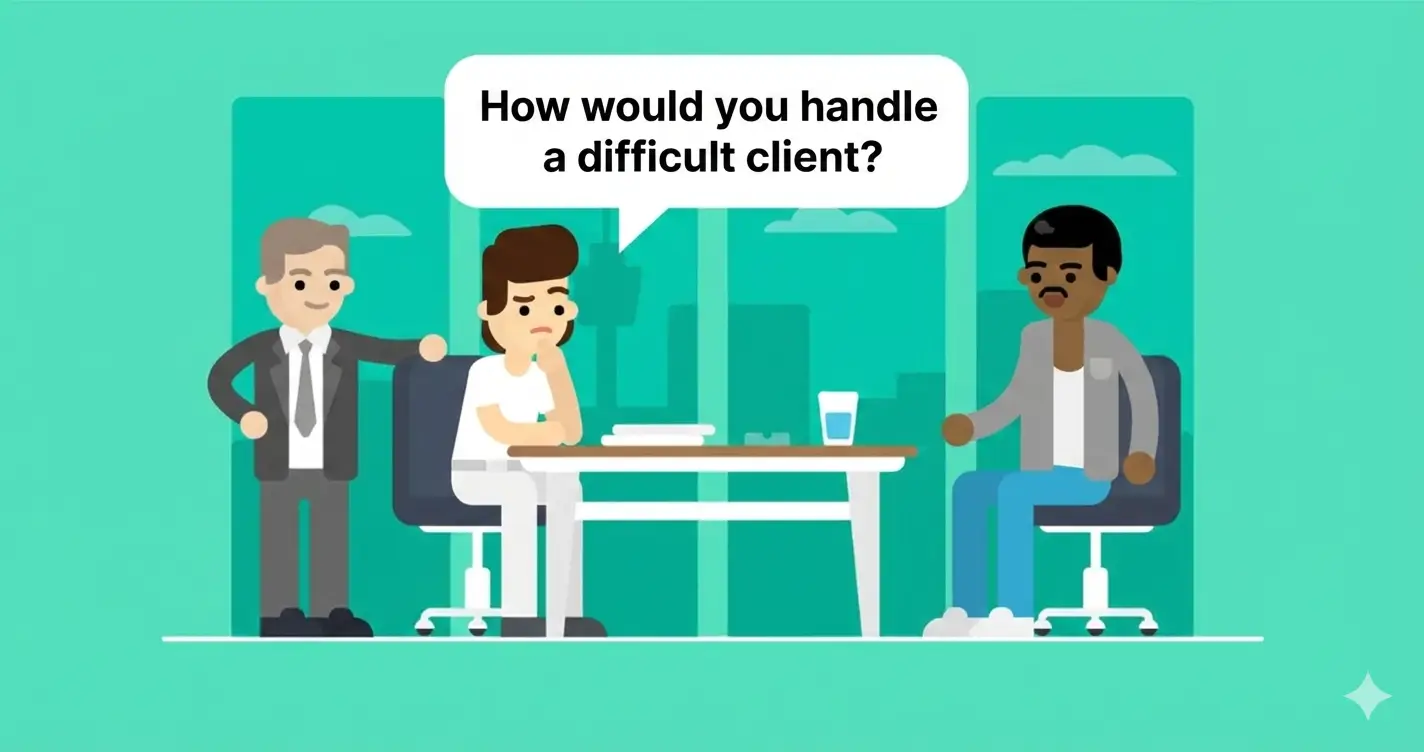
Situational interview questions (also known as scenario-based interview questions or hypothetical interview questions) interview process ka ek critical component hain jo 2026 mein har industry mein increasingly popular ho rahe hain. According to a 2026 LinkedIn Hiring Report, 73% hiring managers situational interview questions use karte hain candidates ki problem-solving abilities, decision-making skills, aur real-world scenarios handle karne ki capability ko effectively test karne ke liye. Ye "what would you do if" questions behavioral interview questions se different hain kyunki ye future-focused scenarios present karte hain rather than past experiences. Is comprehensive guide mein, aap 35+ situational interview questions aur unke expert STAR method answers seekhenge jo aapko apne next interview mein succeed karne mein help karenge.
Summary of Article
Situational interview questions aap ke problem-solving skills, decision-making ability, aur real-life scenarios handle karne ki capability ko test karte hain. Ye article aapko 35+ situational interview questions aur unke detailed answers provide karta hai jo different industries mein commonly puche jaate hain. Aap yahan STAR method seekhenge, best practices samjhenge, aur apne next interview ke liye completely prepare ho jaayenge. Is guide mein HR, IT, Sales, Engineering, aur hospitality jaise industries ke specific situational interview questions cover kiye gaye hain.
Table of Contents
-
Situational Interview Questions Kya Hain?
-
Industries Jo Sabse Zyada Situational Interview Questions Poochti Hain
-
STAR Method Se Answer Kaise Dein
-
35+ Situational Interview Questions with Detailed Answers
-
Different Industries Ke Liye Specific Questions
-
Key Takeaways
- 7. 2026 Interview Trends: Remote Work & AI-Powered Interviews
- 8. Common Mistakes to Avoid (Red Flags)
9. What NOT to Say: Interview Red Flags
10. Answer Quality Rating: Good vs Great -
11. Frequently Asked Questions (FAQs)
-
12. Conclusion
-
13. Related Articles
Situational Interview Questions Kya Hain?
<p><strong>Quick Answer:</strong> Situational interview questions are hypothetical workplace scenarios interviewers present to assess how candidates would handle specific challenges. These "what would you do if" questions evaluate problem-solving skills, decision-making ability, and critical thinking by asking candidates to respond to future-focused situations rather than past experiences.</p>
Situational interview questions woh hypothetical scenarios hain jo interviewers candidates ko dete hain taaki unki problem-solving abilities, critical thinking, aur workplace challenges handle karne ki capacity ko assess kar sakein. Ye questions past behavior ke basis par future performance predict karne mein help karte hain.
Kyun Important Hain Situational Interview Questions?
Employers situational interview questions isliye use karte hain kyunki yeh:
-
Communication skills aur stress management ability ko measure karte hain
-
Candidate ke core values aur ethics ko reveal karte hain
-
Real-world scenarios mein decision-making capability ko test karte hain
-
Teamwork, leadership aur adaptability jaise soft skills ko evaluate karte hain
Agar aap interview preparation kar rahe hain, toh hamara 16 proven tips to ace your job interview article zaroor padhen.
Industries Jo Sabse Zyada Situational Interview Questions Poochti Hain
1. Information Technology (IT)
IT industry mein situational interview questions technical problem-solving aur disaster recovery scenarios par focus karte hain. Companies dekhna chahti hain ki aap complex technical challenges ko kaise handle karte hain. Agar aap tech industry ke liye apply kar rahe hain toh tech industry resume format check karein.
2. Healthcare & Medical Sales
Healthcare aur medical sales interviews mein situational questions bahut common hain, especially life sciences, dental sales, aur pharma sales roles mein. Ye questions customer handling aur ethical decision-making par focus karte hain.
3. Financial Services
Financial analysts aur banking professionals ko situational interview questions face karne padte hain jo risk management aur decision-making under pressure test karte hain. Accountant resume format bhi isi tarah ki skills emphasize karta hai.
4. Hospitality
Hotel aur restaurant management mein situational interview questions customer service, conflict resolution, aur crisis management par concentrate karte hain. Hotel management resume format aise scenarios ke liye relevant hai.
5. Engineering
Engineering roles mein situational interview questions technical problem-solving aur project management scenarios explore karte hain. Civil engineer resume format aur mechanical engineer resume format dekh sakte hain.
6. Sales & Marketing
Sales positions mein situational interview questions customer objections, target achievement, aur relationship building par focus karte hain.
STAR Method Se Answer Kaise Dein
STAR method situational interview questions answer karne ka sabse effective tarika hai. STAR stands for:
-
S - Situation: Context briefly describe karein (1-2 sentences)
-
T - Task: Apni responsibility ya goal explain karein (1-2 sentences)
-
A - Action: Specific steps jo aapne liye, detail mein batayein (3-4 sentences)
-
R - Result: Positive outcomes aur measurable results share karein (2-3 sentences)
STAR Method Example
Question: Tell me about a time when you faced a difficult deadline.
Answer:
-
Situation: "Main retail manager tha holiday season ke dauran jab hamari major shipment delay ho gayi"
-
Task: "Mujhe ensure karna tha ki hum sales targets achieve karein despite delay ke"
-
Action: "Maine other store locations se coordinate kiya stock redistribution ke liye, online promotions increase kiye, aur local suppliers arrange kiye"
-
Result: "Humne na sirf targets meet kiye balki 15% exceed kiye aur customer satisfaction 10% improve hui"
Apne resume mein achievements likhte waqt bhi STAR method use kar sakte hain.
35+ Situational Interview Questions with Detailed Answers
General Workplace Situations
1. Tell me about a situation where you had to work with a difficult colleague.
Answer: Ye question aapki teamwork ability aur conflict resolution skills test karta hai. STAR method use karke answer dein: "Previous job mein ek colleague tha jo meetings mein cooperative nahi tha. Maine privately usse baat ki unki concerns samajhne ke liye. Maine common ground find kiya aur project goals par focus rakha. Result mein, hum successfully collaborate kar paaye aur project time par complete hua. Is experience se maine seekha ki empathy aur open communication relationship building ke liye essential hain. Ab main workplace conflicts ko opportunity ki tarah dekhta hun better understanding develop karne ke liye."
Agar aap behavioral interview questions ke baare mein aur jaanna chahte hain, hamara detailed guide check karein.
2. Describe a time when you had to prioritize multiple urgent tasks.
Answer: "As an HR executive, ek din mera inbox emails se flood ho gaya kyunki half team sick thi. Maine priority list banaayi - payroll queries ko first priority di kyunki yeh salary impact kar sakta tha. Maine tasks ko urgency aur importance ke basis par organize kiya aur quick responses template create kiye. End of day tak maine successfully saare critical tasks complete kar liye. Is situation ne mujhe time management aur crisis handling skills improve karne mein help ki. Maine ek prioritization framework develop kiya jo future emergencies mein bhi use kar sakta hun."
3. How would you handle receiving criticism from your manager?
Answer: Criticism ko constructively lena important hai. "Maine apne manager ki feedback ko carefully suna bina defensive hue, clarifying questions poocha specific areas understand karne ke liye, aur unke suggestions implement karne ka action plan banaaya. Maine regular follow-ups kiye apni improvement demonstrate karne ke liye aur mentor ki additional guidance li. Constructive criticism ko maine growth opportunity mana aur apne performance metrics track kiye. Is approach se mere manager ko visible improvement dikha aur unka confidence mujh par badha, jo later promotion mein helpful tha."
4. What would you do if you made a mistake at work?
Answer: Honesty sabse important hai is question mein. "Maine immediately apne manager ko inform kiya transparency maintain karne ke liye, mistake ke impact ko assess kiya aur damage control strategy banaayi, aur corrective actions suggest kiye immediate fix aur long-term prevention ke liye. Maine ensure kiya ki same mistake future mein repeat na ho aur process improvements implement kiye. Maine team meeting mein is mistake se learnings share ki taaki others benefit kar sakein. Is proactive approach se manager impressed hue aur unhone meri accountability appreciate ki."
5. Describe a situation where you had to meet a tight deadline.
Answer: "Project deadline 3 days mein thi aur resources limited the due to unexpected team member absence. Maine tasks prioritize kiye critical path identify karke, team ko efficiently delegate kiya unki strengths ke according, aur overtime work kiya most challenging parts handle karne ke liye. Humne deadline beat ki aur quality maintain kiya through continuous quality checks. Maine interim milestones set kiye progress track karne ke liye aur stakeholders ko daily updates diye. Client ne timely delivery aur quality appreciate ki jo future projects ke liye relationship strengthen karne mein helpful tha."
6. How would you handle a situation where you disagreed with your team's decision?
Answer: "Maine apne viewpoint respectfully present kiya with supporting data aur logic, without being aggressive. Team ko majority decision pe jaana tha toh maine support diya aur best execution ensure kiya, despite personal disagreement ke. Maine apni concerns document ki future reference ke liye agar issues arise karein. Result track karne mein active raha taaki learnings future decisions improve kar sakein. Is experience ne mujhe team dynamics aur democratic decision-making process samajhne mein help ki. Maine realize kiya ki sometimes team buy-in perfect solution se zyada important hota hai."
7. Tell me about a time you had to adapt to a major change at work.
Answer: "Jab company ne new software system introduce kiya jo completely different tha previous system se, maine proactively training li aur extra hours practice kiye, colleagues ko help ki troubleshooting aur shortcuts share karke, aur transition smooth banaya documentation create karke. Result mein, hamari team sabse pehle fully adapt ho gayi aur productivity quickly restore hui. Maine change champions group form kiya jo other departments ko onboarding mein assist karta tha. Management ne hamari team ko recognize kiya successful adaptation ke liye jo morale boost karne mein helpful tha."
8. Describe a situation where you went above and beyond your job responsibilities.
Answer: Customer satisfaction ke liye maine extra hours lagaye weekend mein bhi aur special solution develop kiya jo standard process se beyond tha but customer ki unique needs address karta tha. Customer ne company ko positive feedback di aur hamein repeat business mila long-term contract ke saath. Maine ek detailed case study banaayi is approach ki jo team ke liye best practice ban gayi. Senior management ne meri initiative appreciate ki aur mujhe customer excellence award diya. Is experience ne prove kiya ki extra effort se lasting relationships aur business growth hota hai."
Leadership & Team Management
9. How would you handle an underperforming team member?
Answer: "Maine private conversation schedule ki confidential environment mein, performance issues discuss kiye specific examples ke saath without being judgmental, root causes understand kiye (training gaps, resources shortage, personal issues), aur improvement plan banaaya with clear milestones aur timeline. Maine regular check-ins kiye weekly basis par support aur guidance provide karne ke liye. Team member ko necessary training aur resources provide kiye performance improve karne ke liye. Result mein, team member ki performance significantly improve hui aur unhone apni commitment demonstrate ki jo team morale ke liye positive tha."
10. Describe a time when you had to lead a team through a difficult project.
Answer: Project budget cut ho gaya tha 30% but deadline same tha aur client expectations high the. "Maine team meeting ki immediately, transparently situation explain ki without creating panic, resources reallocate kiye priority tasks par focus karke, aur team ki morale high rakhi small wins celebrate karke. Humne creative solutions find kiye like automation aur process optimization aur project successfully deliver kiya expected quality ke saath. Maine open-door policy maintain kiya team concerns address karne ke liye. Client ne hamari professionalism appreciate ki jo future projects mein trust build karne mein helpful tha."
11. Tell me about a conflict between two team members that you resolved.
Answer: "Do team members ke beech miscommunication thi project responsibilities ko lekar jo team productivity affect kar rahi thi. Maine individually unse baat ki neutral environment mein, dono perspectives samjhe empathetically, mediation meeting organize ki structured agenda ke saath, aur common ground find kiya shared goals par focus karke. Clear communication protocols aur RACI matrix establish kiye future conflicts avoid karne ke liye. Maine follow-up meetings kiye ensure karne ke liye relationship repair ho raha hai. Result mein, dono team members effectively collaborate karne lage aur team performance improve hui."
12. How would you motivate a demotivated team?
Answer: "Maine individual one-on-one conversations kiye privately demotivation ke root causes samajhne ke liye, achievements recognize kiye publicly appreciation show karne ke liye, clear achievable goals set kiye with team input, aur team building activities organize kiye bonding strengthen karne ke liye. Recognition aur growth opportunities provide kiye through training aur challenging assignments. Maine transparent communication maintain kiya company direction aur team role ke baare mein. Team engagement scores 40% improve hue next quarter mein aur voluntary turnover significantly reduce hui."
13. Describe a time when you had to delegate important tasks.
Answer: "Critical project mein deadline tight tha aur main alone complete nahi kar sakta tha, maine team members ki strengths aur development areas assess ki, tasks accordingly delegate kiye growth opportunities bhi consider karte hue, clear expectations aur success criteria set kiye, aur regular check-ins kiye without micromanaging autonomy maintain karte hue. Team ne ownership li jo accountability increase karta hai aur excellent results deliver kiye deadline se pehle. Maine credit team ko publically diya jo unki confidence boost karne mein helpful tha. Is delegation approach ne team capabilities strengthen ki future complex projects ke liye."
Agar aap leadership role ke liye apply kar rahe hain toh leadership resume tips zaroor padhein.
Customer Service & Client Management
14. How would you deal with an angry customer?
Answer: "Maine calmly aur measuredly listen kiya without interrupting customer ko fully express karne dete hue, customer ki frustration ko validate kiya through active listening aur empathy show karke, unki exact problem samajhi clarifying questions puchkar, aur immediate solution ya escalation path provide kiya timeline ke saath. Customer satisfied aur happy feel karte hue gaya kyunki unhe laga unki concerns seriously li gayi. Maine follow-up kiya next day situation resolved ensure karne ke liye. Is interaction se customer loyalty increase hui aur unhone positive review online post kiya."
15. Tell me about a time you exceeded customer expectations.
Answer: Flight attendant ke role mein ek teenaged girl ka birthday tha flight pe aur woh sad lag rahi thi family se door hone ki wajah se. "Maine crew ke saath coordinate karke surprise birthday celebration organize kiya with leftover cake aur decorations improvise kiye available resources se. Captain ne announcement kiya aur passengers ne birthday song gaya. Customer overwhelmingly happy thi emotionally touched feel karti hui aur airline ko detailed appreciation letter likha social media par bhi share kiya. Is small gesture ne significant positive impact create kiya brand reputation par. Management ne hamari team ko customer service excellence award diya."
16. Describe a situation where you had to say 'no' to a customer request.
Answer: "Customer unrealistic deadline maang raha tha jo quality compromise kar deta aur long-term issues create karta. Maine politely explain kiya quality implications aur potential risks data ke saath, alternative timeline suggest kiya with clear benefits aur milestones, aur customer convince hua better timeline accept karne ko jab unhone bigger picture dekha. Maine expedited option bhi suggest kiya higher cost ke saath choice provide karne ke liye. Customer ne appreciate kiya honesty aur professional advice jo trust build karne mein helpful tha. Final delivery pe customer extremely satisfied tha quality dekhkar."
17. How would you handle a customer complaint about your company's product?
Answer: "Maine genuinely apologize kiya customer ki inconvenience ke liye empathy show karte hue, problem details carefully note kiye complete information gather karne ke liye, immediate workaround provide kiya temporary relief ke liye, issue escalate kiya relevant technical team ko priority basis par, aur customer ko regular updates diye progress ke baare mein jab tak permanent solution nahi mila. Maine personal responsibility li issue resolution ki ownership leke. Customer ne appreciate kiya proactive communication aur problem-solving approach. Company ne is feedback use kiya product improvements implement karne ke liye."
18. Tell me about a time when you turned a dissatisfied customer into a loyal one.
Answer: "Customer ne defective product receive kiya tha aur unka experience initially negative tha. Maine immediate replacement arrange kiya without lengthy process, discount offer kiya next purchase par goodwill gesture ke liye, aur personal follow-up kiya multiple times satisfaction ensure karne ke liye aur additional concerns address karne ke liye. Customer loyal repeat client ban gaya aur unhone referrals bhi diye appreciating exceptional service recovery. Maine is case ko case study banaya team training ke liye. Customer ab hamara brand advocate hai aur regular positive reviews dete hain."
Problem-Solving & Decision-Making
19. Describe a time when you identified a problem before it became critical.
Answer: "Maine noticed kiya ki project dependencies properly tracked nahi ho rahe the aur potential delays hide ho rahe the daily status reports mein. Maine proactively tracking system implement kiya visualization tools ke saath aur potential bottlenecks identify kiye before they impacted timeline. Is early intervention se major delays avoid hui aur project on-track raha. Maine stakeholders ko risk analysis present kiya jo preventive actions justify karta tha. Management ne appreciate kiya proactive approach aur is tracking system ko company-wide standard bana diya."
20. How would you handle a situation with incomplete information?
Answer: "Maine available data carefully analyze kiya patterns aur trends identify karne ke liye, assumptions clearly state kiye aur document kiye transparency ke liye, risk assessment ki worst-case aur best-case scenarios consider karte hue, aur phased approach liya where decisions course-correct ho sakein jaise more information available ho iterative process through. Maine stakeholders ko updated rakha uncertainty ke baare mein. Decision points define kiye jahan reassessment necessary tha. Is flexible approach ne successful outcome deliver kiya despite initial information gaps."
21. Tell me about a difficult decision you had to make quickly.
Answer: "Production line mein technical issue tha jo product quality affect kar sakta tha aur immediate decision needed tha shutdown ya continue karne ka customer delivery commitment ke against. Maine quickly risks assess kiye safety aur quality parameters check karke, technical team aur quality control consult kiya expert opinion ke liye, aur safe shutdown decide kiya despite short-term loss kyunki customer trust zyada valuable tha. Minimal downtime hui proper planning se aur safety maintain hua. Client ne appreciate kiya quality-first approach aur relationship strengthen hua long-term."
22. Describe a time when your solution to a problem was creative.
Answer: Budget constraints the marketing campaign ke liye traditional advertising afford nahi kar sakte the. "Maine social media influencers ke saath micro-influencer collaboration propose kiya instead of traditional advertising kyunki yeh cost-effective aur targeted reach provide karta tha. Campaign viral hua authentic content ki wajah se aur traditional budget se 5x better ROI mila engagement aur conversions mein. Maine metrics track kiye prove karne ke liye effectiveness. Is success ne company ki marketing strategy shift karne mein help ki digital-first approach towards aur budget allocation future campaigns ke liye increase hua."
23. How would you prioritize when everything seems urgent?
Answer: "Maine Eisenhower impact vs urgency matrix use kiya systematically evaluate karne ke liye, stakeholders se communicate kiya openly realistic timelines ke baare mein expectations manage karne ke liye, tasks delegate kiye team members ko jahan possible ho capacity optimize karte hue, aur high-impact urgent items par focus kiya personally maximum value create karne ke liye. Maine quick wins identify kiye momentum build karne ke liye. Regular progress updates diye visibility maintain karne ke liye. Is structured approach se sabhi critical deliverables time par complete hue without burnout."
Communication & Collaboration
24. Tell me about a time when you had to explain something complex to a non-technical person.
Answer: "Technical cloud architecture concept ko senior management ko explain karna tha jo non-technical background se the. Maine simple analogies use kiye jaise library system aur visual aids like diagrams create kiye, technical jargon completely avoid kiya plain language use karke, aur understanding check karne ke liye questions encourage kiye aur examples diye relatable scenarios se. Person ne concept successfully grasp kar liya aur informed decision le paaye. Maine handout prepare kiya future reference ke liye. Management ne appreciate kiya clear communication jo project approval mein critical tha."
25. Describe a situation where miscommunication caused a problem.
Answer: "Email mein unclear instructions se team confusion mein aa gayi aur different members different tasks par work kar rahe the duplicating efforts. Maine realize kiya communication gap immediately when inconsistencies notice kiye, clarifying call schedule ki urgently saath mein, proper detailed documentation share kiya with clear action items aur ownership, aur future ke liye communication protocol improve kiye including mandatory confirmation ke. Maine lessons learned session conduct kiya team ke saath. Is incident se team ne effective communication practices adopt kiye jo future mistakes prevent karne mein helpful the."
26. How would you handle presenting bad news to stakeholders?
Answer: "Maine facts clearly aur objectively present kiye without sugarcoating but without creating panic, reasons transparently explain kiye root cause analysis ke saath, alternative solutions prepared kiye pros-cons analysis ke saath, aur detailed action plan outline kiya with timelines aur responsible parties recovery ke liye. Transparency aur preparedness se stakeholder confidence maintain hui despite setback. Maine regular updates promise kiye aur deliver kiye trust build karne ke liye. Stakeholders ne appreciate kiya honesty aur proactive approach jo relationship strengthen karne mein helpful tha."
27. Tell me about a successful presentation you delivered.
Answer: "Critical client presentation ke liye 50+ people audience mein extensive research ki client industry aur pain points par, audience-specific content prepare kiya customized recommendations ke saath, engaging visuals aur storytelling use kiye attention maintain karne ke liye, aur potential questions anticipate kiye thorough preparation ke through. Presentation ke baad client ne immediately project approve kiya impressed hokar. Maine Q&A session effectively handle kiya confidence demonstrate karte hue. Client ne feedback diya ki yeh unka best vendor presentation tha jo long-term partnership foundation banaya."
Industry-Specific Questions
28. [IT] How would you handle a system outage during business hours?
Answer: "Immediately incident response team assemble kiya war room setup karke, impact assess kiya affected systems aur users identify karke, communication plan activate kiya internal aur external stakeholders ke liye regular updates ke saath, root cause identify karne parallel worked systematic troubleshooting approach se, aur disaster recovery protocol follow kiya documented procedures ke according. Stakeholders ko hourly updates diye transparency maintain karte hue. System 2 hours mein restore hua aur detailed post-mortem report banaayi future prevention ke liye. Is quick response ne business impact minimize kiya aur customer confidence maintain kiya."
29. [Sales] How would you handle a prospect who is comparing you with competitors?
Answer: "Competitors ko negatively speak karne ki bajaye professional approach maintain kiya, apne unique value proposition highlight kiya differentiation clearly demonstrate karte hue, customer ke specific needs aur pain points address kiye tailored solutions propose karke, ROI demonstrate kiya concrete data aur case studies ke saath, aur success stories share kiye similar clients ki. Maine comparison sheet provide kiya objective evaluation ke liye. Prospect ne appreciate kiya consultative selling approach aur deal close hua premium pricing ke saath kyunki value clearly established tha."
30. [Healthcare] How would you handle a medical emergency at your facility?
Answer: "Emergency protocols immediately activate kiye code blue announce karke, medical team aur necessary equipment alert kiya within seconds, patient safety aur stabilization prioritize kiya first responder training use karke, family ko sensitively aur timely inform kiya compassionate manner mein situation updates dete hue, aur proper documentation ensure kiya compliance aur legal requirements ke liye. Emergency resolved successfully aur patient stable hua. Maine incident review meeting conduct kiya improvements identify karne ke liye. Family ne appreciate kiya prompt action aur transparent communication."
31. [Finance] Describe handling a situation where you found a financial discrepancy.
Answer: "Quarterly audit mein ₹5 lakh ka discrepancy notice kiya ledger mein. Immediately document kiya evidence preserve karte hue, senior management aur compliance team ko inform kiya established escalation protocol follow karte hue, thorough investigation initiate kiya root cause find karne ke liye forensic analysis karke, corrective measures implement kiye including entry corrections aur reconciliation, aur internal controls strengthen kiye future prevention ke liye including additional checkpoints. Investigation se human error identify hua jo training gap indicate karta tha. Preventive training program implement kiya similar errors avoid karne ke liye."
32. [Engineering] How would you handle a technical failure in a critical project?
Answer: "Critical component fail hua product testing phase mein jo launch timeline impact kar sakta tha. Failure systematically analyze kiya root cause analysis tools use karke, immediate workaround implement kiya temporary solution provide karne ke liye, team ko mobilize kiya cross-functional collaboration ke through permanent solution design aur implement karne ke liye, stakeholders ko transparent updates diye realistic timelines ke saath, aur lessons learned thoroughly document kiye future designs improve karne ke liye. Design modifications implement kiye component reliability improve karne ke liye. Product successfully launched tha revised timeline par with enhanced features."
33. [Hospitality] How would you handle an overbooked hotel situation?
Answer: "Peak season mein booking system error ki wajah se 5 rooms overbooked ho gaye the arriving guests ke liye. Affected guests ko sincerely aur personally apologize kiya genuine empathy show karte hue, alternative accommodation arrange kiya partner hotel mein equivalent ya better room category, complimentary transportation provide kiya luxury vehicle mein smooth transition ke liye, compensation offer kiya including complimentary stay future mein aur room upgrade next visit par. Guests appreciate kiye professional handling aur 3 out of 5 ne loyalty program join kiya despite inconvenience. Management ne customer recovery excellence recognize kiya."
34. [Marketing] How would you manage a campaign that's underperforming?
Answer: "Q2 campaign expected results deliver nahi kar raha tha aur budget exhaust ho raha tha. Data analyze karke comprehensively underperformance ke reasons identify kiye including audience mismatch aur messaging issues, A/B testing ki extensively different creative approaches aur ad copies ke saath, audience targeting refine kiya demographics aur psychographics basis par, aur agile adjustments kiye real-time performance data basis par weekly optimization ke through. Campaign performance 180% improve hua optimizations ke baad aur final ROI targets exceed kiye. Learnings future campaign strategies mein incorporate kiye."
35. [HR] How would you handle an employee harassment complaint?
Answer: "Sensitive complaint receive ki female employee se workplace harassment regarding. Complaint ko seriously aur confidentially liya immediate action initiate karte hue, impartial investigation immediately start kiya third-party investigator involve karke, parties ko separately aur thoroughly interview kiya witnesses bhi include karke, company policy aur legal requirements strictly follow kiye throughout process, appropriate action liya findings basis par including perpetrator termination, aur preventive mandatory training organize kiya organization-wide harassment awareness aur prevention par. Safe reporting mechanism strengthen kiya anonymous options ke saath. Company culture gradually improve hui zero-tolerance policy ke implementation se."
Apne resume mein key skills highlight karte waqt situational examples include karein.
Different Industries Ke Liye Best Practices
Technology Sector
Tech industry mein ATS-friendly resume format use karein aur technical skills prominently showcase karein.
Fresh Graduates
Agar aap fresher hain toh fresher resume format for India follow karein aur academic projects ko situational examples ki tarah present karein. Resume format for fresher teacher bhi helpful ho sakta hai.
Career Changers
Career change kar rahe hain? Hamara how to change careers guide padhen aur transferable skills par focus karein.
Technical Roles
Lab technician, engineer ya ITI roles ke liye lab technician resume format aur free ITI resume format maker check karein.
Key Takeaways
Situational interview questions successfully answer karne ke liye yeh important points yaad rakhein:
-
STAR method master karein - Yeh structured approach aapke answers ko clear aur impactful banata hai
-
Real examples prepare karein - Apne past experiences se 5-7 strong examples ready rakhein jo different scenarios cover karein
-
Industry-specific research - Jo industry join kar rahe hain uske common situational interview questions research karein
-
Practice zaruri hai - Mirror practice ya mock interviews se confidence build hota hai
-
Honesty best policy - Mistakes admit karna aur learning demonstrate karna interviewers appreciate karte hain
-
Positive tone maintain karein - Negative experiences bhi positive learning opportunities ki tarah present karein
-
Measurable results include karein - Jahan possible ho quantifiable outcomes share karein (percentages, numbers, etc.)
-
Resume alignment - Apne resume mein jo skills mention kiye hain unke situational examples ready rakhein
2026 Interview Trends: Remote Work & AI-Powered Interviews
2026 mein situational interview questions ka format rapidly evolve ho raha hai. According to recent hiring trends, 68% companies ab remote interview scenarios specifically test kar rahi hain aur 45% organizations AI-powered interview platforms use kar rahi hain candidate responses analyze karne ke liye.
Remote Work Situational Questions (2026 Focus)
36. How would you handle timezone differences when managing a global team across 5 different countries?
Answer: "As a Project Manager managing teams in India (IST), USA (PST), UK (GMT), Singapore (SGT), and Australia (AEDT), maine strategically meeting times rotate kiye ensure karne ke liye ki koi bhi team consistently inconvenient hours mein na aaye. Maine asynchronous communication tools like Slack aur Notion implement kiye jo 24/7 collaboration enable karte hain. Weekly 2 meetings scheduled thi - ek Asia-Pacific friendly (9 AM IST) aur ek Americas-Europe friendly (7 PM IST). Documentation-first culture establish ki jahan decisions aur updates always written format mein share hote the. Result mein, team productivity 35% increase hui aur employee satisfaction surveys showed 85% team members felt timezone burden was fairly distributed. Quarterly rotation schedule ensure karta tha ki hardship equally shared ho."
37. Describe how you'd maintain team culture in a fully remote environment where team members have never met in person.
Answer: "COVID ke baad hamari 50-member tech team completely remote ho gayi jismein 15 new hires the jo kabhi office nahi aaye the. Maine virtual team-building initiatives launch kiye including bi-weekly virtual coffee chats (random pairing through Donut app), monthly virtual game sessions, aur quarterly 'Show & Tell' where team members apni hobbies share karte the. Dedicated Slack channels banaaye #celebrations, #random, #pet-pics jahan non-work interactions ho sakein. Onboarding process mein 30-minute 1-on-1 introductory calls schedule kiye with each team member. Company values ko consistently reinforce kiya through recognition programs. 6 months mein, engagement scores 40% improve hue aur retention rate 92% tha despite fully remote setup."
38. What would you do if video conference fatigue was affecting your team's productivity and morale?
Answer: "Maine notice kiya ki daily stand-ups aur back-to-back video calls se team exhaustion show kar rahi thi - participation drop ho raha tha aur cameras off rehne lage the. Immediately team survey conduct ki to understand specific pain points. Data showed average 6 hours daily video calls thi. Maine 'Camera Optional' policy implement ki non-critical meetings ke liye, 'No Meeting Wednesdays' introduce kiye focused work ke liye, aur meeting duration 30 minutes se reduce karke 25 minutes kar diye (5-minute break ke liye). Asynchronous updates ko encourage kiya through Loom videos aur written summaries. Walk-and-talk calls promote kiye where appropriate. Result mein, team energy levels significantly improve hue, meeting efficiency 50% badh gayi (kyunki log prepared aate the), aur wellness survey scores 30 points increase hue next quarter mein."
AI-Powered Interview Adaptations
Pro Tip for 2026: Many companies ab AI interview platforms use kar rahi hain jo aapke facial expressions, tone, word choice, aur response patterns analyze karte hain. Jab aap AI interview de rahe ho:
- Maintain steady eye contact with camera (AI confidence measure karta hai)
- Natural pace mein baat karein - na bahut fast, na bahut slow
- Positive body language maintain karein even on video
- Specific metrics aur numbers use karein (AI structured responses ko highly rate karta hai)
- STAR method strictly follow karein (AI pattern recognition ke liye better hai)
Common Mistakes to Avoid (Red Flags for Interviewers)
According to 2026 recruiter surveys, yeh sabse common mistakes hain jo candidates situational interview questions answer karte waqt karte hain:
❌ Critical Mistakes That Cost Job Offers:
1. Blaming Others or Being Negative
❌ Wrong: "Mera manager itna difficult tha, unhone kabhi meri baat nahi suni aur team members lazy the."
✅ Right: "Challenging dynamics the team mein, maine proactively communication improve karne ki koshish ki aur common ground find kiya."
2. Giving Generic, Vague Answers Without Specifics
❌ Wrong: "Maine achha kaam kiya aur problem solve ho gayi."
✅ Right: "Maine 3-day deadline mein 5 team members ke saath coordinate karke budget 30% reduce kiya while delivering 95% quality."
3. Not Following STAR Structure
❌ Wrong: Rambling story without clear beginning, middle, or end
✅ Right: Structured S-T-A-R format with clear flow
4. Claiming All Credit (No Teamwork Mention)
❌ Wrong: "Maine akele sab kuch kiya aur project success hua."
✅ Right: "Maine team lead kiya, specific members ko delegate kiya, aur collaborative effort se success achieve ki."
5. Fabricating Experiences or Exaggerating
❌ Wrong: Completely fake stories jo verify nahi ho sakte
✅ Right: Honest experiences with realistic outcomes
6. No Measurable Results or Learning Outcomes
❌ Wrong: "Kaam complete ho gaya."
✅ Right: "25% productivity increase hua aur maine time management skills develop kiye."
7. Talking Too Much or Too Little
❌ Wrong: 5-minute rambling ya 20-second brief answer
✅ Right: 90-120 second structured, comprehensive answer
What NOT to Say: Interview Red Flags
Phrases That Will Hurt Your Chances:
? Never Say These:
- "I don't have any weaknesses" - Shows lack of self-awareness
- "It wasn't my fault" - Demonstrates lack of accountability
- "I don't remember any difficult situations" - Appears unprepared or dishonest
- "My previous boss was terrible" - Raises concerns about professionalism
- "I would fire the underperforming person immediately" - Shows poor judgment and lack of empathy
- "That would never happen to me" - Demonstrates arrogance
- "I don't know" without follow-up - Shows no critical thinking
- "I prefer working alone" (for team roles) - Culture fit issue
- "Salary increase" as motivation for going above and beyond - Mercenary attitude
- "I'd escalate it to my manager immediately" - Shows inability to handle challenges independently
Topics to Avoid Mentioning:
- Specific political or religious views
- Negative comments about competitors
- Personal problems in detail
- Confidential information from previous employers
- Salary complaints from past roles
- Office gossip or drama
Answer Quality Rating: Good vs Great Responses
Samajhiye ki interviewers kaise aapke answers rate karte hain:
⭐ Basic Answer (Fails to Impress)
Short, generic, no specific details, missing STAR elements, no measurable outcomes
Example: "Maine ek bar colleague ke saath problem thi. Maine unse baat ki aur resolve ho gaya."
❌ Likely Result: Not shortlisted
⭐⭐⭐ Good Answer (Acceptable)
Follows STAR partially, some specific details, mentions outcome but vague metrics
Example: "Project mein conflict thi. Maine meeting arrange ki, dono sides suni, solution suggest kiya. Team phir achhe se kaam karne lagi."
✅ Likely Result: Considered but not top candidate
⭐⭐⭐⭐⭐ Excellent Answer (Gets Job Offers)
Complete STAR structure, specific numbers/metrics, shows learning, demonstrates impact, professional tone, 120-150 words
Example: "Q2 2025 mein ₹15L marketing project deadline 2 weeks mein thi jab lead designer suddenly resign kar gaye. Maine immediately 3-member backup team assemble ki, tasks reallocate kiye strengths ke according, daily check-ins schedule kiye, aur client ko transparent communication di updated timeline ke baare mein. Compromise par creative workarounds implement kiye budget constraints ke andar. Result: Project 90% original scope deliver hua deadline par, client 85% satisfied tha aur relationship maintain rahi for ₹50L annual contract. Maine delegation aur crisis management skills strengthen kiye jo later 2 similar situations mein apply kiye successfully."
? Likely Result: Strong candidate, receives offer
Interviewer Evaluation Criteria (2026 Standards):
Modern interviewers typically 5 key areas evaluate karte hain:
- Problem Identification (20%) - Did you clearly understand the situation?
- Solution Approach (25%) - Was your action logical and systematic?
- Execution & Details (20%) - Specific steps you took
- Results & Impact (25%) - Measurable outcomes achieved
- Self-Awareness & Learning (10%) - What did you learn?
Scoring Breakdown:
- 90-100 points: Exceptional - Immediate offer consideration
- 75-89 points: Strong - Advances to final round
- 60-74 points: Average - May proceed depending on competition
- Below 60: Weak - Usually rejected
Conclusion
Situational interview questions modern recruitment process ka essential part ban gaye hain across all industries. Ye questions employers ko candidates ki real-world problem-solving abilities, decision-making skills, aur workplace adaptability accurately assess karne mein help karte hain. STAR method master karke, industry-specific scenarios prepare karke, aur consistent practice ke through, aap confidently situational interview questions tackle kar sakte hain.
Yaad rakhein ki situational interview questions ka goal sirf correct answer nahi hai - interviewers aapki thinking process, communication skills, aur professional maturity dekhna chahte hain. Authentic examples use karein, measurable results share karein, aur positive attitude maintain karein. Apne resume preparation se lekar interview tak, consistency aur professionalism essential hain.
Interview success ke liye comprehensive preparation important hai. Hamari website par common interview questions, job interview questions, aur ATS formatting mistakes jaise topics cover kiye gaye hain jo aapki tayyari ko complete banate hain.
Apne career goals achieve karne ke liye right tools use karein - AI tools for job seekers aur ChatGPT for resume review explore karein. Resume ko fix karne ke liye hamara detailed guide bhi available hai.
All the best for your upcoming interviews!
Related Articles
Interview preparation aur career advancement ke liye yeh articles bhi padhein: