Introduction
A resume can be strong on experience and still get ignored because of one tiny mistake. A spelling error in your job title, a broken date, or messy formatting can quietly ruin your chances before a recruiter even finishes the first scan. If you are still building your resume from scratch, this is also a good time to understand how to write a resume in 2026 so your content and structure are strong before proofreading begins.
That is the hard truth of modern hiring. Recruiters skim fast, ATS systems parse even faster, and small errors create a bad signal: low attention to detail, weak presentation, and careless submission. If your resume looks rushed, it often gets treated like a rushed application.
That is why resume proofreading is no longer optional. In 2026, good proofreading is part writing skill, part ATS optimization, and part recruiter psychology. If you are just starting out and want the right structure first, this ATS-friendly resume format for beginners guide is a useful companion. The sections below give you a practical framework to proofread smarter and submit with confidence.
Why Resume Proofreading Matters in 2026
Proofreading matters because your resume is not being read slowly anymore. It is being scanned by software and then skimmed by humans who are comparing dozens of profiles in a short time. If you want to understand how ATS screening affects overall resume quality, read 11 ATS formatting mistakes, because many proofreading errors are really formatting errors in disguise.
A well-proofread resume does three things:
-
It signals professionalism.
-
It improves ATS readability.
-
It helps recruiters trust your application faster.
Even a polished background can lose value if the document contains obvious mistakes. A date mismatch, tense inconsistency, or weak formatting can make the resume feel less credible than it actually is. For a deeper look at what a strong resume should include beyond proofreading, you can also explore 10 essential resume sections in 2026.
Best Resume Proofreading Techniques
Different proofreading methods catch different problems. A strong resume review usually combines three or four methods instead of relying on one. If you want to improve your wording as you proofread, the article on resume-related AI tools for job seekers can also help you understand where AI fits into the process.
Reading aloud slows you down and exposes awkward grammar, missing words, and repetitive phrasing. Printing the resume gives you a different visual view, while mobile review helps you see what recruiters may notice on a small screen. AI tools can help flag grammar issues, but they work best when paired with a human review and a clean final layout.
For beginners who are still unsure whether their resume structure is correct, this ATS-friendly resume format guide can help you fix the foundation before you proofread the details.
[Internal Link Opportunity]
ATS-Friendly Resume Proofreading Tips
ATS proofreading is not just grammar checking. It is checking whether the resume can be read correctly by hiring software. If you are unsure whether your current file is scanning properly, you may also want to use the free ATS resume checker before sending the application.
Focus on keyword alignment, standard headings, and simple formatting that ATS can parse without confusion. Avoid text boxes, sidebars, decorative icons, and complex tables, because these elements can break reading order. Use PDF unless the employer asks for DOCX, and make sure the file is text-based rather than image-based.
If your resume still feels too basic after proofreading, compare it with the advice in how to write a resume in 2026, since good formatting and good content should work together.
Resume Proofreading Tips for Freshers
Freshers often have less experience, so every detail matters more. A small error on a fresher resume can weaken the entire application because the document already has limited content to carry the story. If you are a fresher and still building from scratch, the guide on fresher resume format for India can help you create a cleaner base before proofreading.
Double-check course names, graduation dates, internship company names, project titles, certification names, and skills copied from job descriptions. Freshers should keep the resume simple, honest, and easy to scan, because overclaiming experience is one of the fastest ways to lose trust.
If you have no work experience yet, use ATS-friendly resume format for beginners as your layout reference and then proofread every line carefully.
Resume Proofreading Tips for Experienced Professionals
Experienced candidates have a different problem: more content means more room for inconsistency. Dates, role progression, metrics, and title alignment all need extra attention. If you are updating an older resume, first study how to write a resume in 2026 so your structure matches current hiring expectations before you start editing.
Remove outdated or irrelevant older roles if they no longer support your target job. Then make sure achievements sound current, measurable, and aligned with the role you want now. Professionals switching paths may also benefit from how to change careers as an Indian professional, because career change resumes need extra precision in wording and structure.
[Internal Link Opportunity]
Final Resume Review Before Applying
Before you hit submit, do a final 30-second review. This last check catches the mistakes that appear after all the editing is done. If you want to test whether your resume is actually ready for applications, compare it against the ATS-friendly resume format for beginners checklist one more time.
Name, phone number, email, LinkedIn link, job title, dates, and summary should all be accurate and tailored to the role. Then confirm the file name is professional, the PDF opens correctly, and the resume is easy to scan at a glance.
This is also the point where a tool like free ATS resume checker can save you from last-minute errors before submission.
Conclusion
Resume proofreading is one of the easiest ways to improve your chances without changing your whole career story. A carefully checked resume looks more professional, reads better in ATS systems, and gives recruiters a stronger reason to trust your application. If your resume still needs a stronger structure after proofreading, revisit how to write a resume in 2026 and rebuild the foundation properly.
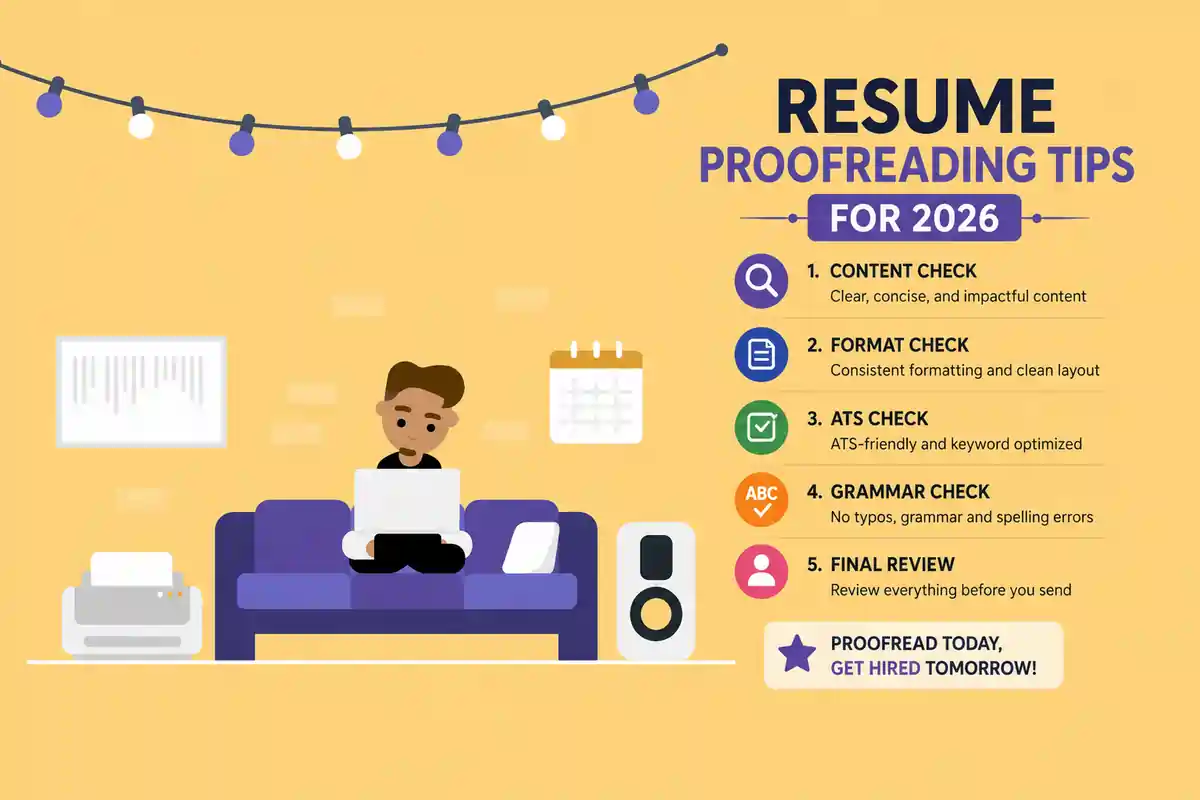
The best results come from combining grammar checks, formatting checks, ATS checks, and a final human review. Do that before every important application, and you will avoid many of the mistakes that quietly cost interviews.
Before you send your next resume, take one last pass. That small step can make the difference between ignored and shortlisted.