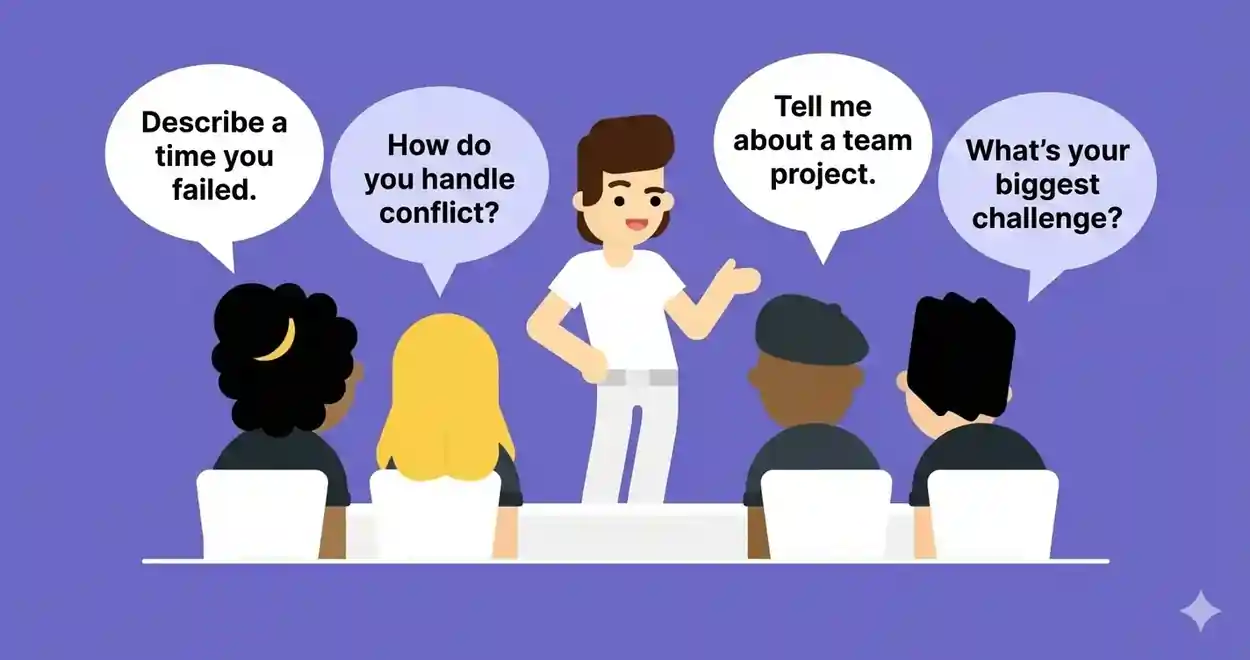
Behavioral interview questions एक career journey में सबसे challenging yet crucial interview obstacles में से एक हैं। ये job Interview questions आपके past experiences को analyze करके आपके future job performance को predict करते हैं। According to recent LinkedIn research,84% of hiring managers prefer behavioral interviews over traditional questioning methods क्योंकि ये candidate की actual capabilities को better reveal करते हैं।
आप interview room में बैठते हैं और interviewer पूछता है “Tell me about a time when…”—तो यही वो moment है जब behavioral interview questions start होते हैं। ये structured questions हैं जो आपके real-world problem-solving approaches, teamwork abilities, और leadership qualities को assess करने के लिए design किए गए हैं।
? Table of Contents
-
What Are Behavioral Interview Questions?
-
Why Employers Prefer Behavioral Interview Questions in 2026
-
The STAR Method: Your Success Formula
-
Top 30+ Behavioral Interview Questions with Sample Answers
-
Teamwork Questions
-
Problem-Solving Questions
-
Adaptability Questions
-
Conflict Resolution Questions
-
Time Management Questions
-
Communication Questions
-
How to Prepare for Behavioral Interview Questions
-
Common Mistakes to Avoid
-
Reddit & Quora Real Experiences
-
Key Takeaways
-
Frequently Asked Questions (FAQs)
-
Conclusion
✅ What Are Behavioral Interview Questions?
Behavioral interview questions एक specialized interviewing technique है जो इस principle पर based है:
“Past behavior is the best predictor of future performance.”
ये questions candidates से specific situations के बारे में पूछते हैं जहां उन्होंने particular skills demonstrate किए हों।
Key Characteristics
1. Past-Focused Approach
ये hypothetical scenarios नहीं पूछते (“What would you do if…”)
Real experiences demand करते हैं (“Tell me about a time when…”)
Concrete examples demand होते हैं, theoretical knowledge नहीं
2. Situation-Specific Format
Detailed context चाहिए होता है
Specific actions और measurable outcomes expect किए जाते हैं
Generic या vague answers acceptable नहीं होते
3. Competency-Based Assessment
हर question एक specific skill evaluate करता है
Leadership, teamwork, problem-solving, communication abilities
Job role की requirements से directly aligned होते हैं
Common Opening Phrases
Behavioral interview questions typically इन phrases से start होते हैं:
-
“Tell me about a time when…”
-
“Describe a situation where…”
-
“Give me an example of…”
-
“Can you share an instance where…”
-
“Walk me through a scenario when…”
Don’t let a weak resume decide your future.
Thousands of people are getting rejected — not because they’re bad, but because their resume doesn’t speak for them. Make a resume that actually gets shortlisted.
Your next job is closer than you think.
Start in 2 minutes.
No complicated forms. Just pick a template, fill details, download.
Create Resume Now →? Why Employers Prefer Behavioral Interview Questions in 2026
Modern hiring landscape में behavioral interview questions का importance significantly बढ़ गया है। आइए understand करें क्यों।
1. Higher Predictive Accuracy
Research से पता चलता है कि candidates who use STAR method are 2.6 times more likely to get hired compared to those who don't. Traditional interview questions की तुलना में behavioral interviews 50–55% more accurate होते हैं candidate के actual job performance को predict करने में।
2. Structured और Fair Assessment
सभी candidates को same set of behavioral interview questions पूछे जाते हैं, creating एक level playing field। यह approach reduces unconscious bias और ensures कि hiring decisions merit-based हों।
3. Evidence-Based Evaluation
Resume पर “team player” या “problem solver” लिखना easy है, but behavioral interview questions candidates को force करते हैं prove करने के लिए अपने claims को through real examples। According to a Society for Human Resource Management study,70% of employers value behavioral-based interview questions specifically for this reason।
4. Cultural Fit Assessment
Companies यह assess कर सकती हैं कि candidate की working style, values, और approach उनके organizational culture के साथ align करती है या नहीं। यह long-term retention के लिए crucial है।
⭐ The STAR Method: Your Success Formula
STAR method वो golden framework है जो आपके behavioral interview questions के answers को structured, compelling, और memorable बनाता है। Research shows कि candidates using STAR method are 50% more likely to make positive impression on hiring managers।

Breaking Down STAR
S – Situation (20%)
Context set करें briefly
कब और कहां हुआ
कौन involved था
Time allocation: 20–30 seconds
T – Task (10%)
आपकी specific responsibility define करें
क्या challenge था
Expected outcome क्या था
Time allocation: 10–15 seconds
A – Action (60%)
सबसे important part
Step-by-step approach explain करें
“I” use करें, “We” नहीं
Specific tools और strategies mention करें
Time allocation: 60–90 seconds
R – Result (10%)
Quantifiable outcomes share करें
Numbers, percentages, metrics use करें
Learning या recognition mention करें
Time allocation: 15–20 seconds
? Sample STAR Answer
Question: “Tell me about a time when you faced a conflict at work.”
Situation (20%):
“मेरी previous company में as Marketing Coordinator, हमारी team को एक major product launch campaign assign किया गया था ₹15 lakhs budget के साथ। मेरे colleague और मेरे बीच disagreement हो गई campaign strategy को लेकर।”
Task (10%):
“मुझे ensure करना था कि हम professional तरीके से resolve करें यह conflict और deadline miss न हो, जो सिर्फ 3 weeks away थी।”
Action (60%):
“मैंने private meeting request की तapnे colleague के साथ। Meeting में, मैंने पहले उनकी concerns actively सुनीं without interrupting। फिर मैंने अपना perspective share किया data-backed insights के साथ। हमने decide किया कि हम दोनों approach को test करेंगे A/B testing के through—₹3 lakhs allocate करके each strategy को। मैंने timeline create किया with clear milestones और daily check-ins schedule कीं transparency के लिए।”
Result (10%):
“A/B testing ने show किया कि combined approach सबसे effective था। हमने campaign successfully launch किया deadline से 2 days early। Results: 65% higher engagement than projected और ₹42 lakhs का revenue generated। हमारा working relationship improve हुआ और हमें jointly ‘Team Collaboration Award’ मिला।”
Quora Insight:
“I interview 100+ candidates yearly. The ones who use STAR method naturally with specific metrics stand out immediately. Recently hired someone who said ‘I reduced customer complaints from 45 per month to 12 in 3 months’—that specificity sealed the deal.” – Anonymous Hiring Manager, Bangalore
Top 35+ Behavioral Interview Questions with Sample Answers
अब हम explore करेंगे industry के most commonbehavioral interview questionswith practical, medium-length answers जो आपको किसी भी interview में confident बनाएंगे।
Category 1: Teamwork & Collaboration Behavioral Interview Questions
Question 1: "Describe a time when you worked with a difficult team member."
Sample Answer:
"मेरी previous role में software development team में, एक senior developer थे जो consistently meetings में late आते थे और अपने code reviews delay करते थे, जिससे पूरी team की productivity affect हो रही थी।मैंने privately बात करने का decide किया judgment के बिना। मुझे pata चला कि वो personally कुछ family issues face कर रहे थे। मैंने suggest किया flexible meeting timings और offered help in code reviews जब वो overwhelmed feel करें।
उन्होंने appreciate किया approach को। हमने system बनाया जहां urgent reviews को priority tag मिलता था। Within 2 weeks, उनकी response time improve हुई 3 days से to less than 12 hours। Project successfully delivered हुआ और हमारी professional relationship strengthen हुई। मैंने सीखा कि empathy और open communication conflicts को opportunities में convert कर सकते हैं।"https://resumeera.xyz/JobPost/blog/16-proven-tips-to-ace-your-job-interview-and-land-your-dream-role-in-2025
Question 2: "Tell me about a time you demonstrated leadership."
Sample Answer:
"During एक critical project जब हमारे project manager suddenly resigned, मैंने (as Senior Analyst) volunteer किया lead करने के लिए 6-member team को। यह ₹25 lakhs का client project था with 5-week deadline।मैंने immediately conducted individual meetings समझने के लिए each member की strengths और concerns। मैंने restructured workflow, implemented daily 15-minute standups using Scrum methodology, और created transparent tracking system on Trello। When एक team member struggling था technically, मैंने arrange किया mentorship sessions और redistribute किए tasks उनकी capabilities के according।
हमने project deliver किया 3 days ahead of schedule with 98% client satisfaction score। मुझे promoted किया गया Team Lead position में with 22% salary hike। सबसे rewarding था जब 4 team members ने specifically mentioned किया performance reviews में कि उन्होंने felt empowered और supported।"https://resumeera.xyz/JobPost/blog/7-skills-and-resume-tips-to-upgrade-your-resume-for-a-leadership-role-in-2026
Question 3: "Give an example of when you helped a struggling colleague."
Sample Answer:
"मेरी marketing team में, एक junior colleague join हुए थे जो social media analytics में struggle कर रहे थे। उनकी reports में errors थीं और deadlines miss हो रही थीं, जिससे उनका confidence affect हो रहा था।मैंने notice किया कि वो hesitant थे help मांगने में। मैंने proactively offer किया एक hour daily mentoring sessions for 2 weeks। मैंने create किया step-by-step tutorial documents और shared किया अपने Excel templates जो analysis simplify करते थे। हमने practiced together on real campaign data।
Within 3 weeks, उनकी accuracy 100% हो गई और वो deadlines से पहले deliver करने लगे। 6 months बाद, उन्होंने department का 'Most Improved Employee' award जीता। उन्होंने publicly thanked किया मुझे। मैंने realize किया कि sometimes लोगों को सिर्फ proper guidance और encouragement चाहिए होता है, skills पहले से present होती हैं।"
Question 4: "Describe a time when you had to work with someone whose working style was very different from yours."
Sample Answer:
"मेरी content creation role में, मुझे partner करना पड़ा एक graphic designer के साथ जो extremely spontaneous और last-minute worker थे, जबकि मैं detailed planner था और advance में sab organize करना prefer करता था।Initially frustration होती थी—मैं scripts 2 weeks advance में ready करता था but visuals last day मिलते थे। Instead of complaining, मैंने conversation initiate किया। मुझे समझ आया कि वो deadline pressure में best work करते थे और advance planning उन्हें restrict feel कराती थी।
हमने middle ground find किया: मैं content framework provide करता था early on but final version deadline से 3 days पहले देता था, giving them comfortable time window। वो meanwhile mood boards create करते थे जो मुझे direction देते थे। इस adjusted approach से हमारी collaboration improved dramatically—हमने 15+ successful campaigns deliver किए जो company के highest engagement rates generate करते थे। मैंने सीखा कि different working styles = different strengths, adaptation is key।"
Question 5: "Tell me about a time when your team failed to meet a goal."
Sample Answer:
"मेरी sales team को Q3 में target दिया गया था ₹50 lakhs revenue का, but हम achieve कर पाए सिर्फ ₹38 lakhs (24% short)। यह disappointing था क्योंकि हम पहली बार target miss कर रहे थे।हमने post-mortem meeting conduct किया without blame game। मैंने admit किया कि मेरी approach में गलती थी—मैंने focus किया था quantity पर (more leads) instead of quality। हमने analyzed lost deals और realize किया कि हमारी lead qualification process weak थी, resulting in wasted effort on low-intent prospects।
मैंने immediately action लिया: implemented BANT framework (Budget, Authority, Need, Timeline) for lead qualification, created detailed ICP (Ideal Customer Profile), और started weekly pipeline review meetings। मैंने team को trained किया saying "no" to poor-fit leads।
Next quarter (Q4), न केवल हम target achieve किया (₹52 lakhs) बल्कि exceed भी किया। More importantly, conversion rate improved from 12% to 28%, और sales cycle reduced by 40%. Failure ने actually हमें smarter और efficient बनाया। मैंने सीखा कि failures best teachers होते हैं अगर आप उनसे genuinely सीखने को ready हों।"
https://resumeera.xyz/JobPost/blog/how-to-change-careers-a-complete-guide-for-indian-professionals
Question 6: "Describe a time when you motivated a demotivated team member."
Sample Answer:
"मेरी team में एक talented analyst थे जो consistently low perform कर रहे थे last 2 months। Meetings में quiet रहते थे और energy levels down थे।मैंने private one-on-one schedule किया। Conversation में reveal हुआ कि उन्हें feel हो रहा था कि उनका work repetitive था और growth opportunities नहीं थीं। उन्हें challenge चाहिए था।
मैंने immediately action लिया: assigned किया उन्हें lead role in एक challenging project—automating reporting process जो weekly 20+ hours manually consume करती थी। मैंने enrolled किया उन्हें Python training course (company sponsored) और weekly check-ins scheduled कीं support के लिए।
Transformation remarkable था। Within 6 weeks, उन्होंने working automation system develop किया जो team के 60% manual effort reduce कर दिया। उनका confidence restore हुआ और वो again proactive contributor बन गए। Project ने ₹8 lakhs annual savings generate कीं। मैंने सीखा कि demotivation often stems from lack of challenge or growth, not from capability issues।"
Question 7: "Tell me about a time you built strong relationships with team members in a remote setting."
Sample Answer:
"COVID pandemic के during, जब मेरी पूरी 12-member customer support team went remote, मैंने notice किया कि team bonding और communication suffer कर रहे थे। लोग isolated feel कर रहे थे और morale low था।
मैंने कई initiatives start कीं: (1) 'Virtual Coffee Breaks'—Friday को 30-minute non-work casual video calls where हम personal stories share करते थे, (2) 'Kudos Channel' on Slack जहां team members publicly appreciate कर सकते थे each other को, (3) Monthly virtual games—online trivia, Pictionary using collaboration tools।
मैंने personally made effort—मैं randomly team members को call करता था सिर्फ check करने के लिए "how are you really doing?" Professional matters के beyond जाकर।
Results were visible—team engagement survey scores improved from 6.2 to 8.5 out of 10 within 3 months। Employee retention 100% रहा despite multiple external opportunities। Several team members mentioned in feedback कि unhone felt "more connected remotely than they did in office." मैंने realize किया कि intentional effort और genuine care distance को bridge कर सकते हैं।"
Question 8: "Give me an example of when you had to deliver difficult feedback to a peer."
Sample Answer:
"मेरे colleague, जो same level पर थे, consistently interrupt करते थे client meetings में और sometimes unintentionally dominate कर लेते थे conversations को। कुछ clients ने indirectly mentioned किया था discomfort।यह tricky situation थी क्योंकि वो friend भी थे और मेरे पास formal authority नहीं थी। मैंने decided private conversation लेने का। मैंने 'feedback sandwich' approach avoid किया (artificial feel करता है) और instead chose direct but compassionate approach।
मैंने कहा: 'I value our working relationship, और that's why I want to share something। मैंने noticed किया है कि client meetings में sometimes enthusiasm में you tend to interrupt। मुझे लगता है यह unintentional है, but कुछ clients hesitant feel कर रहे हैं। मैं यह share कर रहा हूं क्योंकि I know आप best impression बनाना चाहते हैं।'
Initially उन्हें defensive feel हुआ, but मैंने emphasize किया कि intention helpful है, critical नहीं। मैंने suggest किया कि हम turn-taking system try करें meetings में। उन्होंने appreciate किया honesty को और consciously worked on it।
Next month, client satisfaction scores में improvement show हुआ और colleague ने personally thanked किया mature feedback के लिए। हमारी friendship actually strengthen हुई। मैंने सीखा कि honest feedback, delivered with genuine care, strengthens relationships rather than weakening them।"
Category 2: Problem-Solving & Critical Thinking Behavioral Interview Questions
Question 9: "Describe a complex problem you solved at work."
Sample Answer:
"मेरी e-commerce company में, हम face कर रहे थे 40% cart abandonment rate जो industry average (28%) से बहुत higher था, directly impacting revenue by estimated ₹80 lakhs monthly loss।मैंने systematic approach लिया। First, मैंने analyzed किया 3 months का user behavior data using Google Analytics। Identified किया कि 65% abandonment हो रहा था checkout page पर due to unexpected shipping costs। Second issue था complicated 5-step checkout process।
मैंने propose किया तीन solutions: (1) Free shipping above ₹999 purchase, (2) Simplified 2-step checkout, (3) Exit-intent popup offering 10% discount। मैंने A/B testing conducted किया 2 weeks के लिए।
Results exceeded expectations—cart abandonment reduced to 25%, average order value increased 15% due to free shipping threshold, और conversion rate improved by 32%. This translated to ₹45 lakhs additional monthly revenue। CEO ने personally recognized मेरे data-driven approach को company meeting में।"
Question 10: "Tell me about a time you made a mistake."
Sample Answer:
"मेरी first year में as Content Marketing Manager, मैंने launch किया एक aggressive email campaign without proper audience segmentation। मैंने sent किया same generic message to 50,000+ subscribers।Result था disappointing—15% unsubscribe rate (normal था 2%), और multiple spam complaints जिससे हमारी email deliverability impact हुई। मैंने immediately ownership ली mistake की without blaming tools या team।
मैंने action लिया: personally reached out to unsubscribed users with apology, consulted email marketing expert, और developed comprehensive segmentation strategy based on user behavior, preferences, और purchase history। मैंने implemented double opt-in और preference center।
Next quarter, हमारी email open rates increased to 28% (from 18%), click-through rates doubled, और most importantly, subscriber base grew by 35%. मैंने सीखा कि personalization और respect for customer preferences is non-negotiable। यह 'mistake' ultimately made me better marketer।"
Question 11: "Give me an example of a creative solution you developed for a recurring problem."
Sample Answer:
"मेरी retail store में, हम consistent problem face कर रहे थे —weekend rush hours में billing counters पर 20-30 minute wait times थे, resulting in customer frustration और even some walking away without purchase। यह peak sales time था तो loss significant था।Traditional solution होता additional counters install करना, but space constraint था और cost prohibitive (₹5+ lakhs investment)। मुझे creative solution चाहिए था।
मैंने observe किया कि average transaction time था 3-4 minutes, लेकिन cash handling और change return करना time-intensive था। मैंने propose किया 'Digital Payment Express Lane'—एक dedicated counter exclusively for UPI/card payments (no cash), जो inherently faster transactions enable करता था।
मैंने additionally implemented 'Mobile Queue System'—customers SMS करके virtual queue में join कर सकते थे और browse करते रहते थे while waiting। They received alert 5 minutes before their turn।
Results were impressive: average wait time reduced to 8-12 minutes (60% improvement), customer satisfaction scores improved from 6.8 to 8.7, और weekend sales actually increased by 18% क्योंकि लोग confident थे कि wait manageable होगा। Total implementation cost था सिर्फ ₹40,000। मैंने सीखा कि expensive solutions हमेशा best नहीं होते—thoughtful process redesign often अधिक effective होती है।"
Question 12: "Describe a situation where you had to make a decision with incomplete information."
Sample Answer:
"मेरे operations role में, Friday evening 6 PM को major supplier ने inform किया कि Monday delivery नहीं हो पाएगी due to unexpected logistics issue। हमें raw material चाहिए था Tuesday morning से start होने वाले production run के लिए worth ₹15 lakhs।मेरे पास था सिर्फ weekend—no time for detailed vendor evaluation, price comparison, या quality testing। Incomplete information के साथ quick decision लेना था।
मैंने risk mitigation approach लिया: (1) Contacted किया 3 alternative suppliers हमारी database से (2) Selected किया वो supplier जिसके साथ हमने past में once काम किया था, though volumes smaller थे (3) Negotiated किया emergency delivery premium accepting करके (18% extra cost) (4) Arranged किया immediate quality inspection upon delivery Sunday evening (5) Had backup plan—रखा था option open to slightly delay production run by 1 day if quality failed।
Supplier delivered Sunday evening, quality inspection passed, production started on time Tuesday। Extra cost था ₹65,000 but हमने avoided किया potential revenue loss of ₹8+ lakhs (customer order cancellations) और reputation damage।
Senior management appreciated decision-making under pressure। मैंने सीखा कि perfect information rarely available होती है—key है calculated risks लेना, backup plans बनाना, और decisive action के साथ caution balance करना।"
https://resumeera.xyz/JobPost/blog/15-best-ai-tools-for-job-seekers-in-2025
Question 13: "Tell me about a time you improved a process or system."
Sample Answer:
"मेरी HR department में, employee onboarding process chaotic और time-consuming था। New joiners को first week में 20+ different forms manually fill करने पड़ते थे, multiple departments visit करने पड़ते थे, और frequently information miss हो जाती थी। Average onboarding time था 5-7 days।मैंने analyzed किया पूरी process को और identify किया redundancies। मैंने design किया comprehensive digital onboarding portal using free Google Forms और Workspace tools (no budget approval needed)।
New system में: (1) Single 15-minute form covering all departments (2) Automated email routing to IT, Admin, Payroll based on form submission (3) Digital document upload (no physical papers) (4) Welcome kit pre-prepared based on role (5) Automated checklist sent to manager (6) Day 1 welcome email with all access details।
मैंने pilot tested किया system को with 5 new joiners, collected feedback, और refined किया। Then rolled out organization-wide।
Impact was significant: onboarding time reduced to 1-2 days (70% improvement), new employee satisfaction scores improved from 6.5 to 9.2, administrative burden on HR reduced by 60%, और paperwork errors virtually eliminated। System processed 150+ new joiners first year। Best part—zero implementation cost।
CEO mentioned इस initiative को town hall में as example of 'innovation without resources.' मैंने सीखा कि process improvement doesn't always need expensive software—creative use of existing tools और clear thinking often सुधार ला सकती है।"
Question 14: "Describe a time when you identified a problem before it became serious."
Sample Answer:
"मेरी software testing role में, मैं routine regression testing कर रहा था production deployment से 2 days पहले। मैंने notice किया एक seemingly minor issue—specific user action sequence में application response time थोड़ा slow था (3-4 seconds vs normal 1 second)।Most team members considered it negligible क्योंकि technically functional था और deadline pressure था। But मुझे uncomfortable feel हुआ। मैंने decided deeper investigation करने का।
मैंने discovered किया database query था जो inefficiently written थी। Under current test load (50 users) impact minimal था, but production में हमारे 5000+ concurrent users होते थे। मैंने calculated किया कि production load पर यह query cause कर सकती थी severe performance degradation, possibly server crashes।
मैंने immediately escalated किया senior developer को with detailed analysis। Initially hesitation था delay करने का deployment, but जब उन्होंने load testing किया मेरी inputs के साथ, वो shocked रहे—simulated production load पर application nearly crashed।
Deployment postponed हुई 3 days, issue fixed हुआ properly। Launch ultimately successful रहा without any performance issues। CTO ने personally appreciated मेरी vigilance को। Later estimate हुआ कि अगर issue production में गई होती, potential revenue loss होता ₹50+ lakhs और reputation damage करता।
मैंने सीखा कि 'minor' signs को ignore नहीं करना चाहिए और proactive problem identification reactive firefighting से हमेशा better होती है।"
https://resumeera.xyz/JobPost/blog/should-you-use-ai-to-write-your-resume-complete-guide-for-2026
Question 15: "Tell me about a time when your first solution didn't work."
Sample Answer:
"मेरी customer service team में, complaint resolution time बहुत high था (average 5-7 days), causing customer dissatisfaction। मेरा first solution था hire करना 3 additional support staff।मैंने recruited and trained new team members (3 months process, ₹12 lakhs cost)। However, surprisingly, resolution time barely improved—went from 7 days to 6 days (only 14% improvement)। This was disappointing और management questioned ROI।
मैंने deeper analysis किया और realize किया कि problem staffing नहीं थी—problem था inefficient workflow। Complaints shuffle होती थीं between 4 different departments, causing delays और finger-pointing।
मैंने completely different approach लिया: (1) Created 'Single Point of Contact' model—assigned करा one person per complaint who owned it end-to-end (2) Implemented simple ticket management system (Zoho Desk) (3) Set up daily standup where cross-department issues resolved होते थे immediately (4) Created decision matrix empowering support staff to resolve 80% issues without escalation।
Results exceeded expectations: resolution time dropped to 1.5-2 days (70% improvement), customer satisfaction jumped from 6.2 to 8.9, और interestingly, new staff actually integrated better under clear system।
मैंने सीखा critical lesson: throwing resources at problem without understanding root cause rarely works। Failed first attempt ने actually led to much better solution। Persistence और willingness to pivot approach crucial है।"
Category 3: Adaptability & Learning Behavioral Interview Questions
Question 16: "Describe a time when you adapted to a significant change."
Sample Answer:
"March 2023 में, जब मेरी manufacturing company ने suddenly announced complete digital transformation including new ERP system, मेरी role as Production Coordinator dramatically change होने वाली थी। मैं 15+ years से traditional paper-based systems use कर रहा था।Initially, मुझे anxiety feel हुई but मैंने decided embrace करने का। मैंने enrolled किया online ERP certification course (weekends पर), actively participated किया training sessions में despite being senior-most employee। मैंने created personal cheat sheets और practice किया new system को daily।
जब कई colleagues struggled, मैंने informally start किया peer mentoring sessions lunch breaks में। मैंने document किया common issues और solutions जो later became official training material।
Within 3 months, मैं became go-to person for ERP queries। Management ने mujhe appointed किया 'Digital Champion' for production department। Productivity increased by 25%, errors reduced by 40%, और reporting time decreased from 2 days to 2 hours। मैंने prove किया कि age या experience never a barrier to learning new skills।"
https://resumeera.xyz/JobPost/blog/how-to-change-careers-a-complete-guide-for-indian-professionals
Question 17: "Tell me about a time you had to learn a new skill quickly."
Sample Answer:
"मेरी content writing role में, company ने suddenly decided shift करने का focus video content पर। मुझे inform किया गया कि मुझे lead करना होगा video scriptwriting—एक skill जो मेरे पास बिल्कुल नहीं थी। Timeline था सिर्फ 3 weeks पहले first major video launch के।मैंने intensive learning mode में चला गया। मैंने: (1) Enrolled किया online crash course on video scriptwriting (Udemy) और completed किया in 1 week (2) Analyzed किया 50+ successful video scripts from competitors और industry leaders (3) Connected किया 2 video creators on LinkedIn और requested advice (4) Practiced writing करके 10+ sample scripts और self-critiqued using online resources।
मैंने अपना first real script submit किया week 2 में। Feedback था mixed—structure good but visual storytelling weak। मैंने incorporated feedback, consulted with video production team directly, और rewrote completely।
Final script approved हुआ। Video launch hugely successful रहा—250,000+ views in first month, 12% engagement rate (target था 8%), और client specifically praised scriptwriting। मुझे permanently assigned किया गया video content lead role।
मैंने सीखा कि skill acquisition accelerate हो सकता है जब आप (1) Multiple learning methods combine करें (2) Practical application immediately start करें (3) Feedback actively seek करें (4) Real pressure को motivation में convert करें।"
https://resumeera.xyz/JobPost/blog/30-most-important-learning-and-development-trends-for-2026
Question 18: "Give an example of adjusting to unexpected changes in a project."
Sample Answer:
"मेरी event management role में, हम organize कर रहे थे एक major corporate conference—500 attendees, ₹35 lakhs budget, 3 months planning। सब कुछ finalized था venue, speakers, catering।2 days पहले event के, venue suddenly informed किया कि building में major electrical issue है और venue available नहीं होगा। यह nightmare scenario था।
Panic की बजाय, मैंने immediately action mode में shift किया। Within 2 hours: (1) Created emergency WhatsApp group with core team (2) Listed 8 potential backup venues (3) Divided team—each person called 2-3 venues simultaneously (4) Prepared था compromise करने के लिए slight budget increase पर।
One venue—hotel banquet hall—had last-minute cancellation और available था। Catch: 40% more expensive। मैंने quickly renegotiated करके some services cut किए (elaborate stage setup, photo booths) और managed रखने को budget overrun under 15%।
Simultaneously: (1) Revised किया entire logistics plan—seating, AV setup (2) Communicated proactively सभी 500 attendees और speakers को new venue (3) Coordinated vendors—caterer, AV team, transport—for new location (4) Personally supervised setup night before।
Event हुआ successfully। Post-event feedback था 8.7/10 (original target था 8.5)। Many attendees didn't even realize venue चैंज हुआ था। Management appreciated crisis management।
मैंने सीखा कि major setbacks में success formula है: (1) Stay calm (2) Immediate mobilization (3) Clear communication (4) Flexible problem-solving (5) Focus on outcome, not perfect plan।"
Question 19: "Describe working in an unfamiliar environment or situation."
Sample Answer:
"मेरी company ने मुझे select किया represent करने के लिए international trade fair में Germany में—first time I was traveling abroad for work। मुझे handle करना था booth, client meetings, product demonstrations। Challenge था: (1) Different cultural context (2) Language barrier (some clients German speakers) (3) Different business etiquette (4) Alone—no team support physically present।मैंने extensively prepared किया। Before travel: (1) Researched किया German business culture—punctuality expectations, handshake etiquette, direct communication style (2) Learned basic German phrases (3) Created detailed FAQ document anticipating client questions (4) Scheduled daily video check-ins with India team (5) Downloaded offline translation app।
On-ground challenges थे real। First day, मैंने realize किया कि my presentation style (typical Indian enthusiasm) थोड़ा too animated था for German audience जो preferred matter-of-fact approach। मैंने quickly adapted—toned down expressions, focused on data और specifications।
Language issue solve किया by having printed materials in both English and German, और जब needed, मैं politely asked "Would you prefer if I speak slower?" or used translation app without hesitation।
Results: (1) Successfully conducted 35+ client meetings (2) Generated 12 qualified leads (3) Closed 2 deals worth €50,000 (4) Received appreciation email from CEO।
मैंने सीखा कि unfamiliar environment में success depends on: (1) Thorough preparation (2) Cultural sensitivity (3) Flexibility to adapt quickly (4) Accepting discomfort zone as growth zone (5) Asking for help when needed isn't weakness।"
https://resumeera.xyz/JobPost/blog/how-to-write-an-international-resume-complete-guide-for-2026
Question 20: "Tell me about receiving constructive criticism and how you responded."
Sample Answer:
"मेरी annual performance review में, मेरी manager ने pointed out कि while मेरी technical skills excellent थीं, मेरी communication में improvement चाहिए थी। Specifically, वो कह रहे थे कि मैं meetings में too technical हो जाता था, making it difficult for non-technical stakeholders to understand।Initially, मुझे defensive feel हुआ क्योंकि मुझे लगा मैं thorough information provide कर रहा था। But रात को सोचने पर realize हुआ कि यह valid feedback था—मैंने recall किया instances जहां executives looked confused during मेरी presentations।
मैंने decided own करने का और work करने का इस पर। मैंने: (1) Enrolled किया 'Communication for Technical Professionals' workshop (2) Started practicing 'ELI5' approach—Explain Like I'm 5—अपने technical concepts को simplify करने के लिए (3) Requested किया colleague को review करने के लिए मेरे presentations before important meetings (4) Recorded अपने practice presentations और self-evaluated।
मैंने implemented किया 'layered communication'—starting with high-level overview, then diving into technical details only if audience showed interest या asked।
3 months बाद, same manager specifically commented improvement पर। In Q4 presentation to board, CEO ने personally appreciated कैसे मैंने complex system explained किया in understandable terms। This feedback ने actually opened doors—मुझे start किया गया include करना in client-facing roles।
मैंने सीखा कि constructive criticism, जब genuinely received और acted upon, career को accelerate कर सकती है। Initial discomfort temporary है but long-term benefits significant हैं।"
Category 4: Conflict Resolution & Difficult Situations
Question 21: "Tell me about a disagreement with your manager."
Sample Answer:
"मेरी Sales Executive role में, मेरी manager चाहती थीं कि हम invest करें expensive TV advertising में (₹12 lakhs budget) traditional approach following करते हुए। However, मेरा analysis show कर रहा था कि हमारा target audience (18-30 years) primarily digital platforms use करता है।मैंने respectfully request किया private meeting और prepared गया with comprehensive data—competitor analysis, audience demographics, digital marketing ROI case studies। मैंने acknowledge किया उनकी experience और then presented किया alternative: invest same budget in targeted social media campaigns और influencer partnerships।
Rather than complete rejection of their idea, मैंने propose किया 60-40 split—₹7 lakhs digital, ₹5 lakhs traditional, ताकि हम test कर सकें both approaches।
Manager appreciated data-driven respectful approach। हमने implemented hybrid strategy। Results: digital campaigns generated 3.5x more leads at 40% lower cost per acquisition। Traditional ads worked well for brand awareness। Next quarter, budget allocation shifted to 80% digital based on performance। हमारा professional relationship strengthened significantly क्योंकि मैंने proven track record बनाया।"
Question 22: "Describe handling a very angry customer or client."
Sample Answer:
"मेरी customer service role में, एक client extremely angry था क्योंकि हमने delivered किया था wrong product—industrial machinery part worth ₹3 lakhs। Their production line था stopped for 2 days, causing them estimated ₹15 lakhs daily loss। Client was threatening legal action और social media exposure।Phone call में client loud था और accusatory। मेरी first instinct थी defend करना company को, but मैंने consciously chose different approach।
मैंने: (1) Let them vent completely without interrupting—5 solid minutes (2) Acknowledged completely: 'You're absolutely right to be angry। This is unacceptable and we take full responsibility' (3) Avoided corporate jargon या scripted responses (4) Asked specific questions about their situation—production schedule, exact requirements (5) Took personal ownership: 'I'm personally going to ensure this is resolved.'
मैंने immediate action लिया: (1) Arranged emergency courier delivery of correct part—arriving next morning (personally confirmed with logistics) (2) Offered 50% discount on current order (3) Provided 1-year extended warranty free (4) Arranged senior management call to apologize directly।
Next day, part delivered successfully। Client called back—completely different tone। उन्होंने appreciated prompt action और admitted 'Most companies would have given us runaround for weeks.'
Not only हमने retained client, but 3 months later उन्होंने placed bigger order worth ₹25 lakhs। उन्होंने specifically mentioned in their testimonial our 'exceptional crisis response.'
मैंने सीखा कि angry customers don't want excuses—they want (1) Acknowledgment (2) Empathy (3) Immediate action (4) Personal accountability। Defensive attitude escalates, ownership de-escalates।"
https://resumeera.xyz/JobPost/blog/how-to-write-a-cover-letter-that-gets-you-hired-in-2026
Question 23: "Tell me about mediating between two conflicting parties."
Sample Answer:
"मेरी project management role में, serious conflict arise हुआ हमारी development team और design team के बीच। Developers complain कर रहे थे कि designs technically impractical थे और implementation में बहुत time लग रहा था। Designers frustrated थे कि उनकी creative vision compromise हो रही थी। दोनों teams each other को blame कर रहे थे project delays के लिए।
As project manager, मुझे mediate करना पड़ा। मैंने individual meetings conduct कीं दोनों teams के साथ separately, letting each side explain their perspective without opposition present। मुझे realize हुआ कि real issue था communication gap—designers unaware थे technical constraints, developers didn't understand design rationale।
मैंने organized किया joint workshop—not a meeting but collaborative session। Format था: (1) Designers explained किया एक design decision, including user experience logic (2) Developers explained technical implementation challenges specifically (3) Together brainstorm किया alternatives जो both user experience और technical feasibility balance करें।
Initially tense था atmosphere, but gradually mutual understanding build होने लगी। हमने created किया 'Design-Development Collaboration Framework': (1) Early involvement—developers review करें designs in wireframe stage itself (2) Bi-weekly sync meetings (3) Shared documentation explaining design decisions AND technical constraints (4) Compromise criteria clearly defined।
Project completed हुआ with only 1 week delay (earlier था 3 weeks delay projected)। More importantly, teams की working relationship transform हुआ। Next project 10% ahead of schedule deliver हुआ।
मैंने सीखा कि effective mediation में: (1) Individual perspectives genuinely सुनना (2) Common ground identify करना (3) Structured communication channels establish करना (4) Focus on problem, not personalities।"
Question 24: "Describe a time you had to say 'no' to a request."
Sample Answer:
"मेरी marketing role में, senior sales leader ने request किया कि मैं urgent customized presentation बनाऊं एक potential client के लिए—needed in 24 hours। Normally यह reasonable होता, but मेरे पास already थे 3 high-priority deliverables with same-day deadlines including CEO presentation for board meeting।
Simply 'no' कहना wasn't option क्योंकि sales team important था। But 'yes' कहना meant compromising other commitments।
मैंने transparent approach लिया। मैंने call किया sales leader और explained: 'I completely understand इस client presentation की importance। Currently मेरे पास हैं X, Y, Z commitments with these deadlines। मैं आपकी help जरूर करूंगा, but मुझे understand करना होगा priorities।'
मैंने options presented कीं: (1) मैं basic presentation बना सकता हूं आज (standard template using existing content)—2 hours (2) मैं fully customized presentation बना सकता हूं लेकिन tomorrow evening तक—6 hours (3) क्या sales team member कुछ background work कर सकता है (client research, key points) तो मैं faster integrate कर सकता हूं।
Sales leader appreciated honesty और transparency। हमने chose किया option 3। Sales person ने prepared किया detailed client brief और key points। मैंने 4 hours में high-quality customized presentation deliver किया, और मेरे other commitments भी on-time रहे।
Presentation helped win ₹18 lakhs contract। Sales leader ने later mentioned कि उन्होंने appreciated मेरा honest communication instead of over-promising and under-delivering।
मैंने सीखा कि 'no' कहने का skill actually है 'yes' कहने का better way—with clear alternatives, transparent reasoning, और collaborative problem-solving।"
Question 25: "Tell me about a time you were misunderstood."
Sample Answer:
"मेरी team lead role में, मैंने implement किया एक new performance tracking system जहां daily task updates mandatory थे। मेरा intention था improve करना transparency और help करना team members identify blockers early।
However, team ने perceive किया इसे micro-management के रूप में। मुझे informal feedback मिला कि लोग feel कर रहे थे 'not trusted' और monitoring की जा रही है। Morale affected हो रहा था, और some team members visibly disengaged हो रहे थे।
यह painful था क्योंकि मेरा intention opposite था। मैंने realize किया कि मैंने mistake की—मैंने policy implement किया without explaining rationale या seeking input।
मैंने immediately called team meeting और openly addressed किया: 'मुझे realize हुआ है कि मेरा recent decision misunderstood हुआ है, और यह मेरी fault है क्योंकि मैंने properly communicate नहीं किया। मैं clarify करना चाहता हूं और आपकी concerns सुनना चाहता हूं।'
मैंने explained किया actual intention: (1) Help team members get credit for their work (visibility to management) (2) Identify bottlenecks proactively (3) Distribute workload fairly। Then, मैंने genuinely listened to team की concerns।
Together हमने modified किया system: (1) Weekly detailed updates instead of daily (2) Format simplified—just bullets, not elaborate descriptions (3) Optional status calls for anyone needing help (4) Clear communication कि data का use supporting teams के लिए है, not evaluating individuals।
Modified system successfully adopted हुआ। Within month, team actually appreciated it क्योंकि managers were better informed और support faster मिलने लगी।
मैंने सीखा कि: (1) Intentions matter less than perception (2) Change implementation requires explanation, not just announcement (3) Acknowledging misunderstanding quickly limits damage (4) Collaborative modification builds trust।"
Category 5: Time Management & Organization Behavioral Interview Questions
Question 26: "Describe how you managed multiple projects simultaneously."
Sample Answer:
"As Graphic Designer, मुझे एक month में handle करने थे तीन major projects: (1) Complete website redesign—4 week deadline, (2) Monthly social media content—150+ graphics, (3) Print brochure for trade show—2 week deadline। सभी equally important थे।
मैंने systematic approach लिया। First, मैंने created master timeline using Asana, breaking down each project into smaller tasks with mini-deadlines। मैंने prioritized based on urgency और dependencies—trade show brochure got highest priority due to fixed date।
मैंने implemented time-blocking: mornings (9-12) dedicated to brochure when I'm most creative, afternoons (2-4) for website revisions, और last hour for social media batch creation। मैंने also set up templates for repetitive tasks, reducing social media graphics time by 60%।
मैंने weekly communicated progress to all stakeholders proactively। When website project faced delay due to client feedback, मैंने immediately renegotiated timeline और reallocated hours।
All three projects delivered successfully—brochure 2 days early, website on time with 95% client satisfaction, और social media content maintained consistency। Management increased मेरी project capacity to 4 concurrent projects due to demonstrated capability।"https://resumeera.xyz/JobPost/blog/how-to-write-a-resume-for-a-part-time-job-in-2026
Question 27: "Tell me about a time you missed a deadline."
Sample Answer:
"मेरी content writing role में, मुझे deliver करना था एक comprehensive industry report—50 pages, extensively researched। Deadline थी 15th October। मैंने confidently committed किया।
However, mid-project (around 5th October), मुझे realize हुआ कि research significantly more extensive था than anticipated। Also, 2 key interviews जो मैंने schedule किए थे, cancelled हो गए last minute। मैं deadline miss करने वाला था।
12th October को—3 days before deadline—मैंने decided proactively communicate करने का instead of hoping for miracle। मैंने called किया project lead और honestly explained: 'I need to inform you कि current progress के based पर, I'll need 4 additional days। मैं 19th October तक complete report deliver करूंगा। मैं sincerely apologize for this.'
मैंने also explained किया क्या किया जा सकता था: 'मैं आज 30-page draft और outline deliver कर सकता हूं ताकि आप preliminary review शुरू कर सकें।'
Lead initially disappointed थे but appreciated advance notice। मैंने overtime किया और delivered quality 50-page report on 18th (1 day earlier than revised timeline)। Report was well-received—client rated 9/10।
However, मैंने seriously analyzed किया क्या गलत हुआ: (1) Underestimated scope during initial commitment (2) Didn't buffer for contingencies (3) Should have communicated challenges earlier—around 8th October।
Next projects में, मैंने implemented: (1) 20% time buffer in all estimates (2) Weekly progress updates even when not asked (3) Risk assessment upfront (contingency planning)। मैंने subsequent 15+ projects में कोई deadline miss नहीं की।
मैंने सीखा कि deadline miss होना गलती है, but bigger गलती है: (1) Last-minute surprise (2) Not communicating proactively (3) Not learning from experience।"
Question 28: "Describe reprioritizing your work due to changing circumstances."
Sample Answer:
"मेरी operations role में, मैं focused था एक month-long efficiency improvement project पर। मैंने 2 weeks invest किए थे already। Suddenly, Wednesday morning, CEO announced company was bidding for major contract—proposal due Friday (2 days away)। मुझे assigned किया गया lead करने के लिए operations section of proposal।
यह significant priority shift था। Original project था important but not urgent। New proposal था both important and urgent—potential ₹1 crore contract।
मैंने immediately action लिया: (1) Informed किया मेरी manager about original project status और asked for timeline extension (approved—pushed to 2 weeks later) (2) Documented किया मेरा current progress और handed over कुछ routine tasks temporarily to team member (3) Cleared my calendar—cancelled 4 non-essential meetings।
Next 48 hours, मैंने focused exclusively on proposal। मैंने: (1) Collaborated with sales, technical teams (2) Gathered data, created cost projections (3) Wrote comprehensive operations plan (4) Reviewed and refined multiple drafts।
Proposal submitted था on time Friday 5 PM। Quality was high—proposal won हमें the contract। CEO personally thanked entire proposal team।
Following week, मैंने resumed original efficiency project। Timeline extension ने actually helped—मुझे fresh perspective मिला। Project ultimately completed successfully 1 week ahead of revised deadline।
मैंने सीखा reprioritization skills: (1) Assess urgency vs importance quickly (2) Communicate changes to stakeholders immediately (3) Delegate or defer less critical items (4) Fully commit to new priority without guilt (5) Return to deferred work systematically, not neglecting it।"https://resumeera.xyz/JobPost/blog/how-to-write-a-resume-in-2026
Question 29: "Tell me about managing a long-term project."
Sample Answer:
"मुझे assigned किया गया था lead करना company के first mobile app development—6 month timeline, ₹45 lakhs budget, cross-functional team of 12 people (developers, designers, marketers)। यह strategically important था क्योंकि competitors already mobile apps launch कर चुके थे।
Long-term project challenges थे: (1) Maintaining team motivation over extended period (2) Managing scope creep (3) Adapting to changing market conditions (4) Coordinating multiple departments।
मैंने structured approach implement किया:
Phase Division: Divided 6 months into 2-week sprints (Agile methodology)—total 12 sprints। Each sprint had specific deliverable।
Regular Check-ins: (1) Daily 15-min standups (2) Sprint reviews every 2 weeks (3) Monthly stakeholder presentations (4) Weekly risk assessment sessions।
Motivation Management: (1) Celebrated small wins—pizza parties after each major milestone (2) Rotation—team members tried different aspects, reducing monotony (3) Transparent communication—team always knew project status।
Scope Management: Created change request process। Any new feature required: (1) Written justification (2) Impact assessment (3) Executive approval। यह prevented unnecessary scope creep।
Risk Mitigation: Maintained risk register। Example: When lead developer resigned month 4, I had already identified this risk and arranged knowledge transfer, minimizing disruption।
Adaptation: Month 3 में, competitor launched feature-rich app। Instead of panicking, हमने sprint review में evaluated, integrated 2 critical features, deferred 1 nice-to-have feature।
Project delivered था 1 week ahead of schedule। App launched with 95% planned features। First month: 25,000+ downloads, 4.2/5 rating। Under budget by ₹3 lakhs।
मैंने सीखा long-term project management: (1) Break down into manageable chunks (2) Consistent communication prevents surprises (3) Flexibility within structure (4) Team engagement is as important as task completion (5) Risk anticipation better than risk reaction।"
Question 30: "Give an example of when you handled interruptions during focused work."
Sample Answer:
"मेरी data analysis role में, मुझे regular basis पर complex reports generate करनी होती थीं requiring deep concentration—typically 3-4 hour blocks। However, being 'team expert' on analytics tool, मुझे frequently interrupted किया जाता था colleagues द्वारा quick questions के लिए—sometimes 15-20 times daily।
यह significantly impacting था मेरी productivity। Complex analysis requiring 3 hours ले रही थी 5-6 hours क्योंकि हर interruption broke मेरा flow। Moreover, थोड़ा frustration भी build हो रहा था।
मैंने tackle किया इसे systematically:
Assessment: First मैंने tracked किया 1 week—noted हर interruption, time taken, type of query। Data showed: (1) Average 18 interruptions per day (2) 70% were repetitive questions (3) Average 8 minutes lost per interruption (total 2.4 hours daily)।
Solution Implementation:
(1)Office Hours: मैंने designated किया 11-12 AM और 4-5 PM as 'Analytics Help Hours'। announced टीम को कि these times I'm fully available। Other times, please email unless truly urgent।
(2)Documentation: मैंने created comprehensive 'Analytics FAQ' document covering 80% common questions। Shared on team drive।
(3)Visual Signal: During focused work (9-11 AM, 2-4 PM), मैं headphones wear करता था और desk पर small 'Focus Mode' card रखता था—clear visual cue।
(4)Quick Wins: For genuinely urgent issues, मैं respond करता था but scheduled detailed help for next office hour।
(5)Training: मैंने conducted 2-hour workshop training करने के लिए 3 team members on basic analytics, creating secondary support।
Results were dramatic: interruptions reduced to 4-5 per day (mostly during office hours)। मे
Question 31: "Tell me about a time when you had to deal with ambiguous instructions or unclear expectations."
Sample Answer:
"मेरी project coordinator role में, senior management ने announce किया एक new initiative: 'Improve customer experience across all touchpoints.' मुझे lead करने के लिए कहा गया, but briefing बेहद vague थी—no specific goals, no budget clarity, no timeline mentioned।
Initially मैं confused था। मैं wait कर सकता था detailed instructions के लिए, but मुझे लगा यह opportunity था demonstrate initiative।
मैंने proactive approach लिया:
Step 1 - Clarification Through Questions: मैंने scheduled किया 30-minute meeting senior stakeholders के साथ। मैंने specific questions पूछे: (1) Success कैसे measure होगी? (2) Priority touchpoints कौन से हैं? (3) Available resources क्या हैं? (4) Expected timeline क्या है? Surprisingly, stakeholders को भी स्पष्टता नहीं थी—उन्होंने admit किया 'we're figuring it out.'
Step 2 - Research & Proposal: मैंने independently research किया: (1) Analyzed existing customer feedback (500+ reviews/complaints) (2) Identified top 5 pain points (3) Benchmarked 3 competitors (4) Created preliminary proposal with 3 potential approaches—aggressive (₹25 lakhs, 6 months), moderate (₹12 lakhs, 4 months), minimal (₹5 lakhs, 2 months)।
Step 3 - Structured Proposal: मैंने presented किया detailed proposal including expected ROI, resource requirements, risk assessment। मैंने gave management choice rather than waiting for their direction।
Management appreciated इस approach को। उन्होंने approved किया moderate approach। मैंने executed systematically—focusing पहले highest-impact areas पर (checkout process, customer support response time)।
Results: 4 months में, customer satisfaction score improved 6.8 से 8.3। Customer complaints reduced by 35%। Management ने specifically mentioned कि मेरी 'initiative in ambiguity' ने project को possible बनाया।
Learning: Ambiguity isn't always bad—यह opportunity है shape करने की direction। Keys हैं: (1) Ask clarifying questions without waiting passively (2) Do independent research (3) Propose structured options (4) Take calculated ownership।"
Question 32: "Describe a time when you had to work with limited resources or budget."
Sample Answer:
"मेरी marketing role में, हमें assigned किया गया था launch करना employee referral program। Target था generate करना 50 quality referrals in 3 months। Industry standard budget ऐसे programs के लिए होता है ₹5-8 lakhs। हमारा budget था सिर्फ ₹50,000—barely 10% of typical।
Initially team discouraged था। Traditional approach—referral bonuses of ₹20,000-30,000 per hire—financially impossible था।
मैंने creative, zero/low-cost strategies explore कीं:
Strategy 1 - Gamification Instead of Cash:
Instead of monetary rewards, मैंने designed tiered recognition system: (1) Bronze (1 referral) - Certificate + LinkedIn shoutout (2) Silver (3 referrals) - 'Referral Champion' badge + parking spot for 1 month (3) Gold (5+ referrals) - Trophy + lunch with CEO + featured in company newsletter। Surprisingly, employees responded—recognition sometimes motivates more than money।
Strategy 2 - Leveraging Existing Assets:
मैंने utilized existing company resources: (1) Created referral portal using free Google Forms + Sites (2) Designed posters using Canva free version (3) Used internal email/Slack—no external ad spend (4) Recorded 2-minute CEO message on smartphone encouraging participation।
Strategy 3 - Social Proof & Competition:
मैंने started weekly leaderboard publicly displaying top referrers (with their permission)। Healthy competition develop हुई। Teams started competing against each other।
Strategy 4 - Simplified Process:
मैंने process extremely easy बनाया—employees सिर्फ name and email submit करते थे। HR follow-up handles करता था। Reduced friction increased participation।
Selective Monetary Incentive:
Limited budget (₹50K) मैंने strategically used किया—₹5,000 for everyhiredreferral (not just referred), limiting maximum 10 payouts। This ensured quality over quantity।
Results:
-
68 referrals generated (36% above target)
-
12 hired (2 over budget—company happily paid extra ₹10K)
-
₹60K total spent vs ₹50K budget (only 20% overrun)
-
Cost per hire: ₹5,000 vs industry standard ₹80,000-1 lakh (recruitment agency fees)
-
ROI: 1400%(approximately)
Program declared 'best HR initiative of year.' मुझे promoted किया गया।
Learning: Budget constraints force creativity। Often हम assume expensive = effective। Reality: thoughtful, creative approaches with existing resources कई बार better results deliver करते हैं than throwing money at problems। Constraints breed innovation।"
Question 33: "Tell me about a time you had to make an unpopular decision."
Sample Answer:
"मेरी team lead role में, मुझे face करना पड़ा tough situation। हमारी 8-member team में work distribution uneven था—3 members consistently high performers जो 60% work handle कर रहे थे, while 2 members chronically underperforming थे but workload relatively light था।
High performers increasingly frustrated थे और burnout के verge पर। But सबको पता था कि underperformers के family connections थे company में (one was founder's relative)—sensitive situation।
मुझे decision लेना पड़ा: either maintain status quo and risk losing top performers, या address issue and face political backlash।
मैंने chosen किया latter। मैंने implemented 'Performance-Based Task Allocation' system:
The Unpopular Decision:
मैंने announced किया कि task distribution अब होगा based on previous month's completion rate and quality scores। High performers को challenging, visible projects मिलेंगी (career growth opportunities)। Low performers को routine, structured tasks मिलेंगी।
Additionally, मैंने introduced weekly performance reviews with transparent metrics visible to entire team।
Immediate Backlash:
-
2 underperforming members openly complained about 'discrimination'
-
One escalated to senior management
-
कुछ team members (friends of underperformers) initially unsupportive रहे
-
Atmosphere tense हो गया
My Response:
मैंने remained firm but fair: (1) Explained rationale clearly—meritocracy और fairness to high performers (2) Offered support—paired underperformers with mentors, provided training resources (3) Documented everything—metrics, allocation logic, support offered (4) Had private conversations explaining यह growth opportunity है for them।
Critically, मैंने backed up decision with senior management, presenting data showing: (1) Uneven distribution impacting team morale (2) Risk of top talent attrition (3) System is fair—anyone can improve and get better tasks।
Results (after 3 months):
-
1 underperformer genuinely improved—completion rate went from 45% to 78%। They thanked me later for 'push'
-
1 underperformer self-selected out—resigned (honestly, team relieved)
-
High performers' satisfaction scores improved from 5.2 to 8.7
-
Overall team productivity increased by 42%
-
Attrition risk eliminated
6 months later, same system was adopted by 3 other teams। Senior management appreciated 'tough but necessary decision.'
Learning: Leadership sometimes requires unpopular decisions। Keys are: (1) Ensure decision is genuinely fair, not political (2) Communicate rationale clearly (3) Provide support for improvement (4) Stand firm with data, not emotions (5) Accept short-term discomfort for long-term benefit। Popular ≠ Right।"https://resumeera.xyz/JobPost/blog/7-skills-and-resume-tips-to-upgrade-your-resume-for-a-leadership-role-in-2026
Question 34: "Describe a time when you exceeded expectations or went above and beyond."
Sample Answer:
"मेरी junior analyst role में, मुझे assigned किया गया था simple task: 'Prepare monthly sales report'—standard 5-page Excel report जो मेरे predecessor 2 years से same format में बना रहे थे। Expected completion time: 4-5 hours।
However, जब मैं data analyze कर रहा था, मुझे notice हुए interesting patterns जो standard report में visible नहीं थे: (1) Regional sales trends कुछ surprising थे (2) Product mix changing था significantly (3) Customer segments behavior differently behave कर रहे थे।
Decision Point:
मैं simply assigned report submit कर सकता था। But मुझे लगा यह opportunity था add value।
Going Beyond:
मैंने decide किया deeper dive लेने का। अगले 2 days (including weekend—voluntarily), मैंने:
(1) Enhanced Analysis:
-
Compared current month with same month last 3 years (seasonal trends)
-
Broke down sales by 5 customer segments
-
Identified top 10 products driving growth और bottom 10 dragging down
-
Analyzed correlation between marketing spends और sales
(2) Visual Transformation:
-
Instead of Excel tables, मैंने created interactive Tableau dashboard
-
Color-coded insights—green for positive trends, red for concerns
-
Added 'Executive Summary' single-page with top 5 insights
(3) Actionable Recommendations:
-
Identified 3 underperforming regions with specific reasons
-
Suggested reallocation of marketing budget (15% shift) based on ROI analysis
-
Recommended discontinuing 2 products with consistent negative margins
-
Proposed pilot program for high-potential customer segment
मैंने submitted enhanced report—original expected था 5 pages Excel, मेरा था 15-page analysis + interactive dashboard।
Initial Reaction:
My immediate manager surprised था—'यह तो बहुत ज्यादा है than what I asked!'। मुझे thoda concerned हुआ कि maybe I overstepped।
Outcome:
Manager presented report को senior leadership weekly review में। Response overwhelming था:
-
COO specifically asked 'Who prepared this?'
-
Marketing head immediately implemented 2 of my recommendations
-
My suggested budget reallocation resulted in 23% improvement in marketing ROI next quarter
-
Product discontinuation saved ₹12 lakhs annually
3 weeks later:
-
मुझे fast-tracked किया गया from Junior to Senior Analyst (typically took 18-24 months, मैंने किया in 8 months)
-
Salary increase: 28%
-
Asked to train other analysts on 'enhanced reporting'
-
My format became standard template company-wide
Most Meaningful Recognition:
6 months later, during company town hall, CEO mentioned: 'Sometimes extraordinary results come from people who don't just complete tasks, but think about impact। यह culture हमें build करनी है।' though he didn't name me directly, my team knew।
Learning: 'Going above and beyond' doesn't mean simply working more hours—it means thinking about real value। Sometimes spending 120% effort creates 10x impact। Questions मैंने खुद से पूछे थे: (1) What's the real objective beyond this task? (2) How can I make this more useful? (3) What insights are hidden in this data? (4) Am I just completing task या solving problem?
Caveat: यह sustainable हर task के लिए नहीं है—strategically choose करना होता है where to go extra mile। But जब opportunities आती हैं, grab them।"https://resumeera.xyz/JobPost/blog/how-to-write-a-resume-in-2026
Question 35: "Tell me about a time when you had to learn from failure and apply that learning."
Sample Answer:
"मेरी digital marketing role में, मुझे opportunity मिली lead करने की company का first major social media advertising campaign—₹8 lakhs budget, targeting youth audience (18-25 years) for new product launch।
मैं excited था और confident भी। मेरी strategy थी: visually stunning ads, celebrity micro-influencer partnerships, aggressive targeting। मैंने 6 weeks invest किए planning में।
The Failure:
Campaign launched। Results were disastrous:
-
Expected: 50,000 reach, 5% engagement, 500 conversions
-
Actual: 82,000 reach (good!), but 0.8% engagement (horrible), 47 conversions (10% of target)
-
₹8 lakhs spent, ROI: negative 75%
-
Worse: Several negative comments about ads being 'trying too hard' and 'inauthentic'
यह professionally humbling था। CEO personally called meeting। मुझे लगा my job at risk था।
Immediate Response:
Instead of defensive होने का, मैंने decided own करने का completely:
-
Prepared detailed post-mortem analysis before meeting
-
Identified exact failures without sugarcoating
-
Took full responsibility without blaming team, budget, or timing
Root Cause Analysis:
Meeting में मैंने present किया brutal honest analysis:
(1) Fundamental Assumption Wrong:
मैंने assume किया था 'professional looking' ads work करेंगे। Data showed our target audience (Gen Z) responded better to user-generated, authentic content, not polished ads।
(2) Influencer Selection Flawed:
मैंने choose किए थे influencers based on follower count। Turns out their audience demographics didn't match ours—followers mostly 28-40 age group, not our 18-25 target।
(3) Messaging Disconnect:
My creative messaging focused on product features। Our audience cared about lifestyle fit and peer validation।
(4) No Testing:
मैंने directly full budget deployed किया। Should have tested small first।
The Ask:
Surprisingly, instead of firing me, CEO asked: 'What would you do differently now? Do you want another chance?'
मैं shocked था। मैंने immediately presented revised strategy I had already prepared:
Revised Approach (Learning Applied):
(1) Authentic Content: User-generated content style ads—actual customers using product, testimonial format
(2) Micro-Influencers: 15 genuine micro-influencers (5K-50K followers) with precisely matched audience demographics
(3) Value-Based Messaging: Lifestyle benefits और peer acceptance, not technical features
(4) Test-Then-Scale: Start with ₹50K test campaign for 1 week, analyze, then scale
CEO approved ₹4 lakhs additional budget (half of original)—second chance।
Second Campaign Results:
-
Reach: 65,000 (less than first, but targeted)
-
Engagement: 12.5% (15x improvement!)
-
Conversions: 780 (156% of original target)
-
ROI: positive 240%
-
Organic viral sharing—additional 30,000 unpaid reach
-
Positive sentiment: 94%
Impact:
-
Product launch declared successful
-
Campaign case study used in internal training
-
मुझे named 'Marketing Executive of Quarter' (ironic, given earlier failure)
-
Methodology adopted for future campaigns
Most Important Learning:
6 months later, during my performance review, CEO said something profound: 'Your first campaign taught me you're human। Your response to failure taught me you're exceptional। Many people make mistakes—few own them, analyze deeply, और come back stronger। That's why you're still here and now leading 3 people।'
Key Lessons:
(1)Failure Documentation: I maintained detailed journal of what went wrong—this became invaluable reference
(2)Assumption Validation: Never deploy at scale without testing assumptions
(3)Data Over Intuition: My 'creative instinct' was wrong; audience data was right
(4)Ownership Culture: Organizations respect people who own failures more than those who deliver modest success while covering up mistakes
(5)Failure ≠ End: It's data point for better decision-making
मैंने realize किया: Success teaches you what works। Failure teaches you why things work। Both essential। Greatest professionals aren't those who never fail—they're those who fail, learn, और don't repeat same mistakes।"https://resumeera.xyz/JobPost/blog/how-to-change-careers-a-complete-guide-for-indian-professionals
Reddit Insight: "I failed spectacularly in my first management role—lost 3 team members in 2 months। Interview के लिए मैंने इस failure को openly discuss किया। Interviewer impressed हुए कि I took accountability और showed exactly what I learned। Got the senior role। Sometimes your failures, when owned genuinely, become your strongest stories।" - u/LeadershipJourney, r/careeradvice
How to Prepare for Behavioral Interview Questions
1. Prepare 8-10 Core Stories
Create diverse stories covering:
-
Leadership example
-
Teamwork/collaboration
-
Problem-solving
-
Conflict resolution
-
Failure/learning
-
Customer service
-
Time management
-
Innovation
-
Adaptability
2. Research the Company
Study job description carefully।Behavioral interview questionstypically job requirements से aligned होते हैं। If JD mentions "collaborative environment," expect teamwork questionshttps://resumeera.xyz/JobPost/blog/how-to-write-a-resume-in-2026.
3. Practice STAR Method
Practice answers aloud but don't memorize। According to research,84% of candidates who practiced STAR method felt more confidentin actual interviews.
4. Quantify Everything
Always use specific numbers:
-
"Increased by X%"
-
"Reduced from Y to Z"
-
"Managed team of N people"
-
"Within X weeks/days"
5. Prepare Follow-up Responses
Interviewers often ask follow-up behavioral interview questions:
-
"What would you do differently?"
-
"How did you measure success?"
-
"What did you learn?"
6. Review Recent Experiences
Use examples from last 2-3 years ideally। Recent experiences are more relevant और detailed recall करना easier होता है।
Common Mistakes to Avoid
❌ Mistake 1: Using "We" Instead of "I"
Problem: Interviewer can't assess YOUR contribution
Solution: "We achieved X, and MY specific role was Y where I did Z"
❌ Mistake 2: No Quantifiable Results
Problem: Impact unclear
Solution: Always close with numbers—percentages, revenue, time saved
❌ Mistake 3: Rambling Without Structure
Problem: Losing interviewer's attention
Solution: Stick to STAR method—2-3 minutes maximum per answer
❌ Mistake 4: Badmouthing Previous Employers
Problem: Shows unprofessionalism
Solution: Stay neutral/positive even when discussing challenges
❌ Mistake 5: Generic Answers
Problem: Unmemorable, could apply to anyone
Solution: Provide specific details—names of tools, exact timelines, particular metrics
❌ Mistake 6: Taking No Ownership in Failure Stories
Problem: Appears defensive, lacks accountability
Solution: Own your mistakes and emphasize learning
❌ Mistake 7: Outdated Examples
Problem: Using college project when you have 5 years experience
Solution: Recent professional examples preferred
❌ Mistake 8: Unprepared for Follow-ups
Problem: Getting caught in inconsistencies
Solution: Know your stories deeply with accurate details
Quora Wisdom: "I once saw a candidate give perfect STAR answers but when I asked follow-up questions, they couldn't provide details. It was clear they'd memorized scripts. Authenticity matters more than perfection." - Hiring Manager, Tech Industry
Reddit & Quora Real Experiences
Reddit Success Story 1
"मेरे 7 interviews थे जिनमें मैं fail हुआ क्योंकि मैं ramble करता था। फिर मैंने STAR method seriously practice किया। 8th interview में, interviewer ने specifically कहा 'Your structured answers really stand out.' Got the offer with 40% salary jump।" - u/CareerTransform2024, r/jobs
Reddit Challenge Story 2
"Behavioral questions hardest होते हैं freshers के लिए। मेरे पास corporate experience नहीं थी तो मैंने college projects, internships, और even volunteer work use किया। Key था show करना transferable skills। Landed job at startup." - u/FirstJobSuccess, r/cscareerquestions
Quora Insight
"As someone जिसने 500+ candidates interview किए हैं, I can tell you: candidates who prepare 5-6 solid STAR stories और उन्हें different questions के लिए adapt करते हैं, वो scripted answers वालों से better perform करते हैं। Flexibility > Memorization." - Senior Recruiter, Bangalore
Key Takeaways
✅Behavioral interview questionsassess past behavior to predict future performance—prepare real examples
✅STAR method increases hiring chances by 2.6x—structure every answer as Situation, Task, Action, Result
✅Quantify everything—use specific numbers, percentages, timelines to make answers credible
✅Prepare 8-10 diverse stories—covering teamwork, leadership, problem-solving, conflict, adaptability, failure
✅Practice aloud but don't memorize—authenticity beats perfection every time
✅Use "I" not "We"—clearly demonstrate your personal contribution
✅Recent examples work best—ideally from last 2-3 years for professional roles
✅Time your answers—ideal length is 2-3 minutes per response
✅Never badmouth previous employers—stay professional even discussing challenges
✅Prepare for follow-up questions—know your stories deeply with accurate details
✅Research company and role—tailor your story selection to job requirementshttps://resumeera.xyz/JobPost/blog/ats-friendly-resume-format-for-beginners-complete-seo-guide
✅Show growth mindset—even failure stories should end with learning and improvement
Conclusion
Behavioral interview questionsआज के competitive job market में आपका सबसे powerful tool हो सकते हैं—अगर आप properly prepared हैं। यह comprehensive guide ने आपको दिया है सब कुछ जो चाहिए: STAR method framework, 30+ real questions with sample answers, preparation strategies, common mistakes to avoid, और real-world experiences from Reddit और Quora communities।
Remember,behavioral interview questionsका purpose नहीं है आपको trick करना। यह है genuinely understand करना how you work, how you solve problems, और whether आप right fit हैं role के लिए। Research consistently shows कि candidates who use STAR method properly are2.6 times more likely to get hired.
अब action का time है। आज ही start करें:
-
Identify करें 8-10 strong experiencesfrom your career covering different competencies
-
Structure करें उन्हें STAR format मेंwith quantifiable results
-
Practice करें aloudwith timer—aim for 2-3 minutes per story
-
Record करें और review करेंimprove करने के लिए delivery
-
Research करें target companyऔर align करें stories job requirements के साथ
जब आप next time interview room में बैठेंगे और सुनेंगे "Tell me about a time when..."—आप confident होंगे, prepared होंगे, और ready होंगे impress करने के लिए with your well-crafted stories।
Your dream job उस perfect STAR answer की दूरी पर है। Best of luck!
Related Resources
अपनी interview preparation को next level पर ले जाएं:
Frequently Asked Questions
Q1: How many behavioral interview questions should I prepare for?
Q2: Can I use the same story for multiple behavioral interview questions?
Q3: What if I don't have work experience for behavioral interview questions as a fresher?
Q4: How long should my answer to a behavioral interview question be?
Q5: What's the difference between behavioral and situational interview questions?
Why Trust Resumeera for ? 35+ Behavioral Interview Questions: Complete Guide with Examples & Expert Answers for 2026?

written by (Sharukh Khan)
Co-Founder & Career Expert
The insights shared here are based on real ATS screening experience, resume shortlisting patterns, and hands-on work with job seekers.
- ✔ Certified expertise in resume & ATS optimization
- ✔ Practical hiring exposure through active consultancy work
- ✔ Resume strategies tested against real job shortlisting
- ✔ Updated with current hiring and ATS trends
