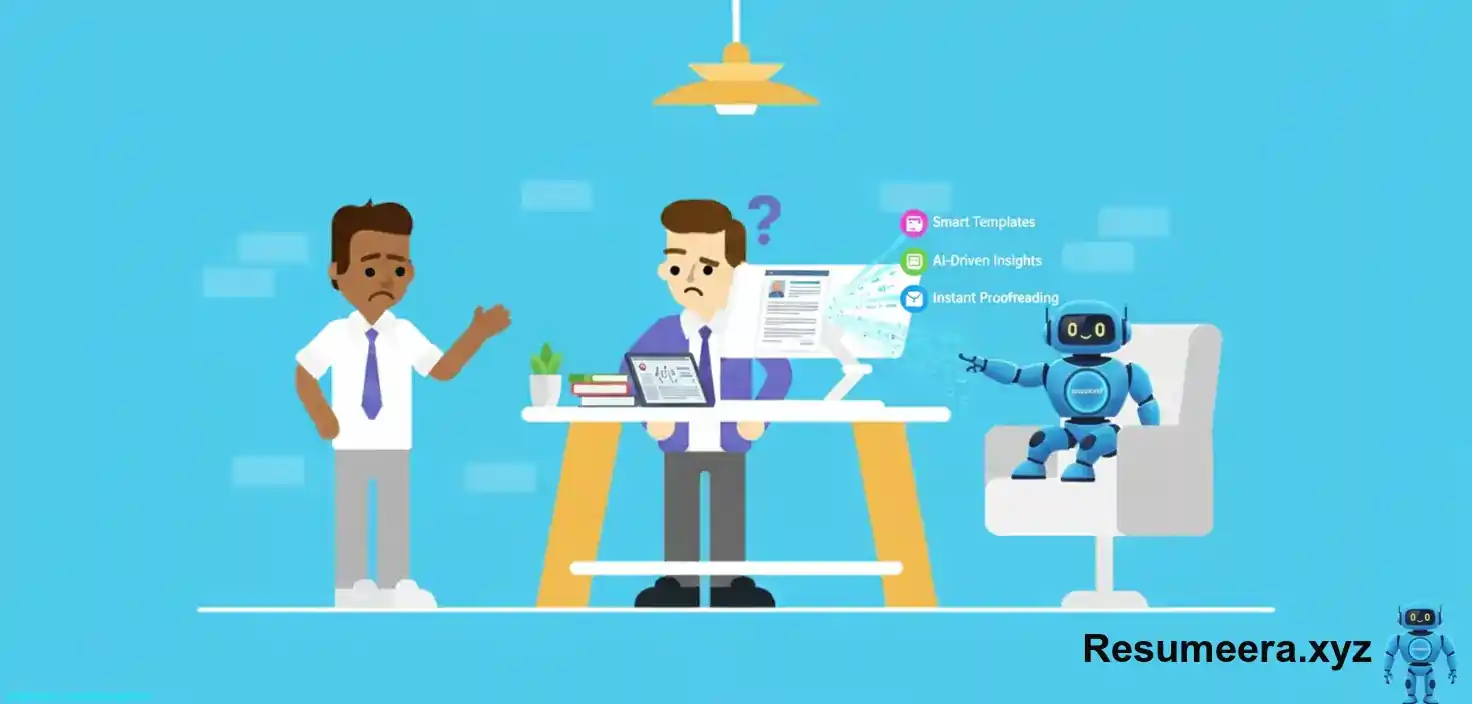
Using AI to write your resume in 2026 can be a smart move if you do it correctly, but blindly copying AI-generated content can cost you interviews. For Indian job seekers applying through Naukri, LinkedIn, Indeed, and company career portals, the difference between an AI-assisted resume that gets shortlisted and one that gets rejected by an ATS comes down to accuracy, formatting, and personalisation. AI tools can fix grammar, suggest stronger action verbs, tailor keywords for a specific job description, and structure your resume in minutes, yet they cannot verify your actual achievements, understand the context of your work at TCS, Infosys, Wipro, or a startup in Bengaluru, or decide which format a recruiter in Mumbai or Delhi expects. This guide explains exactly when to use AI, when to avoid it, how Indian recruiters and ATS software detect generic AI resumes, and the step-by-step method to use AI without losing your personal voice or getting filtered out.
What AI Resume Writing Actually Means in 2026
AI resume writing does not mean letting a tool invent your entire career history with one click. In 2026, it means using generative AI, resume builders, and writing assistants to draft, improve, and optimise content that you provide. You still supply the facts — your education, companies, job titles, years of experience, skills, and measurable results — and the AI helps you phrase them more effectively for recruiters and Applicant Tracking Systems. For a fresher from Pune applying for a software developer role or an experienced sales manager in Hyderabad targeting a leadership position, the input quality determines the output quality. If you give vague prompts like "write my resume", you will get a vague, generic document. If you give specific inputs like "BCA graduate, 2024, internship at local digital marketing agency for 3 months, handled Instagram content and ran 2 paid campaigns with Rs. 15,000 budget", the AI can produce a relevant, targeted bullet point.
How AI Tools Generate Resume Content
Most AI resume tools work on large language models trained on millions of resume examples, job descriptions, and hiring patterns. When you enter a job title and paste a job description from Naukri or LinkedIn, the tool identifies repeated keywords, required skills, and preferred qualifications. It then rephrases your experience to include those terms, corrects sentence structure, and suggests a clean layout. For example, if a job description for a Business Analyst in Gurugram mentions "SQL, Power BI, stakeholder management, and requirement gathering" five times, the AI will recommend adding those exact phrases if they match your real skills. Advanced tools also score your resume against the job description and suggest improvements for ATS compatibility, such as removing tables, graphics, and text boxes that older ATS versions used by many Indian IT services and manufacturing companies cannot parse.
However, AI does not fact-check. It may hallucinate metrics, invent tools you never used, or add a location to a job description incorrectly. It also tends to use the same overused phrases like "results-driven professional" or "passionate team player" which recruiters in India see hundreds of times a week. That is why every AI draft needs a thorough human review. You must verify dates, percentages, company names, and technical skills before submitting.
Types of AI Resume Tools Available to Indian Job Seekers
Indian candidates in 2026 typically encounter four categories of AI help. First, general chatbots like ChatGPT, Gemini, and Copilot, where you paste your details and ask for a rewrite. Second, dedicated AI resume builders such as Rezi, Kickresume, Enhancv, and several Indian platforms that offer templates, content suggestions, and ATS scores. Third, writing assistants built into Microsoft Word with Copilot, which can generate a professional summary from your draft bullet points and refine language while keeping the document in .docx format. Fourth, ATS optimisation tools that scan your resume against a specific Naukri job posting and tell you which keywords are missing. Each has a different strength. Chatbots are flexible for rewriting, builders are good for quick formatting, Word Copilot is useful for keeping full editing control, and scanners are best for final keyword tuning. For most Indian job seekers, a combination works best: draft in Word, use a chatbot for language improvement, and run a final ATS scan before exporting to PDF.
- General AI chatbots: Best for rewriting bullet points, creating summaries, and tailoring to job descriptions. Requires strong prompts and manual fact-checking.
- AI resume builders: Best for freshers who need structure and design quickly. Often limited to PDF and Word exports and may add generic content if inputs are weak.
- Microsoft Word Copilot: Best for experienced professionals who want to keep editing access, control formatting, and then export to PDF after checking layout.
- ATS keyword scanners: Best for final optimisation before applying on Naukri, LinkedIn Easy Apply, or company portals that use Taleo, Workday, or Zoho Recruit.
Real Benefits of Using AI for Your Resume in the Indian Job Market
When used as an assistant rather than a replacement, AI offers clear advantages, especially in India where competition is high and recruiters spend only 6 to 8 seconds on an initial scan. For a fresher with limited experience, AI can turn a basic internship description like "worked on social media" into a stronger, metric-focused point: "Created 30+ Instagram creatives and assisted in 2 paid campaigns that increased follower engagement by 18% in 3 months." For an experienced professional with 7 years in operations, AI can help translate long, paragraph-style duties into concise, achievement-oriented bullets that hiring managers prefer. This is particularly useful when you are switching domains, such as moving from customer support to business analysis, and need help framing transferable skills.
AI is also highly effective at fixing common language issues. Many Indian candidates are technically strong but lose marks due to grammar errors, inconsistent tense, or overly long sentences. AI can standardise your language, replace weak verbs like "did" or "handled" with stronger ones like "executed", "coordinated", or "resolved", and ensure consistent formatting across sections. It can also generate multiple versions of your professional summary for different roles — one for a Data Analyst position focusing on SQL and Excel, another for a Product Analyst role focusing on stakeholder communication — without you starting from scratch each time. This saves hours when you are applying to 15 to 20 jobs per week on Naukri and LinkedIn.
Another practical benefit is keyword alignment. Most large Indian employers, from banks like HDFC and ICICI to IT firms like HCLTech and Tech Mahindra, use an ATS to filter resumes before a human sees them. If your resume does not contain the exact keywords from the job description, it may be ranked low even if you are qualified. AI can quickly compare your resume with the job posting and suggest natural inclusion of terms like "GST reconciliation", "manual testing", "SAP MM", or "digital marketing" where relevant. This targeted tailoring can lift your ATS match score significantly without keyword stuffing, which recruiters easily detect.
Where AI Adds the Most Value for Freshers and Experienced Professionals
For freshers and recent graduates from Tier 2 and Tier 3 colleges, AI helps compensate for lack of professional writing experience. It can suggest the right resume format — typically reverse-chronological for freshers with internships or functional for those with gaps — and ensure your education, projects, and certifications are presented clearly. For example, a BCom fresher applying for an accounting role can use AI to properly highlight Tally, Advanced Excel, and GST filing learned during a 6-month course, rather than burying it at the bottom. For experienced candidates, AI is most valuable for condensing a 3-page resume into a sharp 1 or 2-page document, prioritising the last 5 to 7 years of experience, and quantifying impact with numbers that Indian recruiters trust, such as "Reduced invoice processing time by 30% for a team handling 500+ invoices monthly" instead of "Responsible for invoice processing."
Serious Risks and Limitations You Must Know Before Relying on AI
The biggest risk of using AI to write your resume is factual inaccuracy. AI models predict the next likely word, they do not know your real career. If you do not provide exact numbers, they will invent them. A tool might add "Increased sales by 45%" or "Proficient in Python and Tableau" even if you never achieved that or never used those tools. In India, where background verification by third-party agencies is standard for most MNCs and startups, any mismatch between your resume and your actual documents, payslips, or references can lead to immediate rejection or even blacklisting. Recruiters in Bengaluru, Hyderabad, and Pune routinely cross-check claimed projects on GitHub, LinkedIn, and during technical interviews.
The second major limitation is generic, detectable language. Recruiters who review 200+ resumes daily for a single opening on Naukri can quickly spot AI-written summaries that sound identical. Phrases like "Highly motivated professional seeking a challenging role to leverage my skills" appear in thousands of AI drafts and signal low effort. AI also struggles with context specific to the Indian market, such as explaining a career gap due to preparing for government exams, describing a family business role, or correctly representing a 3-year diploma versus a BTech degree. It may also suggest a US-style resume format with an objective statement, which is outdated for most Indian corporate roles where a concise professional summary of 3 to 4 lines is preferred.
Privacy is another concern. Pasting your full resume with phone number, email, PAN details, or current CTC into a free, unknown AI website can expose your data. Stick to reputable tools and avoid uploading sensitive personal information. Finally, over-dependence on AI can weaken your interview preparation. If AI writes that you "Led a team of 5 and managed Agile sprints", you must be ready to answer detailed follow-up questions about team size, sprint duration, and tools like Jira. If you cannot explain what is on your resume, the interviewer will assume it is exaggerated.
Use AI to improve how you say it, never to invent what you did. Every number, tool, and achievement on your resume must be something you can prove in an interview or background check.
What Indian Recruiters and ATS Really Think About AI Resumes
Indian recruiters are not against AI, they are against lazy AI use. Talent acquisition teams at large companies using systems like Taleo, SuccessFactors, Workday, and Zoho Recruit report that 30 to 40% of resumes now show signs of AI generation, but only a small fraction are well-edited. A well-edited hybrid resume — where AI helped with language and formatting but the candidate added real, specific achievements — performs the same as a fully human-written one. A fully AI-generated, generic resume is often ranked lower by both ATS and human reviewers because it lacks specificity, uses keyword stuffing, and fails to match the exact experience level requested.
ATS software itself does not reject a resume simply because it was written with AI. It checks for parseability, keyword match, and structure. Problems arise when AI builders use heavy design elements, columns, icons, infographics, or tables that older ATS models cannot read. Many Indian SMEs and recruitment consultancies still use older ATS versions that require a simple, single-column Word or PDF layout. If your AI template uses two columns, text boxes for skills, or images for progress bars, the ATS may misread your work history or skip your skills section entirely. That is why the safest approach is to keep a clean, ATS-friendly master resume in .docx format and export a visually identical PDF only after checking fonts, spacing, and alignment.
| Feature | Fully AI-Generated Resume | Human-Written Resume | Hybrid (AI + Human Edit) - Recommended |
|---|---|---|---|
| Content Accuracy | High risk of hallucinated metrics and skills | Accurate but may have grammar and phrasing issues | Accurate and well-phrased after verification |
| ATS Compatibility | Often low due to fancy templates and graphics | High if simple layout is used | High when using clean Word/PDF template |
| Keyword Optimisation | May stuff keywords unnaturally | May miss important keywords from job description | Balanced, natural keyword inclusion |
| Recruiter Perception in India | Seen as generic and low effort | Seen as authentic but may be poorly formatted | Seen as professional, specific, and credible |
| Time Required | 5-10 minutes but needs heavy correction | 3-5 hours for a strong draft | 45-90 minutes for a tailored, verified resume |
| Interview Success Rate | Low, candidate struggles to defend claims | Moderate to high | Highest, content is both strong and defensible |
LinkedIn and Naukri algorithms also matter. When you upload a resume to Naukri, its parser extracts skills for its own search database. If your resume says "Proficient in MS Office" but the recruiter searches for "Advanced Excel, VLOOKUP, Pivot Tables", you will not appear in results. A hybrid approach lets you use AI to identify those specific skill phrases from the job description and add them honestly to your skills section, improving discoverability without lying.
How to Use AI Correctly: Step-by-Step Process to Create an ATS-Friendly Resume
The goal is to let AI handle drafting and polishing while you retain full control over facts and final design. Follow this process for every job you apply to, especially when targeting competitive roles in IT, finance, marketing, and core engineering in India. Keep your master resume updated and create a tailored version for each application.
- Prepare your raw facts first. Open a blank document and list your actual details without worrying about language: education with years and percentages or CGPA, each job with company name, location, exact dates, job title, 3 to 5 real duties, and any numbers like team size, budget handled, tickets resolved, or sales achieved. For freshers, list projects, internships, and certifications with duration and tools used.
- Choose the right resume format. For most Indian job seekers, use reverse-chronological format. Freshers with no experience can use a skills-based format that highlights projects and education. Select a simple, single-column template in Word (.docx) with clear headings: Contact, Summary, Skills, Experience, Education, Certifications. Avoid templates with heavy colours, photos, or two columns.
- Generate a first draft with a specific prompt. Paste your raw facts into your chosen AI tool and use a detailed prompt such as: "Rewrite these work experiences into 4 concise bullet points each, starting with strong action verbs, including metrics where provided, and optimising for ATS. Do not add new skills or numbers. Keep language suitable for an Indian recruiter." This prevents hallucination.
- Tailor to the specific job description. Copy the job description from Naukri or LinkedIn, paste it with your draft, and prompt: "Compare my resume with this job description for a [Job Title] role. List missing keywords that I actually possess and suggest where to add them naturally without stuffing." Only add keywords you truly have.
- Human edit for truth and voice. Read every line aloud. Remove any skill or achievement you cannot explain. Replace generic AI phrases with your own specifics. For example, change "Managed social media efficiently" to "Scheduled 20 posts per month on Instagram and LinkedIn using Meta Business Suite for a D2C skincare brand." Add context Indian recruiters understand, like "Handled GST filing for 40+ clients monthly" or "Supported UAT for core banking migration."
- Fix formatting for ATS. Ensure you use standard headings (Work Experience, not My Journey), simple fonts like Calibri or Arial 10.5 to 11 pt, no tables or text boxes, and bullet points using plain dots. Keep file name professional: FirstName_LastName_Resume.pdf. Save the master in .docx first to retain editing access.
- Check file format as per employer instruction. If the job ad says "Send resume as PDF", export to PDF and open it to verify layout, fonts, and spacing are intact on mobile and desktop. If it says DOC or DOCX, or if you are applying via an older ATS portal, submit the Word version. When no format is specified, PDF is the safest for preserving design, but keep a Word copy ready.
- Run a final ATS and grammar check. Use a free ATS scanner or ResumeEra.xyz tools to check keyword match, readability, and parsing errors. Run spell check in Indian English. Ask a friend or mentor to review for 2 minutes and tell you what role you seem fit for — if they cannot guess, your summary needs clarity.
This 8-step method typically takes 60 to 90 minutes for the first resume and 20 to 30 minutes for each tailored version after that. It gives you the speed of AI with the credibility of human verification, which is exactly what Indian hiring managers want to see.
AI Resume Format and Template Rules: PDF vs Word for Naukri and LinkedIn
Format is where many AI resume builders fail Indian candidates. A beautiful design that looks good on screen may be unreadable to an ATS. The rule is simple: content first, design second. For Naukri, Indeed, and most company portals in India, a clean, text-based resume parses best. LinkedIn Easy Apply also prefers simple formatting because it auto-fills fields from your resume. If the parser cannot read your experience due to columns or graphics, your profile may be incomplete and ranked lower.
Always create and save your resume in Word (.docx) first. This keeps full editing access, allows you to quickly tailor keywords, and ensures compatibility with older ATS models that specifically request DOC or DOCX. Before submitting, check the job advertisement for file format instructions. If a PDF is requested, save the Word document as a PDF, then open the exported file and check that headings, bullets, fonts, and spacing have not shifted. Test by opening the PDF on your phone — many recruiters in India first view resumes on mobile. If the text appears jumbled or cut off, fix it in Word and re-export. Avoid scanned PDFs or image-based resumes, as ATS cannot read text inside images.
For template choice, prefer a single-column layout with clear section breaks, adequate white space, and no header or footer for critical information like contact details, since some ATS ignore headers and footers. Use bold for job titles and company names, and keep colour minimal — black text with one dark blue accent for headings is enough. Tools like Microsoft Word offer free ATS-friendly templates that arrange information clearly and precisely, and you can use AI writer within Word to create a professional summary from your draft ideas, then refine language and flow while keeping experience accurate using the document editor. This approach keeps you in control of the final file rather than relying on a builder that limits exports to PDF only.
Common Mistakes Indians Make When Using AI to Write Resumes
Even with good intentions, many job seekers in India make avoidable errors when using AI that lead to rejection. Recognising these mistakes can save you weeks of unsuccessful applications.
- Copying AI output without verification: Submitting a resume that claims "Expert in Advanced Python, Machine Learning" when you only completed a 2-week online course. During a technical round in any Indian IT company, you will be asked to code, and the gap will be obvious.
- Using the same AI resume for every job: Sending an identical resume to a Digital Marketing role and a Content Writing role. AI can tailor quickly, but you must actually do it. A generic resume that tries to cover everything impresses no one and ranks low on ATS for specific roles.
- Keyword stuffing: Adding a long list of skills like "SQL, Python, Java, C++, AWS, Azure, Power BI, Tableau" at the bottom just because AI suggested them, even though you only know Excel and SQL. Recruiters and ATS both penalise irrelevant keyword stuffing.
- Choosing fancy AI templates with columns and graphics: Using a two-column design with skill bars, pie charts, or icons. These may look modern but often fail ATS parsing and hide your experience from recruiters who use Naukri's resume database search.
- Leaving AI's generic summary: Keeping a summary like "A dedicated and enthusiastic professional looking for a challenging opportunity to grow" which says nothing about your actual value. Replace it with a specific 3-line summary: "BBA graduate with 1 year of experience in inside sales, handling 40+ outbound calls daily and achieving 110% of monthly target for 3 consecutive months. Skilled in CRM and lead qualification. Seeking a Business Development role in Mumbai."
- Ignoring file format instructions: Sending a PDF when the company portal explicitly asks for DOCX, or sending a Word file with broken formatting because you never opened it after export. Always follow the format named in the job advertisement.
- Not updating LinkedIn to match the resume: Your Naukri and LinkedIn profiles show different job titles or dates than your resume. Indian recruiters cross-check both, and inconsistency raises doubts about credibility. Use AI to also update your LinkedIn headline and About section consistently.
- Overlooking Indian English and local context: Using US spellings and terms like "GPA 4.0" or "Sophomore" that confuse Indian recruiters. Use percentages or CGPA out of 10, mention relevant Indian certifications like NISM, CA Inter, or NPTEL, and keep language in standard Indian English.
Avoiding these mistakes is more important than having a perfect design. A simple, truthful, well-tailored resume that you can confidently explain will always outperform a flashy AI-generated document that you cannot defend.
Frequently Asked Questions About Using AI to Write Your Resume
Should I let AI write my entire resume from scratch?
No. Let AI help you draft and polish, but you must provide the facts and do the final edit. Give AI your real education, job titles, dates, and achievements, then ask it to rewrite for clarity and ATS keywords. Never let it invent numbers, tools, or experiences. A hybrid approach where you verify every line is the safest and most effective for the Indian job market.
Will Indian companies reject my resume if they detect it was written with AI?
Companies do not reject resumes simply for using AI help, they reject generic, inaccurate, or poorly formatted resumes. If your AI-assisted resume is specific, truthful, and uses a clean ATS-friendly layout, recruiters will treat it like any other professional resume. Problems arise only when the content is vague, exaggerated, or clearly copy-pasted without personalisation.
Is it better to submit my resume as PDF or Word (DOCX) in India?
Save your master resume in Word (.docx) to keep editing access. If the job ad specifies a format, follow it exactly. If no format is specified, PDF is generally best for preserving formatting on any device, but older ATS models used by some Indian firms parse DOCX more reliably. When in doubt, keep both versions ready and submit PDF unless DOCX is requested. Always open the exported file to check layout before sending.
Can AI help me tailor my resume for different jobs on Naukri and LinkedIn?
Yes, and this is one of its best uses. Paste the job description and your current resume into an AI tool and ask it to suggest natural keyword additions and bullet rewrites that match the role. For example, tailoring one version for "Customer Support Executive" and another for "Client Success Associate" can improve your ATS match score. Just ensure you only add skills you actually possess.
How do I make my AI-written resume pass ATS software?
Use a simple, single-column template with standard headings like Work Experience, Education, and Skills. Avoid tables, text boxes, images, and headers or footers for important details. Use plain bullet points, standard fonts like Calibri or Arial, and include exact keywords from the job description where relevant. Save in .docx first, then export to PDF and test parsing with a free ATS scanner.
Is it safe to upload my resume to free AI resume builders?
Use only reputable, well-known tools and avoid uploading sensitive data like PAN, Aadhaar, full address, or current CTC. Free unknown sites may store or misuse your data. For safety, use AI within Microsoft Word, trusted builders that clearly state privacy policies, or offline editing after generating content. Always redact highly personal information before pasting into any online tool.
As a fresher with no work experience, can AI still help me create a strong resume?
Absolutely. AI can help freshers structure academic projects, internships, volunteer work, and certifications into impactful bullet points. Provide details like project title, duration, tools used, and what you learned, and ask AI to frame it as achievement-oriented points. For example, turn "Made a college project on sales analysis" into "Analysed 6 months of sales data for a local retailer using Excel (Pivot Tables, VLOOKUP) and presented insights that suggested a 12% inventory cost reduction."
How much should I edit an AI-generated resume before sending it?
Edit every single line. Check dates, company names, job titles, percentages, and all numbers. Remove any skill you cannot demonstrate. Replace generic phrases with specific, quantifiable achievements from your real work. Read it aloud to ensure it sounds like you and that you can answer interview questions on every point. A good rule is to spend at least 30 minutes reviewing a 1-page AI draft before submission.
Using AI to write your resume in 2026 is not about choosing between human or machine, it is about combining both intelligently. AI gives you speed, better language, and keyword precision for competitive portals like Naukri and LinkedIn, while your personal input ensures truth, context, and credibility that Indian recruiters value. Start with your real facts, use AI to draft and tailor, verify every claim, keep your format simple and ATS-friendly in Word and PDF, and avoid the common mistakes of copying generic content. When you treat AI as a skilled assistant rather than a ghostwriter, you get a resume that not only passes the ATS but also gives you the confidence to defend every word in the interview room. Build your master resume today, tailor it for each role, and let your actual achievements speak clearly.