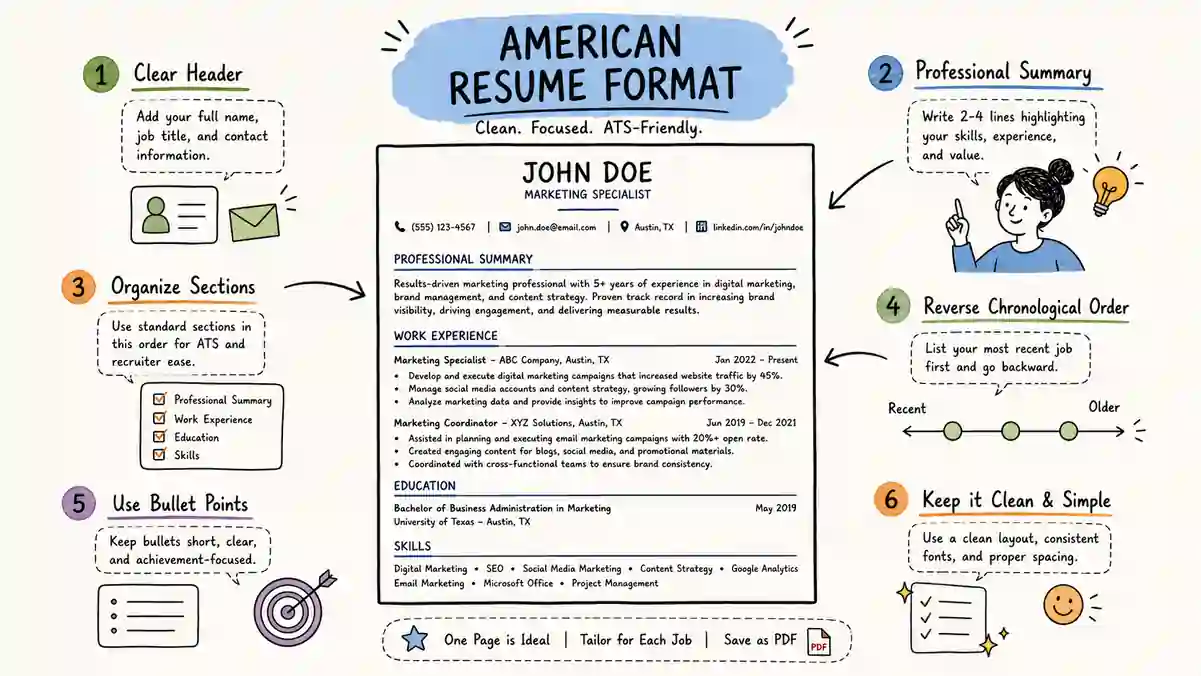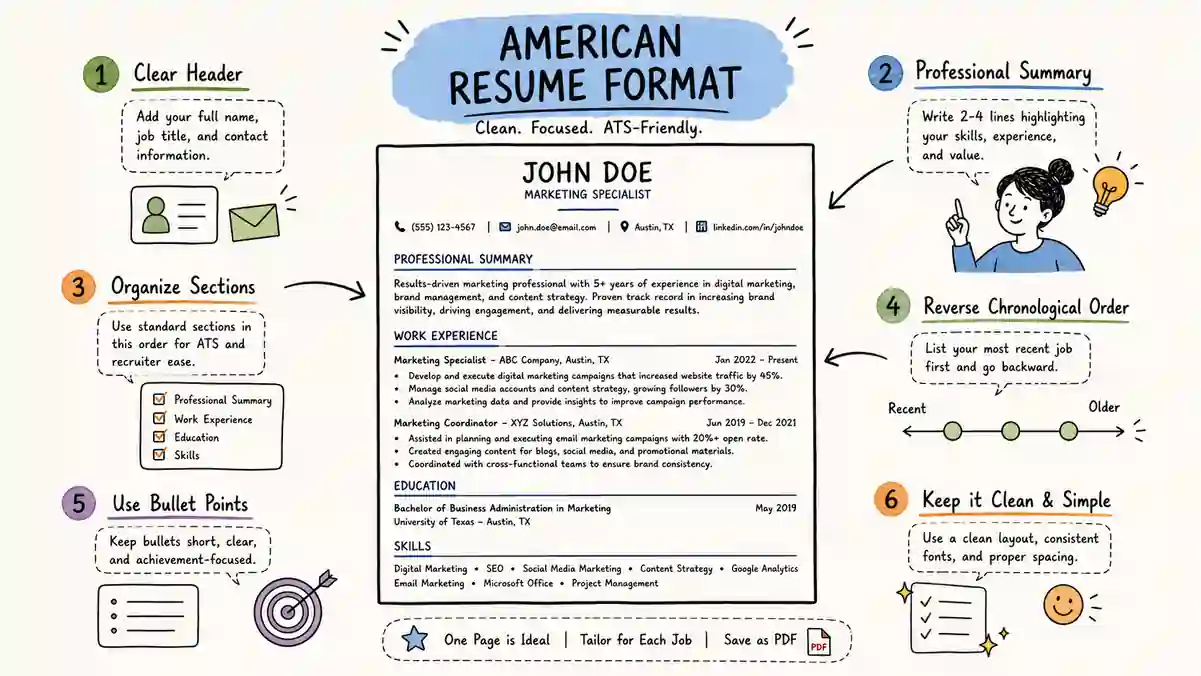
In the competitive United States job market, the first step toward success is mastering a strictly standardized document structure. The American resume format is not merely a piece of paper; it is a precision-engineered marketing tool designed to pass through Applicant Tracking Systems (ATS) and capture a hiring manager's attention within six seconds. Unlike international CVs or academic portfolios, the US resume demands brevity, strict relevance, and quantified, results-oriented content above everything else.
Understanding every nuance of the American resume format is critical for both domestic candidates and international applicants. A single deviation — including a photo, a full address, or an "Objective" statement — can result in immediate rejection regardless of your qualifications. This 2026 guide dissects the complete anatomy of a winning US resume, provides a section-by-section best practice breakdown, covers ATS optimization, and offers special guidance for Indian and international professionals targeting the American job market. Start with a strong foundation by reading our complete guide on how to write a resume in 2026, then apply the US-specific rules covered here.
Free Resume Builder
Don’t let a weak resume decide your future.
Thousands of people are getting rejected — not because they’re bad, but because their resume doesn’t speak for them. Make a resume that actually gets shortlisted.
Your next job is closer than you think.
Start in 2 minutes.
No complicated forms. Just pick a template, fill details, And Apply.
Apply Now Your Job →The Core Philosophy of the American Resume
The fundamental difference between an American resume and its global counterparts is purpose and selectivity. In the US, a resume is a one-to-two page curated summary of your professional history, tailored specifically to the role at hand. It is not a complete life history. This makes it fundamentally different from a Curriculum Vitae (CV), which is a comprehensive, multi-page document used only in academia, medicine, or scientific research.
The American market operates on one guiding principle: relevance over completeness. Research consistently shows that hiring managers spend an average of six to seven seconds scanning a resume before deciding whether to read it fully. Your document must immediately answer three questions for the recruiter: Can this person do the job? Will they fit the company culture? What unique, quantifiable value do they bring?
This philosophy demands an achievement-focused approach. Instead of listing daily duties and responsibilities, the American format requires you to articulate outcomes using hard numbers, percentages, and dollar values. The shift from "what I was responsible for" to "what I actually delivered" is the single most important mindset change in US resume writing. For practical help on writing strong achievements, read our guide on resume achievements that impress US recruiters.
Core Characteristics at a Glance
| Element | US Standard | Common Mistake |
|---|---|---|
| Length | 1 page (0–5 yrs), 2 pages (5+ yrs) | 3+ pages for non-executives |
| Photo | Never included | Including a headshot |
| Address | City, State only (e.g., Dallas, TX) | Full street address |
| Format | Reverse-chronological | Functional or creative formats |
| Content Focus | Quantified achievements | Listing job duties only |
| Personal Info | None (no DOB, gender, religion) | Including personal demographics |
| Objective Statement | Never — use Professional Summary | "Seeking a challenging role..." |
Three Primary US Resume Format Types
Before building your content, you must choose the right structural framework. There are three recognized formats in the US market. Choosing the wrong one can undermine your entire application before a recruiter reads a single word. For a complete comparison of all formats, visit our dedicated guide on all major resume formats.
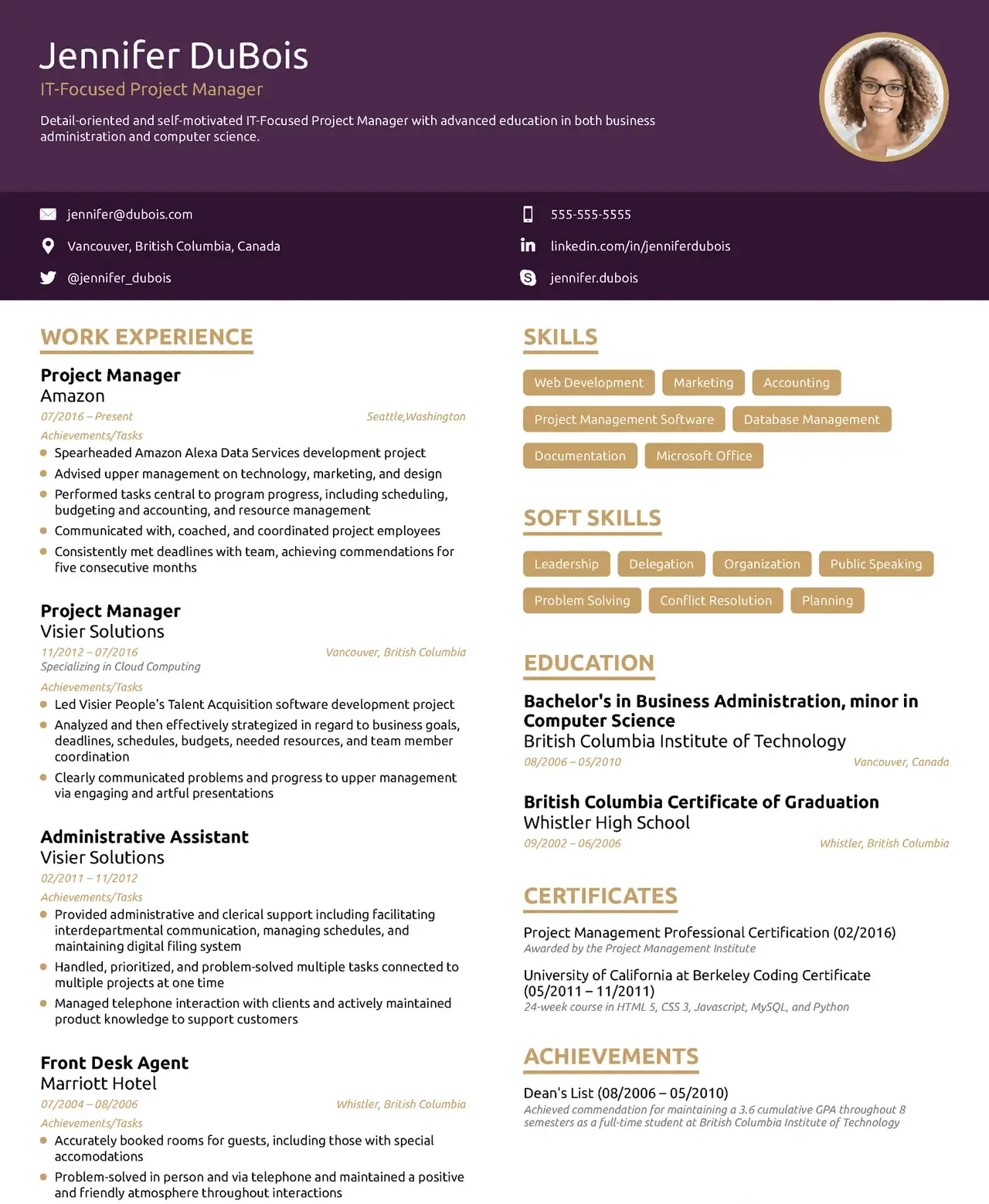
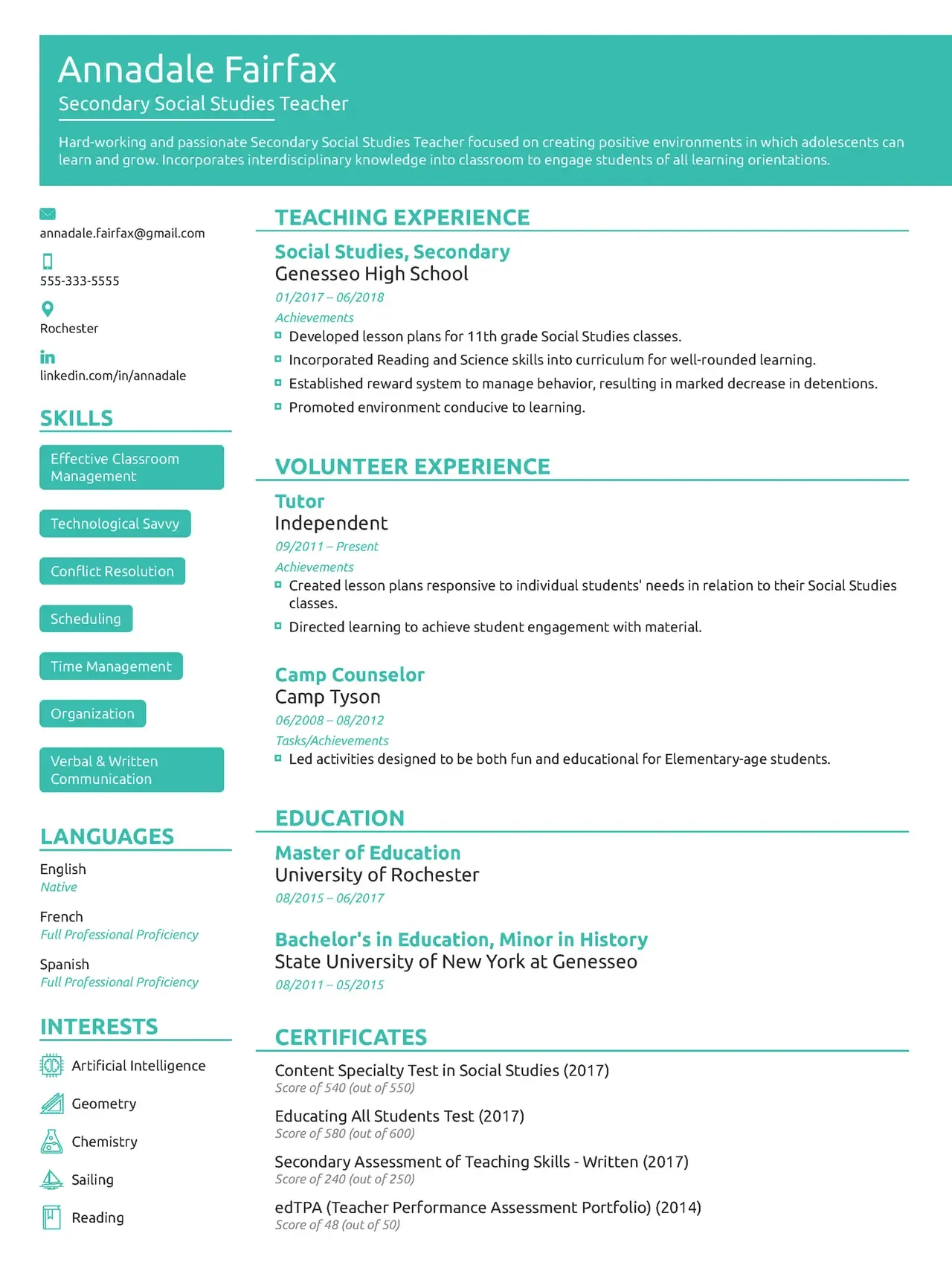
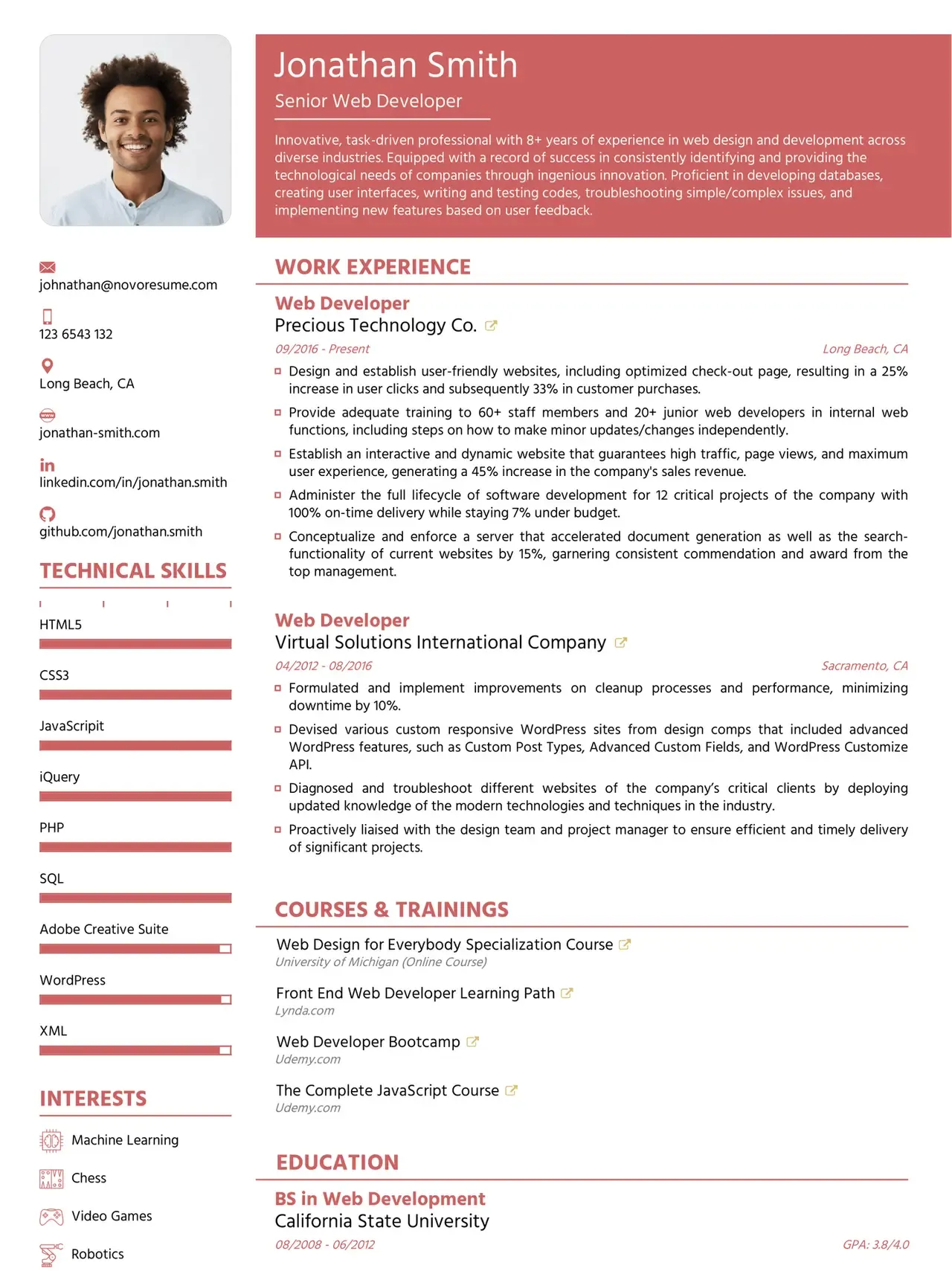
1. Reverse-Chronological Format
This is the gold standard for the American resume format. It lists your work experience starting with the most recent role and moving backward. American recruiters love this format because it provides an instant, scannable view of career progression, showing stability, upward mobility, and a clean employment timeline.
Best for: Candidates with a consistent work history, those targeting a role similar to their current position, and anyone with no significant employment gaps.
Read our complete guide with examples: Reverse-chronological resume format for 2026.
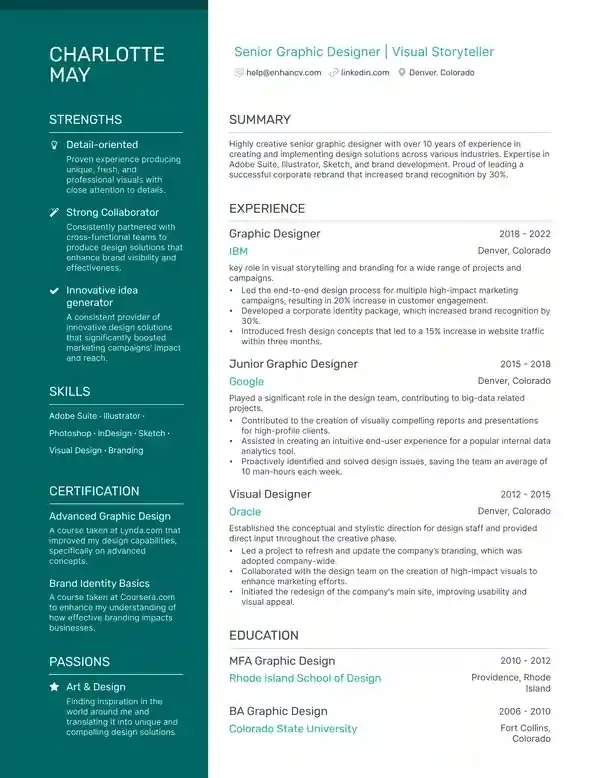
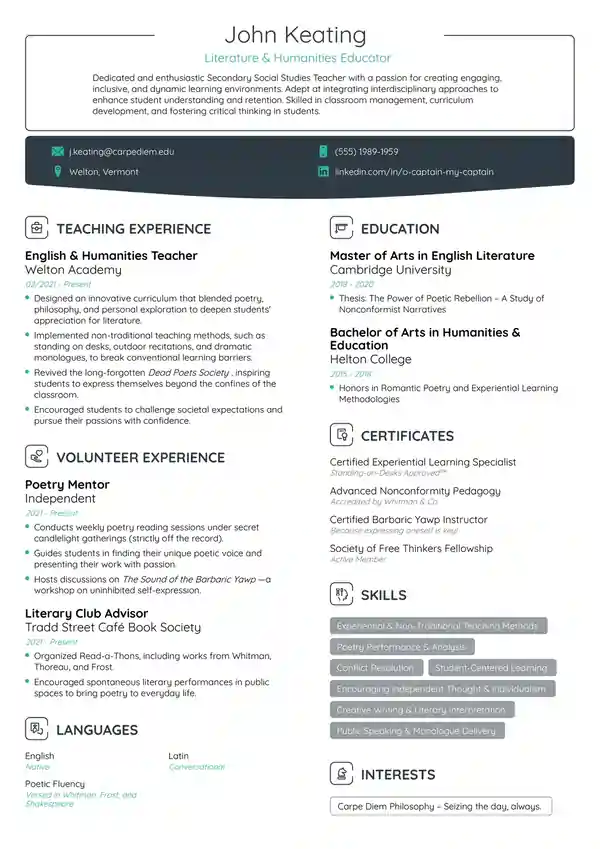
2. Functional (Skills-Based) Format
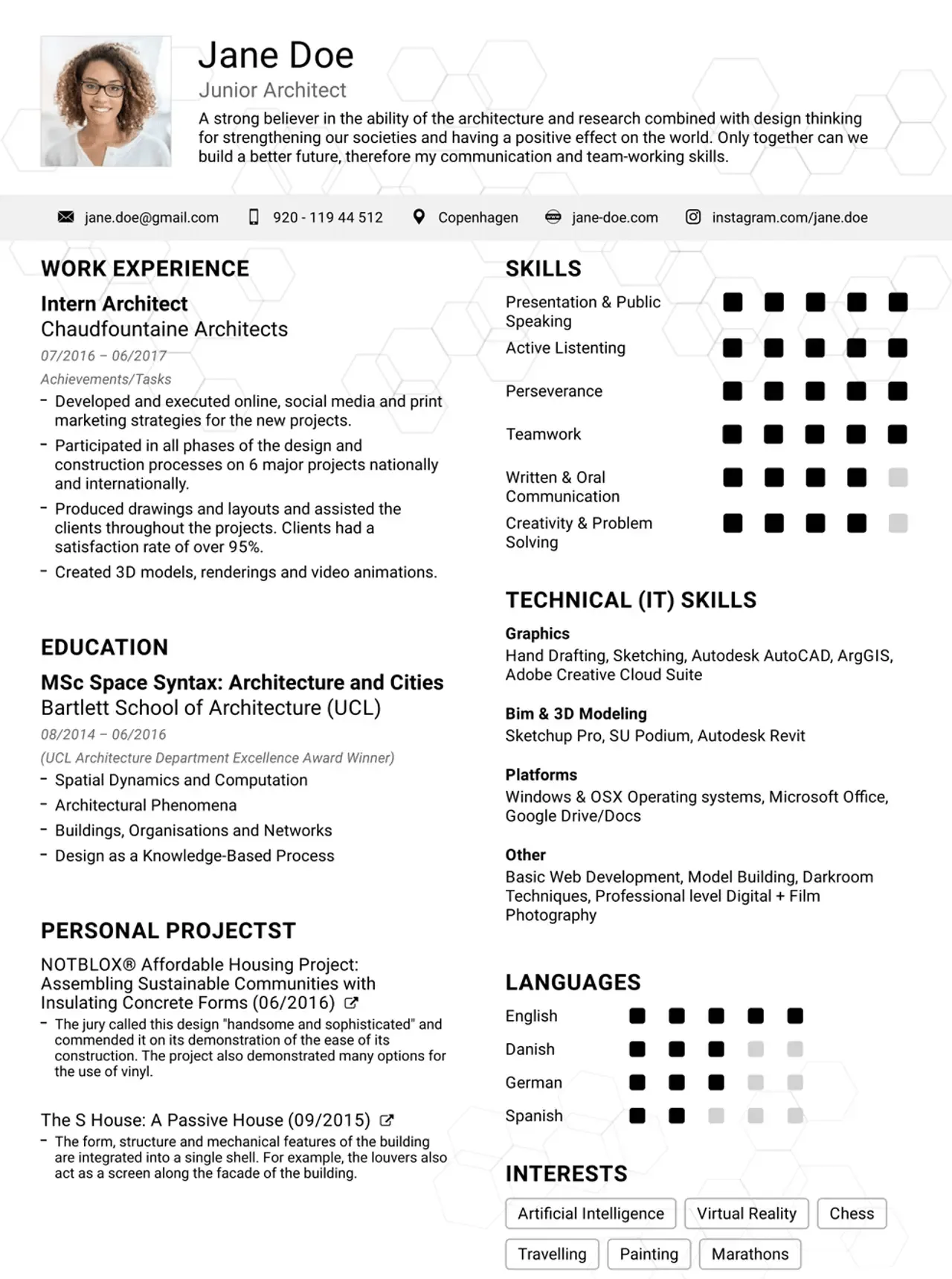
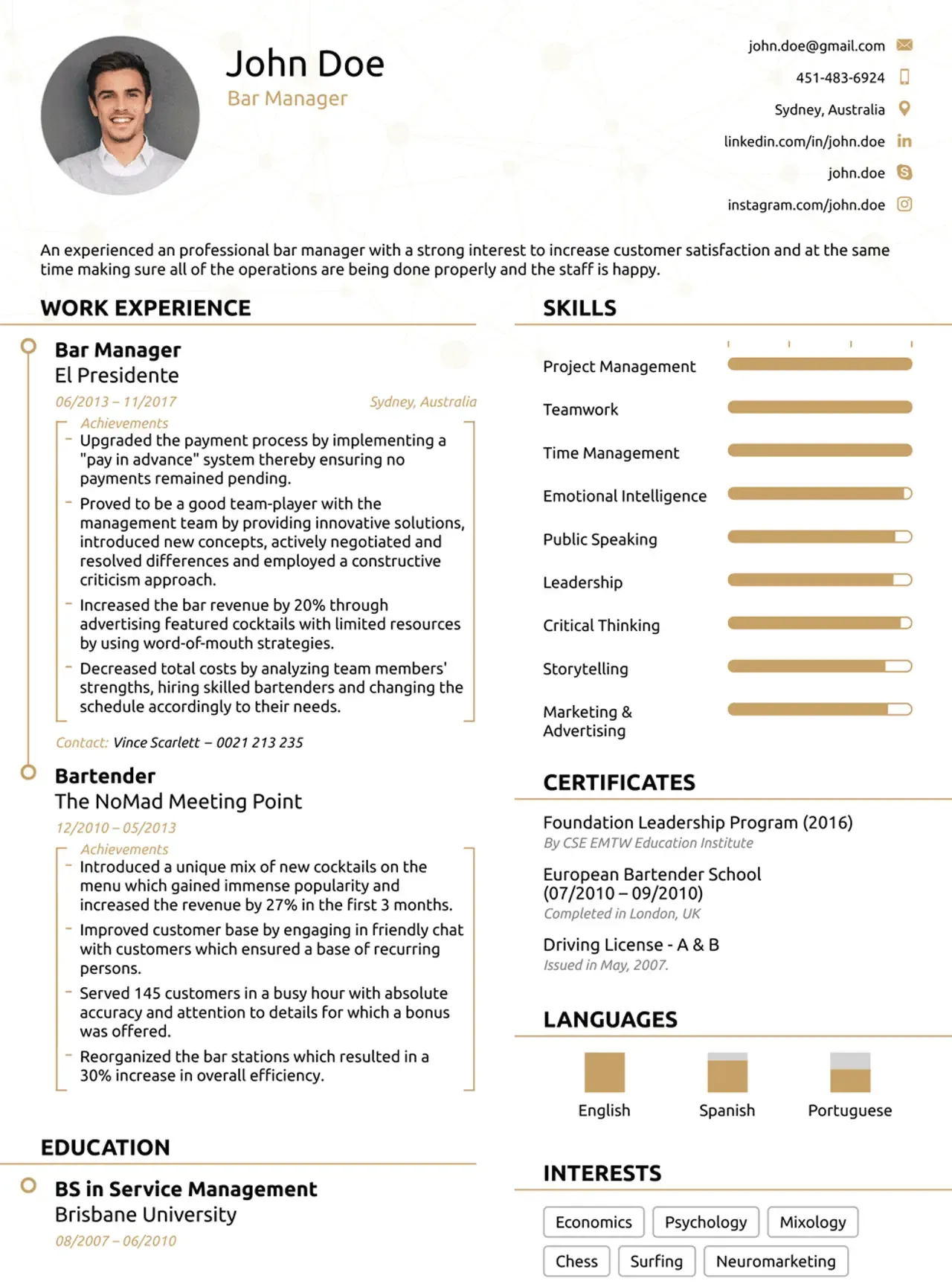
This format groups experience by skill set rather than by date, emphasizing what you can do rather than where and when you did it. However, this format is viewed with significant skepticism by US recruiters. It is often associated with candidates hiding employment gaps or a lack of direct experience.
Best for: Only as a last resort — significant unexplained gaps, or drastic career changes where no other approach is viable.
Understand the risks in detail: Functional resume format — when it works and when it fails.
3. Combination (Hybrid) Format
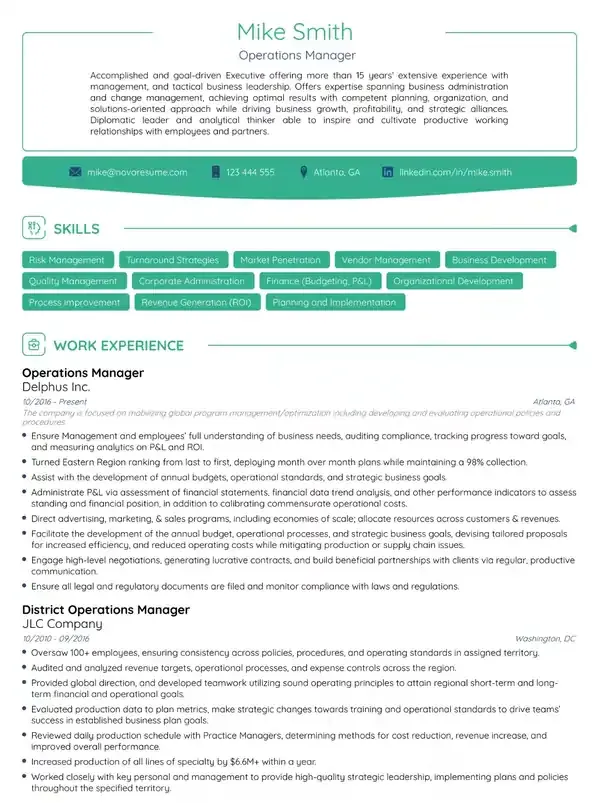
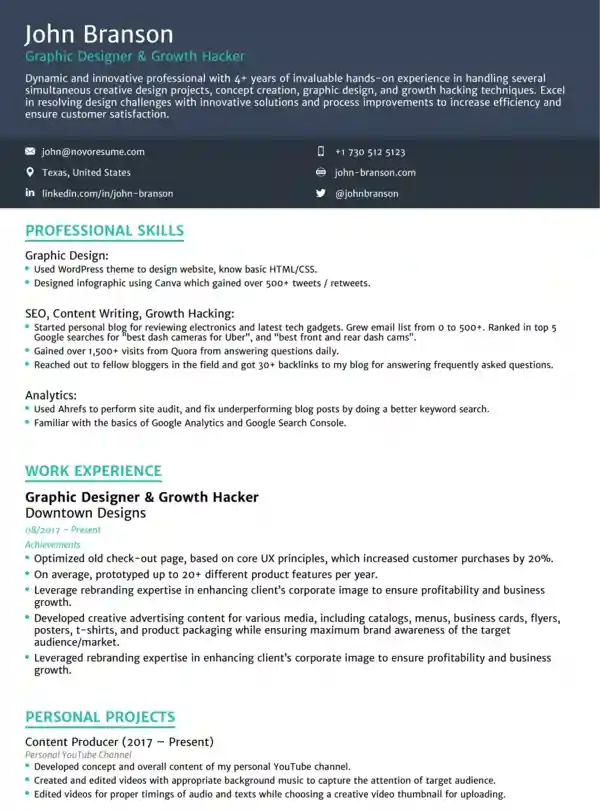
The hybrid format opens with a targeted skills summary, then follows with a reverse-chronological work history. It gives recruiters the competency snapshot they want up front, followed by the timeline they need to verify it.
Best for: Senior professionals, career changers with genuinely transferable skills, and technical specialists who need to highlight a specific technology stack.
Full guidance with examples: Combination resume format for 2026.
Section-by-Section Breakdown of the American Resume
Each section of the US resume has a specific strategic function. Getting even one section wrong can eliminate you from consideration. The 10 essential resume sections for 2026 gives you the complete picture. Below is the US-specific breakdown.
1. Contact Information Header
Your header must be the very first thing a reader sees. Place your full name in a large, bold font (18–22pt). Below it on the same or next line, add:
- City, State (e.g., "Chicago, IL") — no full street address
- Professional phone number
- Professional email (e.g., firstname.lastname@gmail.com)
- LinkedIn profile URL (customized: linkedin.com/in/yourname)
- Portfolio, GitHub, or personal site link (for tech and creative roles)
What to never include: photograph, date of birth, marital status, national ID number, full street address, or religious/political affiliations. See our detailed guide on how to show contact information on your resume in 2026.
2. Professional Summary
The Professional Summary replaces the outdated Objective Statement. In 3–4 lines, it must communicate your title, years of experience, biggest achievement, and the value you bring to the employer. It must be customized for every application.
Weak Example: "Seeking a software engineering role to grow and contribute to a great team."
Strong Example: "Full-Stack Software Engineer with 6+ years of experience building scalable SaaS applications for US fintech companies. Reduced API response time by 60% for a $50M revenue platform. Proficient in React, Node.js, and AWS. Seeking to bring performance-engineering expertise to a high-growth product team."
For 30+ summary examples across different industries and experience levels, read our guide on writing a powerful profile summary for your resume.
3. Work Experience
This is the most critical section and the one recruiters spend the most time on. List every relevant role in reverse-chronological order with: Job Title, Company Name, City/State, Month and Year of employment dates, and 3–5 achievement-focused bullet points.
Each bullet point must follow the "Challenge–Action–Result" (CAR) framework:
- Challenge: What problem existed?
- Action: What did you specifically do?
- Result: What was the measurable outcome?
Weak: "Managed social media accounts for the brand."
Strong: "Grew brand's Instagram following by 180% in 6 months by implementing a content calendar and A/B-tested paid promotion strategy, generating $120K in attributed revenue."
Use strong action verbs to start every bullet: Spearheaded, Architected, Orchestrated, Delivered, Negotiated, Automated. Never use passive voice. Deep dive into writing impactful bullets: how to write resume work experience and resume achievements that get interviews.
If you are a recent graduate or have limited formal experience, supplement this section with academic or personal projects. See our guide on how to list projects on a resume.
4. Education
For experienced professionals (3+ years of work history), place this section after your work experience. Include degree type, major, university name, and location. Include your GPA only if you graduated within the past 2 years and it is 3.5 or above. For those who graduated more than 10 years ago, omit the graduation year entirely to prevent age bias.
If you are applying to new graduate roles without experience, see our guide on new graduate resume format.
5. Skills Section
This section is crucial for ATS matching. Every skill you list must mirror the language used in the target job description. Organize into categories: Technical Skills, Certifications, Languages, and Tools. Never use stars, progress bars, or icons to rate your proficiency — ATS cannot read images and recruiters ignore visual skill ratings. Write plain text: "Proficient in Python, SQL, and Tableau."
For a comprehensive list of high-demand skills to include: key skills for a resume and personal skills for a resume.
6. Optional Power Sections
The following optional sections can significantly strengthen your resume when relevant:
- Certifications: PMP, AWS, CPA, CFA, Google Analytics — listed with issuing organization and year.
- Projects: Particularly powerful for tech roles and fresh graduates. Guide: projects on a resume.
- Volunteer Work: Highly valued by US employers as it demonstrates community engagement and leadership.
- Languages: State proficiency clearly: Native / Fluent / Conversational / Basic.
- Interests and Hobbies: Include only if directly relevant. Read our guide on interests for a resume.
ATS Optimization for the US Job Market
More than 75% of large US companies use ATS software to automatically screen and rank applications before a human reads them. If your document is not properly formatted for machine parsing, it is invisible. Our complete guide on how to build an ATS-friendly resume walks you through every technical detail.
ATS Formatting Rules
- Single-column layout only: Multi-column layouts are frequently scrambled by ATS parsers. Learn why in our article on are Canva resumes ATS-friendly.
- Standard fonts: Arial, Calibri, Helvetica, or Times New Roman at 10–12pt for body text.
- No headers/footers for key content: Some ATS systems skip content placed in document headers and footers entirely.
- No tables for main content: While comparison tables for data are fine, never put your core contact info or work history inside a table.
- File format: PDF preserves formatting; .docx is safer for older ATS systems. Follow the employer's stated preference. Ensure no password protection.
- Standard headings only: Use "Work Experience," "Education," "Skills" — not creative alternatives like "My Journey" or "What I've Built."
ATS Keyword Strategy
Keyword matching is how ATS ranks your resume against other applicants. The system compares your document against the job description and assigns a relevance score. Your goal is to mirror the exact terminology from the job posting, not synonyms or abbreviations. If the job says "Project Management Professional," do not write "PMP" alone — write both.
Best workflow: Copy the job description into a text tool, identify the 10–15 most repeated skills and titles, and ensure they appear naturally in your Summary, Experience bullets, and Skills sections. Then test your document using our free ATS resume checker before submitting. Also review our list of 11 common ATS formatting mistakes and our complete guide on 5 proven ways to get your resume past ATS in 2026.
US Resume Tips for Indian and International Applicants
If you are an Indian professional applying for US-based roles, remote US jobs, or positions with H1B visa sponsorship, you must actively unlearn several formatting habits that are standard in India but are instant red flags in America.
Key Differences: Indian Resume vs American Resume
| Element | Indian Resume (Common) | American Resume (Required) |
|---|---|---|
| Photo | Often included | Never included |
| Date of Birth | Standard to include | Never included |
| Father's Name | Sometimes included | Never included |
| Marital Status | Often listed | Never included |
| Length | Often 3–4 pages | Strictly 1–2 pages |
| Content Focus | Job duties and responsibilities | Quantified achievements only |
| Address | Full address with PIN | City, State only |
Additional guidance for Indian professionals targeting US roles:
- Clarify your education equivalency: "B.Tech in Computer Science (equivalent to US Bachelor of Science in Computer Science)" removes any ambiguity for American HR teams.
- Use US English spelling: "Analyze" not "Analyse," "Optimize" not "Optimise," "Organize" not "Organise."
- Include time zone availability: If applying for remote US jobs, state your availability in IST/EST overlap hours in your cover letter.
- Work authorization: If you require H1B sponsorship, address this in the application form rather than on the resume to avoid early screening out.
For full guidance on targeting international roles, read our guides on how to write an international resume for 2026 and building a standout resume for global remote jobs.
Industry-Specific American Resume Tips
While the core US resume format stays consistent, each industry has additional unwritten rules. Customizing your approach per industry is essential. Use our tailoring guide: how to tailor your resume for every job application in 2026.
Technology and Engineering
Lead with a strong Technical Skills section listing languages, frameworks, databases, and cloud platforms. Include a Projects section with GitHub links for each build, especially if you are early-career. Quantify system performance improvements, uptime percentages, or deployment cycle reductions. For specific guidance: tech industry resume format for 2026. If you are targeting Google or top US tech firms, review our guide on how to get a job at Google.
Finance and Accounting
Every bullet point must include a financial metric — revenue generated, costs reduced, audit findings resolved, or portfolio size managed. Conservative, clean design with zero flashy elements is mandatory. CPA, CFA, and FRM certifications carry heavy weight and must be prominently placed. Reference format: accountant resume format for 2026.
Healthcare and Nursing
Include specific licensing information, clinical specializations, and certifications (e.g., BLS, ACLS, RN license number and state). For nursing roles, patient volume and outcomes metrics are expected. Prepare your full application package with our guide on nursing interview questions and answers for 2026.
Creative Fields
A subtle design accent is acceptable (one color, one unique font for headings), but the document must remain fully ATS-readable. Your portfolio URL is the most important element in your header — prioritize it. Understand the design balance with our analysis on 6 reasons resume visual design matters.
Career Changers
Use the hybrid format to lead with a strong transferable skills summary before the chronological history. Bridge your previous experience to your new target industry explicitly in your summary and each bullet. Full strategy: career change resume format, transferable skills on a resume, and complete career change guide for 2026.
Common American Resume Mistakes to Avoid
Even experienced professionals make these errors. Review our comprehensive guide on resume proofreading tips to catch mistakes before you apply, and check what makes a good resume look good to recruiters.
Including a Photo
The most common mistake by international applicants. Photos trigger anti-discrimination protocols in the US hiring process. HR teams are trained to discard resumes with photos to protect the company from EEOC violation claims. Remove it without exception.
Using an "Objective" Statement
Objective statements focus on what you want. Professional Summaries focus on what you give. US recruiters actively penalize candidates who still use Objective statements as it signals the candidate is not familiar with modern hiring standards.
Listing "References Available Upon Request"
This phrase has been considered outdated in the US since the early 2000s. Every recruiter assumes references are available. Remove this line and replace it with an additional achievement bullet point.
Using Multi-Column or Canva Templates
Multi-column layouts are visually appealing but ATS-hostile. Many Canva templates fail ATS parsing entirely. Our comparison of ResumeEra vs Microsoft Word resumes and analysis of Canva resume ATS compatibility explain exactly why this is such a costly mistake.
Sending the Same Resume to Every Job
Untailored resumes score poorly in ATS and are instantly recognizable to human recruiters. Always customize. Our guide: how to tailor your resume to any job description.
Building and Downloading Your American Resume for Free
You do not need to pay a subscription fee to build a professional, ATS-optimized American resume. ResumeEra.xyz gives you a completely free resume builder with no hidden fees, no paywall on downloads, and no forced sign-ups. You can build and download your resume without signing up in under 10 minutes.
If you are evaluating tools, here are our honest comparisons:
- ResumeEra vs Zety 2026
- ResumeEra vs Novoresume 2026
- ResumeEra vs ResumeGenius
- ResumeEra vs Resume.io
- ResumeEra vs Enhancv
- ResumeEra vs Kickresume
- ResumeEra vs All Major Resume Builders 2026
Once built, test your document: free ATS resume checker. Then download your final PDF: how to download a professional resume PDF for free.
After the Resume: Preparing for US Interviews
A polished American resume gets you the interview call. What happens next determines whether you get the offer. US hiring processes typically include: recruiter screening call, technical or skills assessment, behavioral interview, and a final panel round. Prepare comprehensively:
- Common interview questions and answers for 2026
- Behavioral interview questions and answers
- Situational interview questions and answers
- 20 situational interview questions — complete list
- 35 smart questions to ask at your interview
- 16 proven tips to ace your US job interview
You will also need a strong cover letter. Read our complete guide on how to write a cover letter that gets you hired in 2026.
People Also Ask
Do I need to include a photo on an American resume?
No. Including a photo on a US resume is strictly prohibited in most industries. US Equal Employment Opportunity Commission (EEOC) guidelines discourage photos to prevent bias in hiring. Including one will often cause recruiters to discard your resume immediately to protect themselves from legal liability. The only exception is acting, modeling, or on-camera media roles.
How long should an American resume be?
One page for candidates with under five years of experience. Two pages maximum for those with five or more years. Three pages are reserved only for senior executives (C-suite) or academic professionals with extensive publication records. Padding a resume with filler to reach two pages does more harm than good.
Should I include my full address on a US resume?
No. Including your full street address is outdated in the US market. The standard is to list only your City, State, and optionally your Zip Code (e.g., "Houston, TX 77002"). For remote job applications, listing your time zone or state is sufficient. Full addresses are also a privacy risk.
What is the best file format for a US resume?
PDF is the most universally accepted format as it preserves your layout across all devices and operating systems. If an employer specifically requests a .docx Word document, comply with that instruction. Always ensure the file has no password protection and that all text is selectable (not embedded in an image). For additional guidance, read our guide on how to download a professional resume PDF for free.
Can I use a functional resume format for US jobs?
Technically yes, but it is strongly inadvisable. US recruiters consistently view the functional resume format with skepticism, as it is associated with hiding employment gaps or lack of direct experience. The reverse-chronological or hybrid format will almost always produce better results with both ATS systems and human reviewers.
What is the difference between a US resume and a CV?
In the US context, a resume is a short (1–2 page), highly focused document tailored for a specific corporate job application. A CV (Curriculum Vitae) is a comprehensive, multi-page document used exclusively in academic, scientific, or medical hiring contexts. If you are applying for corporate or tech roles in the US, you always need a resume, never a CV. Understand the full difference in our guide on how to make a winning CV in 2026.
How do I optimize my American resume for ATS?
Use a single-column layout, standard section headings, clean fonts, and no graphics. Mirror keywords exactly from the job description in your Summary, Experience, and Skills sections. Save as PDF or DOCX. Test before submitting with our free ATS resume checker. Detailed strategy: ATS-friendly resume format for beginners.
How far back should I list work experience on a US resume?
List the last 10–15 years of directly relevant experience. Roles older than this can be summarized under an "Early Career" header or omitted entirely if they are not relevant to the target position. Relevance always takes priority over chronological completeness in the American format.
Conclusion
Mastering the American resume format in 2026 is one of the most direct investments you can make in your career trajectory. The rules are not arbitrary — they exist because the US hiring ecosystem processes millions of applications through ATS filters, and your document must speak the machine's language before it can speak to the human behind the screen. By committing to a clean reverse-chronological layout, leading with quantified achievements, eliminating every trace of personal biography, and precisely matching your language to the job description, you transform your resume from a passive history into an active competitive weapon.
For international and Indian professionals, the gap between familiar resume norms and American expectations is wider than it appears — but entirely bridgeable. The adjustments are structural and stylistic, not substantive. Your experience and skills are the same; the presentation is what must change. Start building your ATS-optimized US resume right now using ResumeEra's completely free resume builder. Test it with our free ATS resume checker. Then walk into the process confident, prepared, and precisely formatted for the American market.
You’re not failing.
Your resume is.
Most people lose jobs before the interview — not because they lack skills, but because their resume looks average. Fix that in 5 minutes.
- ✅ ATS-optimized format
- ✅ Recruiter-friendly design
- ✅ Download instantly (PDF)
⚡ No signup required • 100% Free • Works on mobile
Get shortlisted faster
Pick a template → fill details → download resume.