Introduction
Aaj ke समय में Node JS backend development का सबसे popular और in-demand technology बन चुका है. चाहे आप fresher हों या 1-3 साल का experience रखते हों, Node JS interview questions की तैयारी करना आपके career के लिए बेहद ज़रूरी है. यह article आपको practical, no-fluff guidance देगा जो सीधे interview में काम आएगी.
इस guide में आप सीखेंगे कि कैसे Node.js के core concepts, asynchronous programming, coding patterns, और real-world scenarios को handle करें. साथ ही, हम आपको बताएंगे कि candidates कौन सी common mistakes करते हैं और कैसे smart preparation strategy से आप अपने competitors से आगे निकल सकते हैं.
यदि आप अपना resume तैयार कर रहे हैं या technical interview questions की तैयारी में लगे हैं, तो यह article आपके लिए complete roadmap है।
Table of Contents
-
Basic Node JS Interview Questions
-
Intermediate Node JS Questions
-
Advanced & Scenario-Based Questions
-
Node JS Coding Questions (with Examples)
-
Common HR + Behavioral Questions
-
Mistakes Candidates Make
-
Smart Preparation Strategy
-
FAQ Section
-
Final Summary
Basic Node JS Interview Questions (Freshers के लिए)
1. Node.js क्या है और यह JavaScript से कैसे अलग है?
Node.js एक open-source, cross-platform runtime environment है जो JavaScript को browser के बाहर run करने की सुविधा देता है. यह Chrome के V8 engine पर built है और server-side programming के लिए use होता है.
Browser JavaScript vs Node.js:
-
Browser में JavaScript DOM manipulation और user events को handle करता है
-
Node.js में file system access, networking, और database operations possible हैं
-
Node.js में
fs,http,pathजैसे modules होते हैं जो browser में नहीं मिलते
2. Node.js single-threaded है या multi-threaded?
.webp)
Node.js single-threaded event loop पर काम करता है, जो इसे non-blocking और scalable बनाता है. Internally, यह libuv library के through multiple threads use करता है, लेकिन developer को single-threaded API मिलता है.
3. Event Loop क्या है और यह कैसे काम करता है?
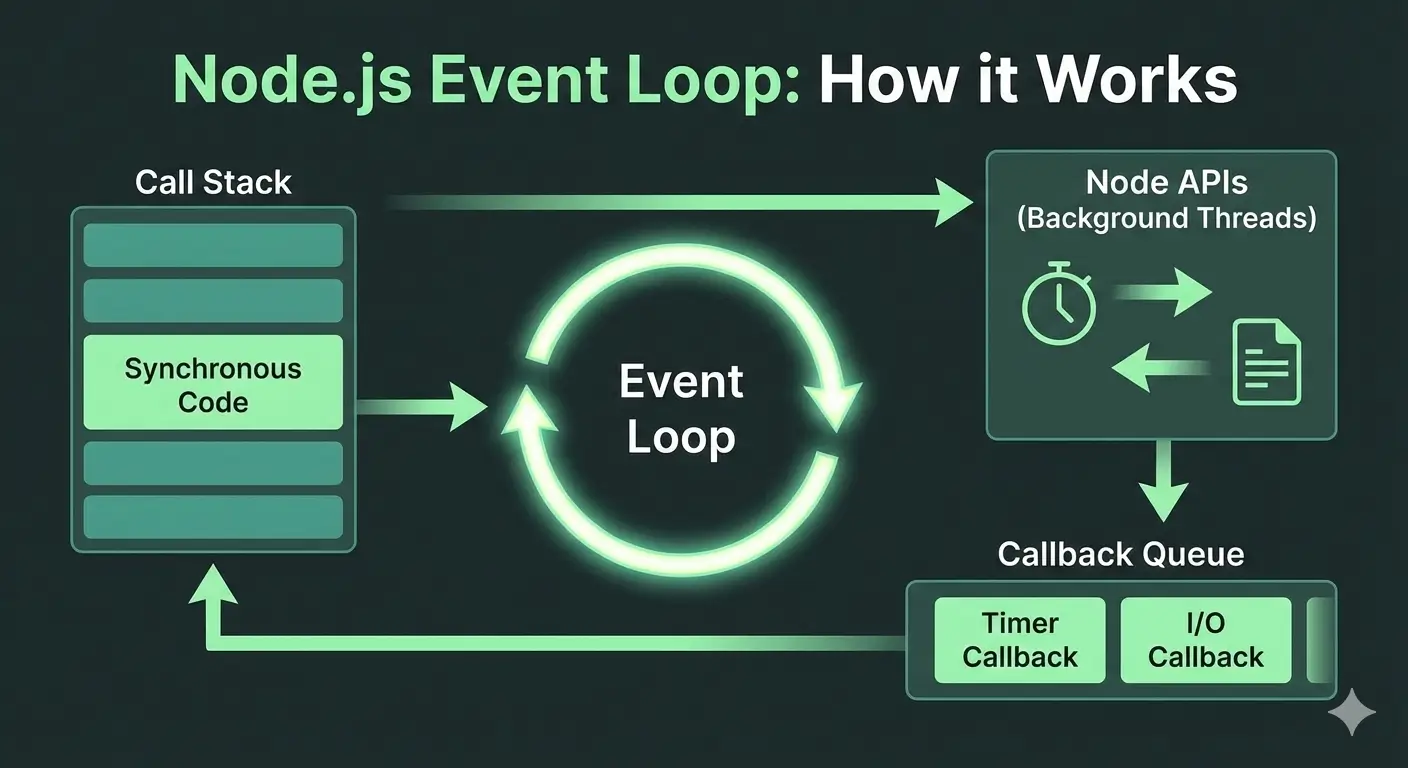
Event Loop Node.js का heart है जो asynchronous operations को efficiently handle करता है. यह continuously check करता है कि call stack empty है या नहीं, और फिर callback queue से next task को execute करता है.
Event Loop के 6 phases होते हैं:
-
Timers -
setTimeout,setIntervalcallbacks -
Pending callbacks - I/O operations से delayed callbacks
-
Idle, prepare - internal operations
-
Poll - new I/O events को retrieve करना
-
Check -
setImmediate()callbacks -
Close callbacks - socket close events
4. Blocking vs Non-blocking code में क्या difference है?
.webp)
Blocking code execution को रोक देता है जब तक task complete नहीं होता. Non-blocking code execution को continue रखता है और task complete होने पर callback execute करता है.
// Blocking example
const fs = require('fs');
const data = fs.readFileSync('file.txt'); // यहाँ रुक जाता है
console.log(data.toString());

// Non-blocking example
fs.readFile('file.txt', (err, data) => {
  if (err) throw err;
  console.log(data.toString());
});
5. NPM क्या है और इसका क्या use है?
NPM (Node Package Manager) Node.js का default package manager है. यह libraries install करने, dependencies manage करने, और versioning handle करने में मदद करता है.
npm install express
npm init
npm run start
6. require() और import में क्या difference है?
-
require() - CommonJS module system में use होता है (Node.js में default)
-
import - ES6 modules के लिए use होता है
// CommonJS
const express = require('express');

// ES6 (package.json में "type": "module" चाहिए)
import express from 'express';
7. Callback function क्या होता है?
Callback एक function है जो दूसरे function में argument के रूप में pass किया जाता है और उस function के complete होने पर execute होता है.
function greet(name, callback) {
  console.log("Hi " + name);
  callback();
}

greet('Rahul', function() {
  console.log('Callback executed!');
});
Intermediate Node JS Interview Questions
8. Promise क्या है और इसके states कौन से हैं?
Promise एक object है जो asynchronous operation के future result को represent करता है. इसके 3 states होते हैं:
const fetchData = () => {
  return new Promise((resolve, reject) => {
    setTimeout(() => {
      resolve('Data fetched successfully!');
    }, 1000);
  });
};

fetchData()
  .then(data => console.log(data))
  .catch(err => console.error(err));
9. async/await को explain करें
async/await Promises के ऊपर built एक modern syntax है जो asynchronous code को synchronous जैसा readable बनाता है.
async function loadData() {
  try {
    const response = await fetch('api/data');
    const data = await response.json();
    console.log(data);
  } catch (error) {
    console.error('Error:', error);
  }
}
10. Express.js क्या है और Node.js के साथ क्यों use होता है?
Express.js Node.js के लिए एक fast, minimal web framework है. यह routing, middleware management, और HTTP utilities को simplify करता है.
const express = require('express');
const app = express();

app.get('/', (req, res) => {
  res.send('Hello from Express!');
});

app.listen(3000, () => {
  console.log('Server running on port 3000');
});
11. Middleware क्या होता है?
Middleware functions वे functions होते हैं जो request-response cycle में execute होते हैं और req, res, next को access कर सकते हैं.
app.use((req, res, next) => {
  console.log('Middleware executed');
  next(); // अगले middleware को call करता है
});
12. Streams क्या हैं और इनके types क्या हैं?
Streams data को chunks में handle करने का efficient तरीका है. 4 types होते हैं:
-
Readable - data read करना (e.g.,
fs.createReadStream) -
Writable - data write करना (e.g.,
fs.createWriteStream) -
Duplex - read और write दोनों
-
Transform - data को modify करते हुए read/write
const fs = require('fs');
const readStream = fs.createReadStream('input.txt');
const writeStream = fs.createWriteStream('output.txt');

readStream.pipe(writeStream);
13. Buffer class का क्या role है?
Buffer binary data को handle करने के लिए use होता है. यह raw memory के साथ directly काम करता है।
const buf = Buffer.from('Hello Node.js');
console.log(buf.toString()); // Output: Hello Node.js
console.log(buf.toJSON()); // Binary representation
Advanced & Scenario-Based Node JS Interview Questions
14. Callback Hell क्या है और इससे कैसे बचें?
Callback Hell nested callbacks की वह situation है जहाँ code बहुत complex और unreadable हो जाता है.
Solution:
// Callback Hell
getUser(id, function(user) {
  getOrders(user, function(orders) {
    getItems(orders, function(items) {
      console.log(items);
    });
  });
});

// Better approach with async/await
async function loadUserData(id) {
  const user = await getUser(id);
  const orders = await getOrders(user);
  const items = await getItems(orders);
  console.log(items);
}
यदि आप behavioral interview questions की भी तैयारी कर रहे हैं, तो problem-solving approach को clearly explain करना सीखें।
15. Clustering क्या है और यह scalability में कैसे help करता है?
Clustering multi-core systems का advantage लेने के लिए Node.js application की multiple instances run करता है.
const cluster = require('cluster');
const http = require('http');
const numCPUs = require('os').cpus().length;

if (cluster.isMaster) {
  for (let i = 0; i < numCPUs; i++) {
    cluster.fork(); // Worker process create करता है
  }
} else {
  http.createServer((req, res) => {
    res.end('Handled by worker');
  }).listen(8000);
}
16. Memory leaks को कैसे detect और prevent करें?
Memory leaks तब होते हैं जब application memory को hold करके रखती है जो अब ज़रूरी नहीं है.
Detection methods:
-
Heap snapshots लें (
v8.writeHeapSnapshot()) -
Chrome DevTools में Memory tab use करें
Prevention tips:
-
Event listeners को properly remove करें
-
Database connections और sockets को close करें
-
clearTimeoutऔरclearIntervaluse करें
17. process.nextTick() और setImmediate() में क्या difference है?
दोनों code execution को defer करते हैं, लेकिन different phases में:
-
process.nextTick() - current operation के बाद तुरंत execute होता है, I/O से पहले
-
setImmediate() - current poll phase complete होने के बाद execute होता है
console.log('Start');

setImmediate(() => {
  console.log('setImmediate');
});

process.nextTick(() => {
  console.log('nextTick');
});

console.log('End');

// Output: Start, End, nextTick, setImmediate
18. Node.js में authentication और authorization कैसे implement करें?
Authentication - user की identity verify करना
Authorization - user को specific resources access करने की permission देना
Common approaches:
-
JWT (JSON Web Tokens) - stateless authentication
-
Session-based auth - server-side session storage
-
OAuth 2.0 - third-party authentication
-
Passport.js - authentication middleware
const jwt = require('jsonwebtoken');

// Token generate करना
const token = jwt.sign({ userId: 123 }, 'secret_key', { expiresIn: '1h' });

// Token verify करना
const decoded = jwt.verify(token, 'secret_key');
Node JS Coding Questions (Practical Examples)
19. Simple HTTP server कैसे create करें?
const http = require('http');

const server = http.createServer((req, res) => {
  res.writeHead(200, {'Content-Type': 'text/plain'});
  res.end('Hello World from Node.js!');
});

server.listen(3000, () => {
  console.log('Server running at http://localhost:3000/');
});
20. File read और write operations कैसे करें?
const fs = require('fs');

// File read (asynchronous)
fs.readFile('input.txt', 'utf8', (err, data) => {
  if (err) throw err;
  console.log(data);
});

// File write
fs.writeFile('output.txt', 'Hello Node.js!', (err) => {
  if (err) throw err;
  console.log('File written successfully');
});
21. REST API endpoint कैसे create करें?
const express = require('express');
const app = express();

app.use(express.json());

// GET request
app.get('/api/users', (req, res) => {
  res.json({ users: ['Rahul', 'Priya', 'Amit'] });
});

// POST request
app.post('/api/users', (req, res) => {
  const newUser = req.body;
  res.status(201).json({ message: 'User created', user: newUser });
});

app.listen(3000);
22. EventEmitter का use करके custom events कैसे create करें?
const EventEmitter = require('events');
const emitter = new EventEmitter();

// Event listener register करना
emitter.on('userLogin', (username) => {
  console.log(`${username} logged in successfully`);
});

// Event emit करना
emitter.emit('userLogin', 'Rahul');
अगर आप Express JS interview questions की भी तैयारी कर रहे हैं, तो routing और middleware concepts को deeply समझें।
Common HR + Behavioral Questions for Node Developers
23. "Tell me about a challenging Node.js project you worked on"
Answer approach:
-
Project का brief context दें (purpose, team size)
-
Technical challenge explain करें (e.g., performance issue, scalability)
-
आपने कौन से steps लिए (debugging, optimization)
-
Result क्या हुआ (improved response time, reduced errors)
24. "Why did you choose Node.js over other backend technologies?"
Key points to mention:
-
JavaScript ecosystem - frontend और backend में same language
-
Non-blocking I/O - high concurrency handle कर सकता है
-
NPM ecosystem - largest package registry
-
Real-time applications के लिए perfect (chat, live notifications)
25. "How do you stay updated with Node.js developments?"
Good answers:
-
Node.js official blog और release notes follow करना
-
GitHub repositories study करना
-
Tech communities (Stack Overflow, Reddit) में active रहना
-
Online courses और tutorials complete करना
Job interview questions की general preparation के लिए भी resources देखें ताकि आप HR rounds में confident रहें।
Mistakes Candidates Make in Node.js Interviews
1. Event Loop को properly explain नहीं कर पाना
Many candidates बस यह कह देते हैं कि "Node.js asynchronous है" लेकिन event loop के phases को detail में नहीं बता पाते. Solution: 6 phases और execution order को clearly समझें।
2. Callback, Promise, async/await में confusion
Freshers अक्सर इन तीनों को mix कर देते हैं. Solution: हर approach को separately practice करें और उनके use cases समझें।
3. Error handling ignore करना
Code examples में try-catch या error-first callbacks नहीं दिखाते. Solution: हमेशा proper error handling demonstrate करें।
4. Real-world scenarios से relate नहीं कर पाना
Theoretical knowledge तो होती है लेकिन practical application नहीं बता पाते. Solution: अपने answers में real project examples include करें।
5. Security best practices नहीं जानना
Helmet, CORS, input sanitization जैसे concepts से unfamiliar होना. Solution: Security topics को अच्छे से prepare करें।
6. Code में inconsistent naming conventions
Variables और functions की naming proper नहीं होती. Solution: camelCase और meaningful names use करना practice करें।
7. Package.json और dependencies को underestimate करना
NPM scripts, semantic versioning, और dependency management को समझ नहीं पाते. Solution: Package management को deeply समझें।
अगर आप ATS-friendly resume बना रहे हैं, तो technical skills को properly highlight करना न भूलें।
Smart Preparation Strategy (Brutally Practical Advice)
Week 1-2: Foundation Building
Daily routine:
-
2 hours - Core concepts (Event Loop, Modules, NPM) study करें
-
1 hour - Basic coding questions practice करें
Focus areas:
-
Blocking vs non-blocking code
-
Callbacks और Promises
-
File system operations
-
HTTP module basics
Week 3-4: Intermediate Concepts
Daily routine:
-
2 hours - Express.js, middleware, routing practice करें
-
1 hour - REST API बनाना सीखें
Build projects:
-
Simple CRUD API with MongoDB
-
File upload functionality
-
Authentication system with JWT
Week 5-6: Advanced Topics & Mock Interviews
Daily routine:
-
2 hours - Clustering, memory management, performance optimization
-
1 hour - System design basics
Advanced topics:
-
Worker threads और child processes
-
WebSockets और real-time communication
-
Microservices architecture
-
Docker basics for Node.js apps
Tips for Maximum Impact:
1. GitHub profile को strong बनाएं
-
3-5 well-documented Node.js projects upload करें
-
README files में clear instructions दें
2. Hands-on practice करें
-
LeetCode, HackerRank पर Node.js problems solve करें
-
Real-world scenarios को simulate करें
3. Interview simulation करें
-
Friends के साथ mock interviews conduct करें
-
खुद से loud बोलकर explanations practice करें
-
Technical terms को Hindi-English mix में fluently बोलना सीखें
4. Resources collect करें
-
Node.js official docs bookmark करें
-
YouTube channels follow करें
-
JavaScript interview questions भी साथ में prepare करें
5. Portfolio website बनाएं
-
अपने projects को showcase करें
-
Resume को ATS-friendly format में रखें
-
LinkedIn profile को optimize करें
Final Summary
Node.js interview की तैयारी करना एक systematic approach demand करता है. यह सिर्फ syntax याद करने का नहीं, बल्कि core concepts को deeply समझने और practical implementation का game है.
Key takeaways:
✅ Foundation solid रखें - Event Loop, asynchronous programming, modules को अच्छे से समझें
✅ Hands-on practice करें - theoretical knowledge से ज़्यादा coding practice important है
✅ Real-world examples दें - interviews में apne projects के experiences share करें
✅ Error handling ignore न करें - production-ready code की mentality रखें
✅ Security best practices जानें - authentication, input validation, CORS को समझें
✅ Portfolio strong बनाएं - GitHub profile और winning CV maintain करें
2026 में Node.js developers की demand और बढ़ने वाली है. Companies scalable, real-time applications build करने के लिए skilled Node.js engineers को hire कर रही हैं. यदि आप इस guide को follow करके prepare करते हैं, तो आप definitely अपने interviews में confident और successful होंगे।

.webp&folder=article_image)

.webp&folder=article_image)