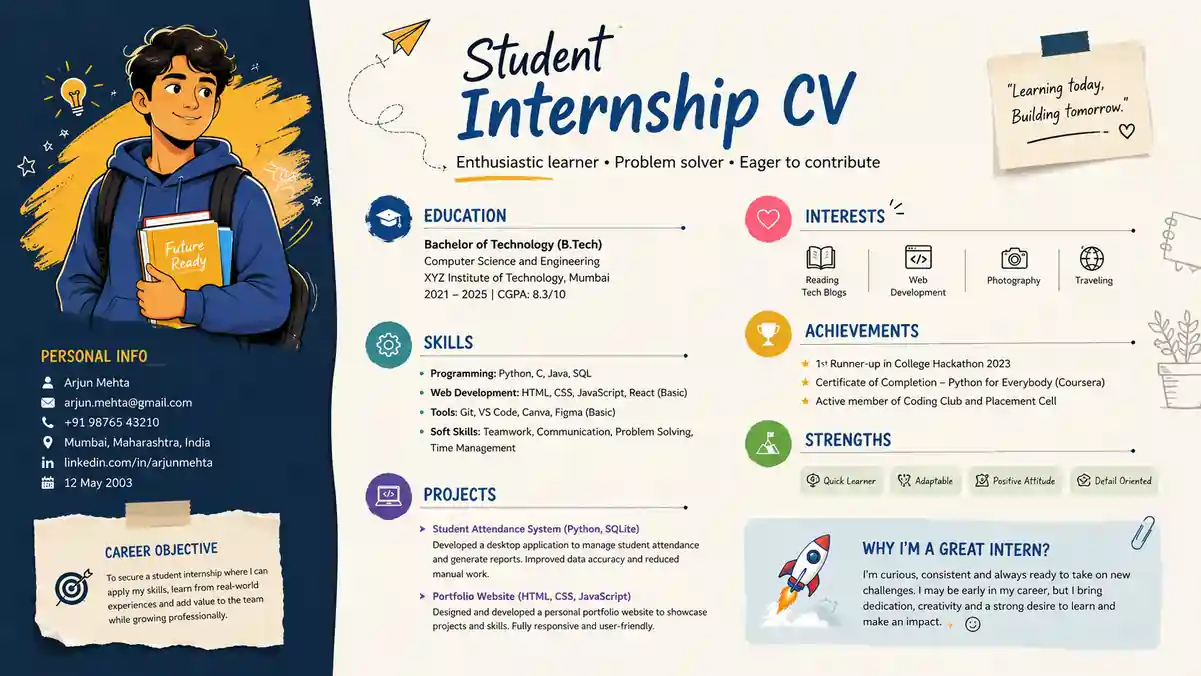
In the competitive landscape of the modern job market, securing a student internship is often the critical bridge between academic theory and professional reality. However, for most students, the biggest hurdle is not a lack of skills, but the lack of a polished Student Internship CV that effectively communicates potential to recruiters. Unlike experienced professionals who can rely on a history of employment, students must strategically frame their academic projects, extracurricular activities, and transferable skills to demonstrate readiness for the workforce.
This comprehensive guide is designed to be your definitive resource for building a high-impact CV. We will dissect the anatomy of a winning document, explore how to navigate Applicant Tracking Systems (ATS) without prior work history, and provide actionable frameworks for turning classroom achievements into professional assets. Whether you are targeting a role in a top-tier tech giant or a dynamic local startup, the principles outlined here will help you construct a narrative that compels recruiters to invite you for an interview.
Table of Contents
- Understanding the Student Internship CV
- Why Internship CVs Differ from Standard Resumes
- Structuring Your CV for Maximum Impact
- How to Write a Student Internship CV with No Experience
- Crafting a Compelling Professional Summary
- Showcasing Academic Projects and Coursework
- Highlighting Transferable Skills and Extracurriculars
- Mastering the ATS for Internship Applications
- Formatting and Design Best Practices
- Common Mistakes to Avoid
- People Also Ask
- Frequently Asked Questions
You’re not failing.
Your resume is.
Most people lose jobs before the interview — not because they lack skills, but because their resume looks average. Fix that in 5 minutes.
- ✅ ATS-optimized format
- ✅ Recruiter-friendly design
- ✅ Download instantly (PDF)
⚡ No signup required • 100% Free • Works on mobile
Get shortlisted faster
Pick a template → fill details → download resume.
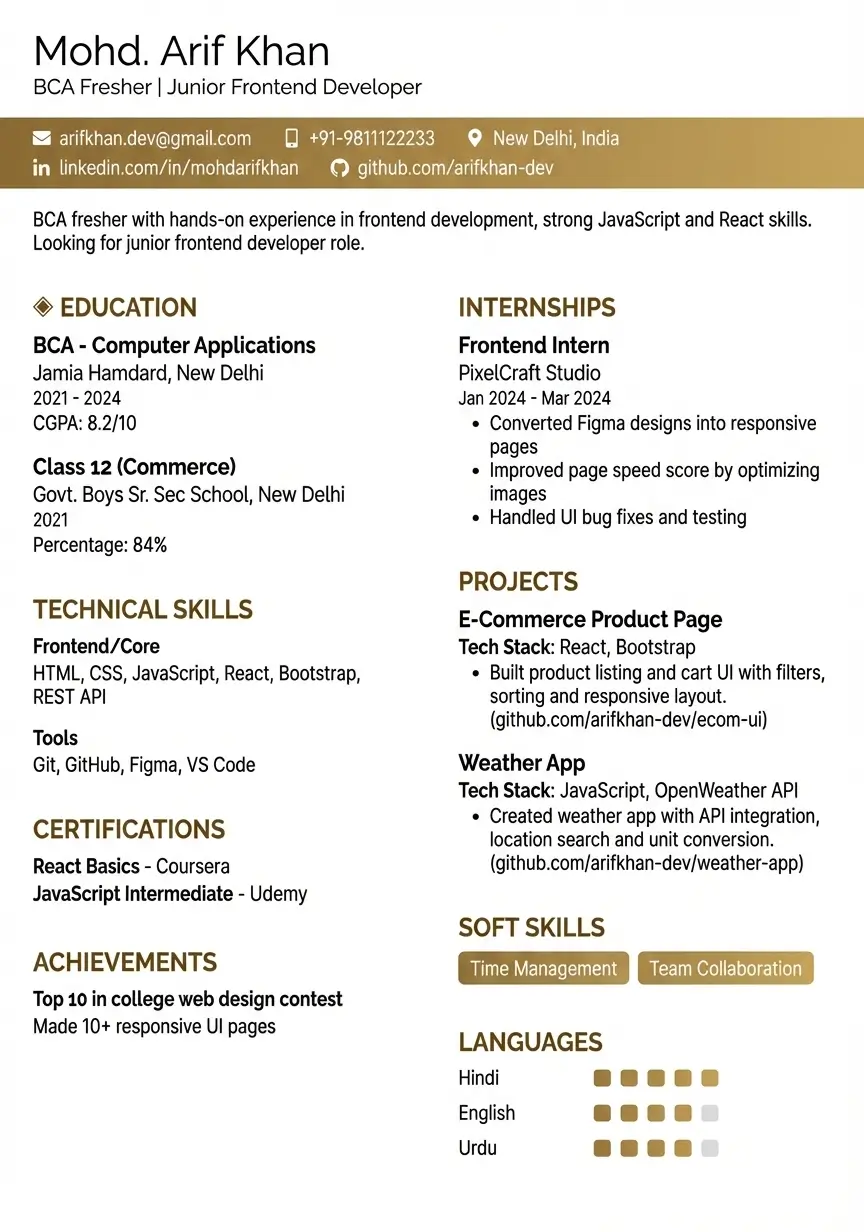
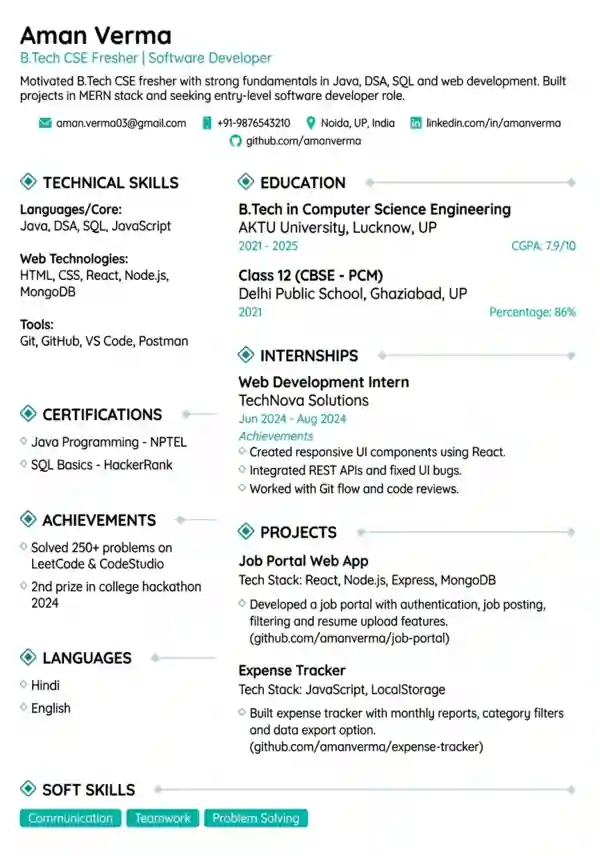
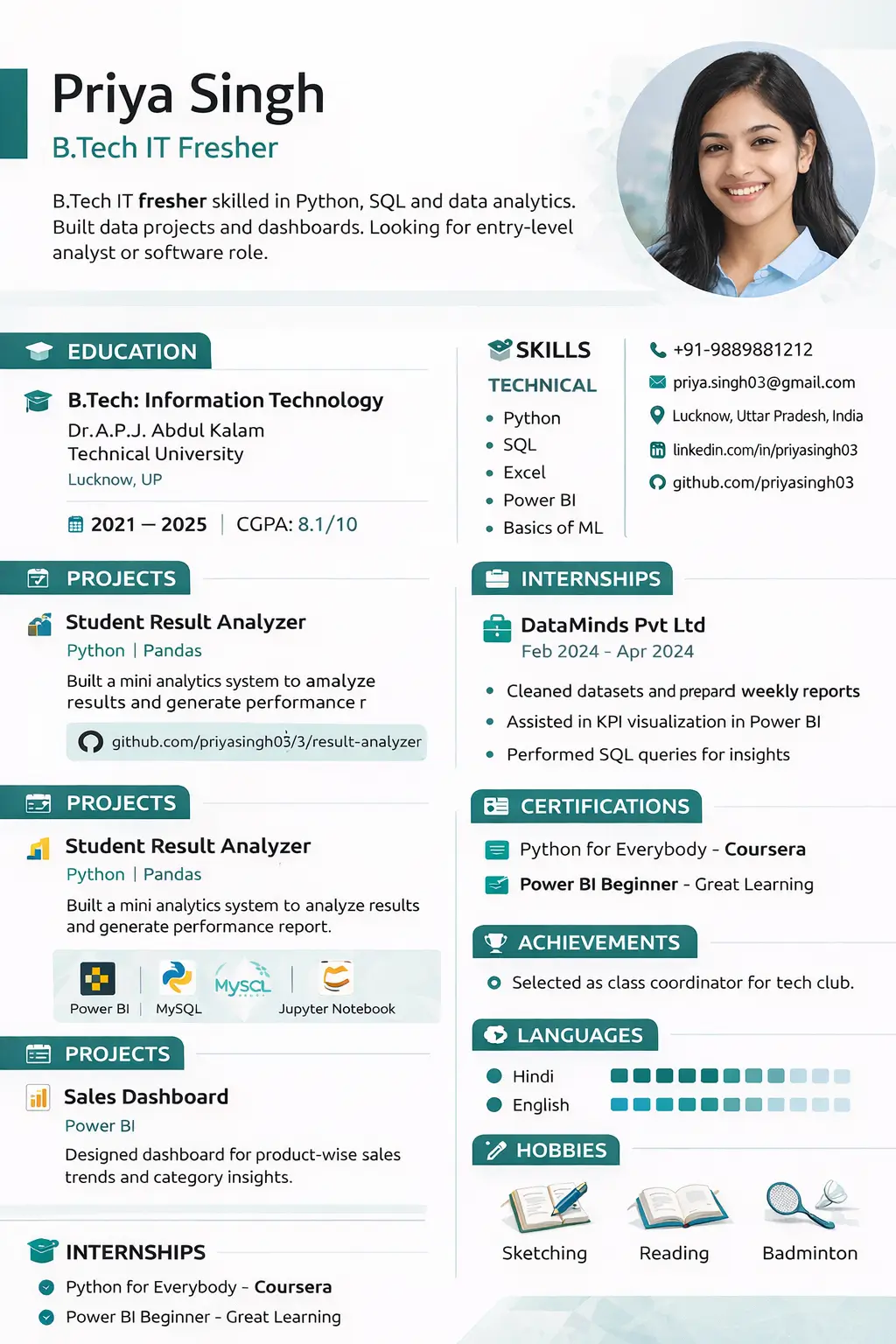
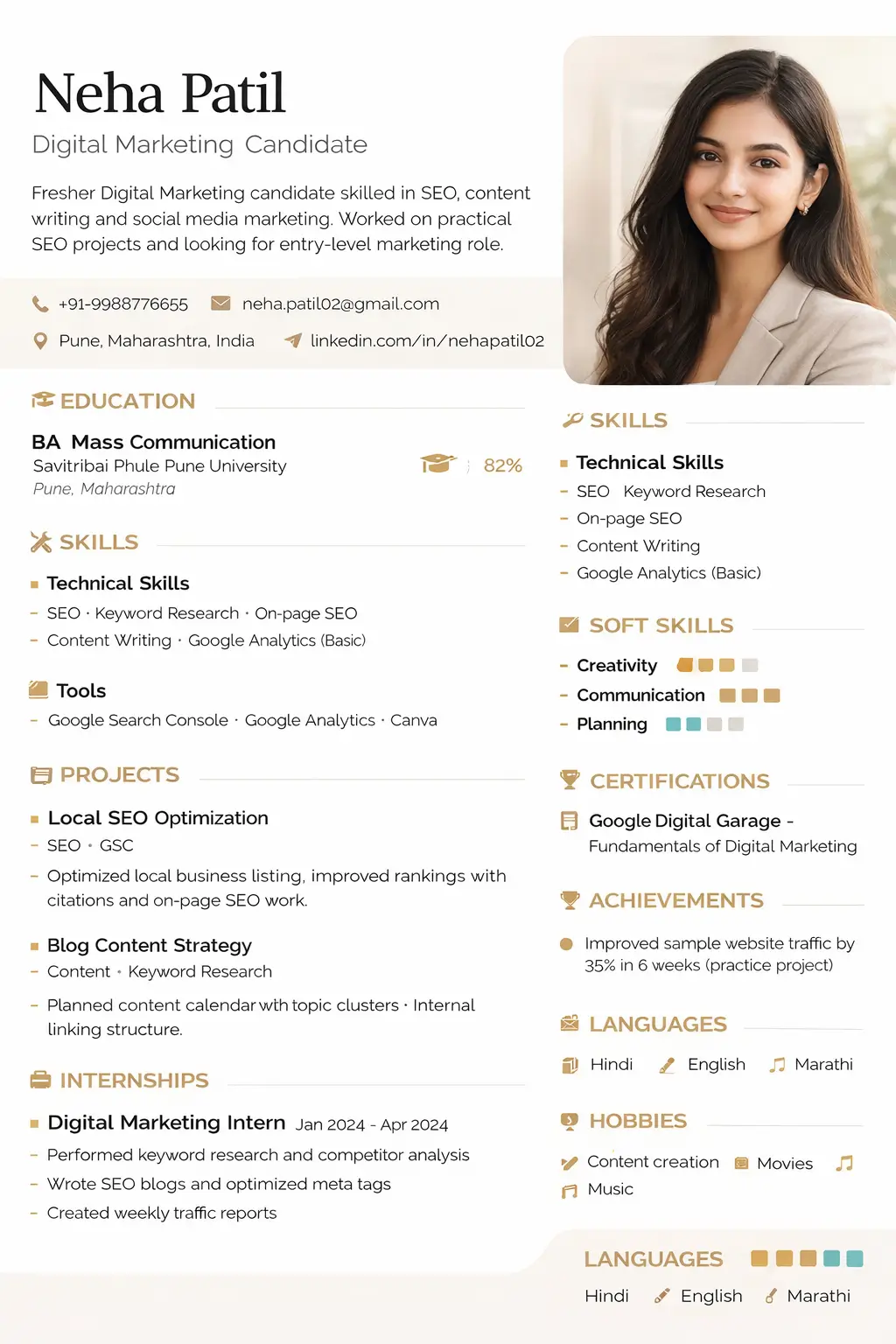
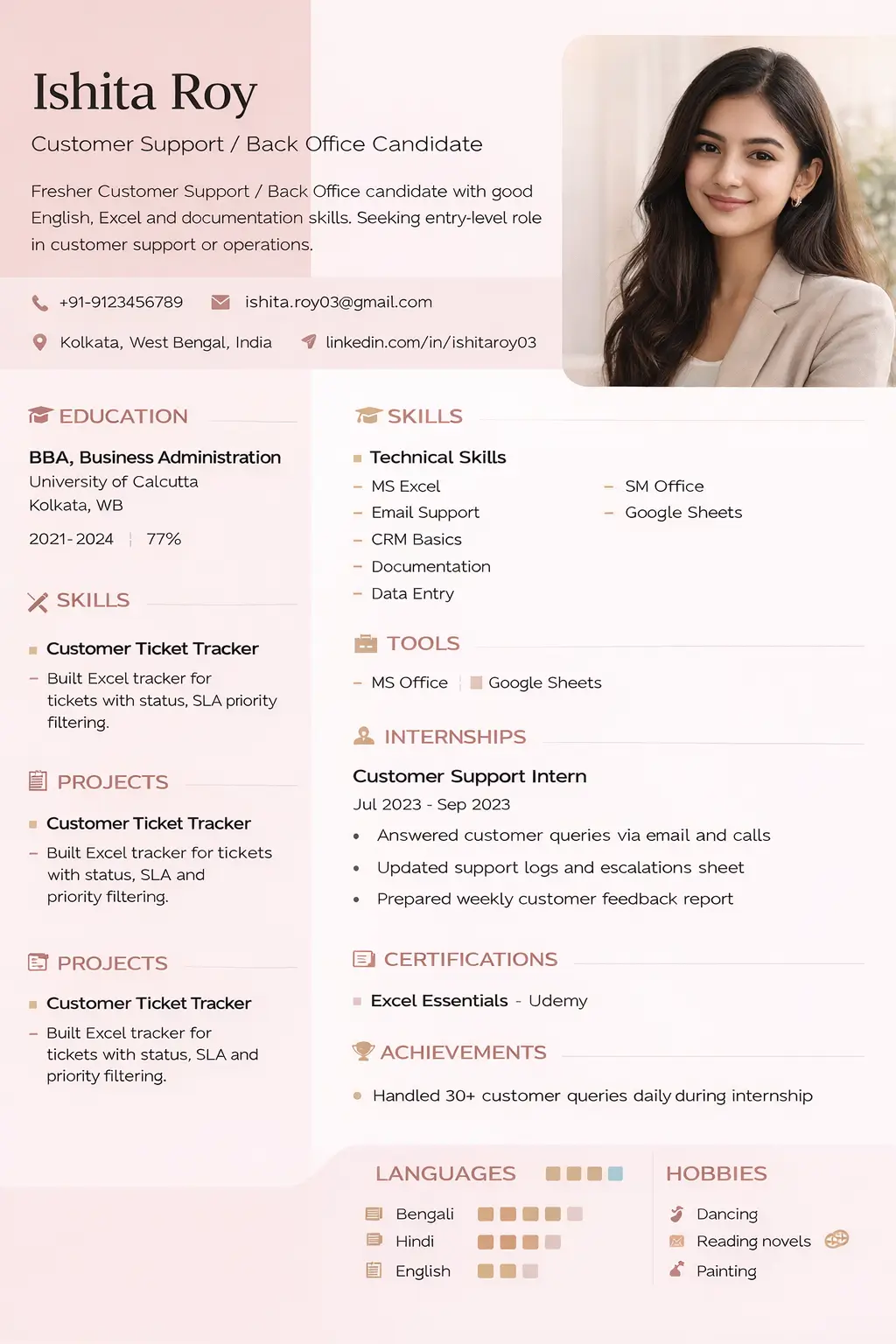
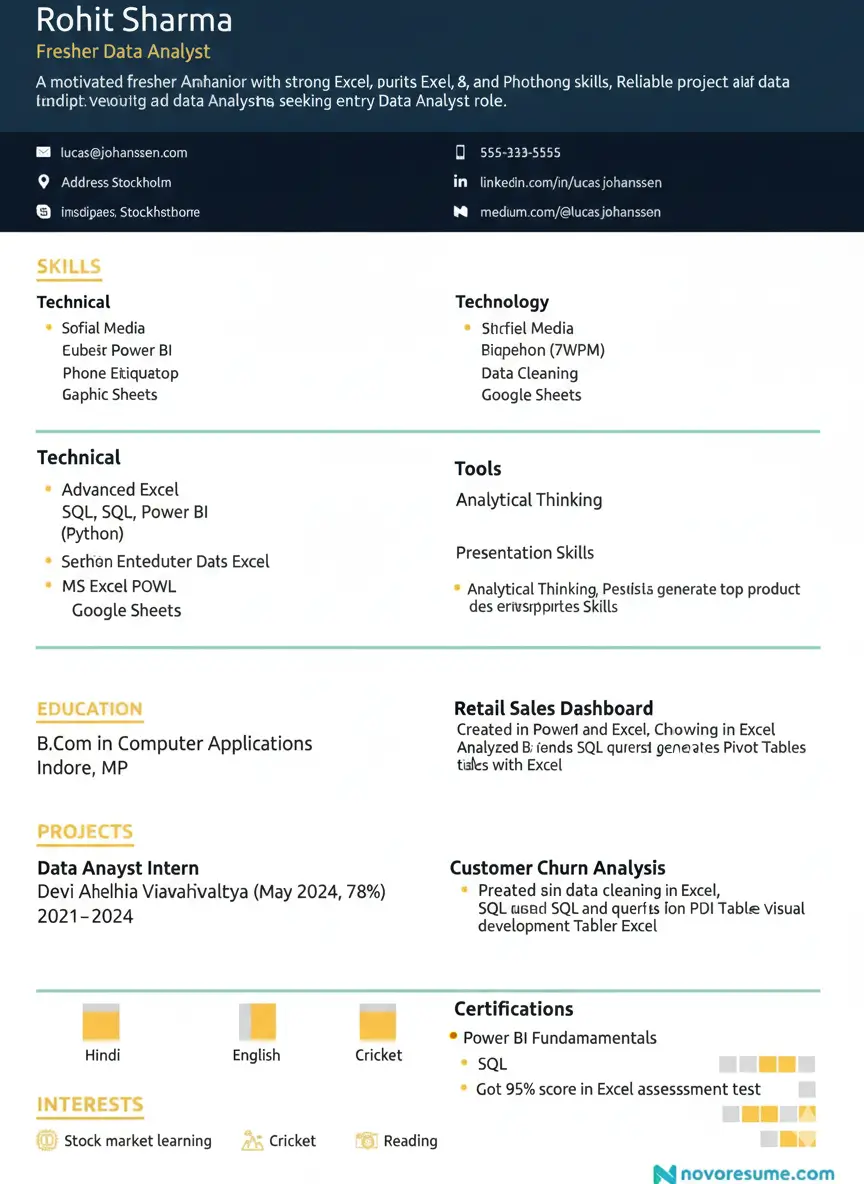
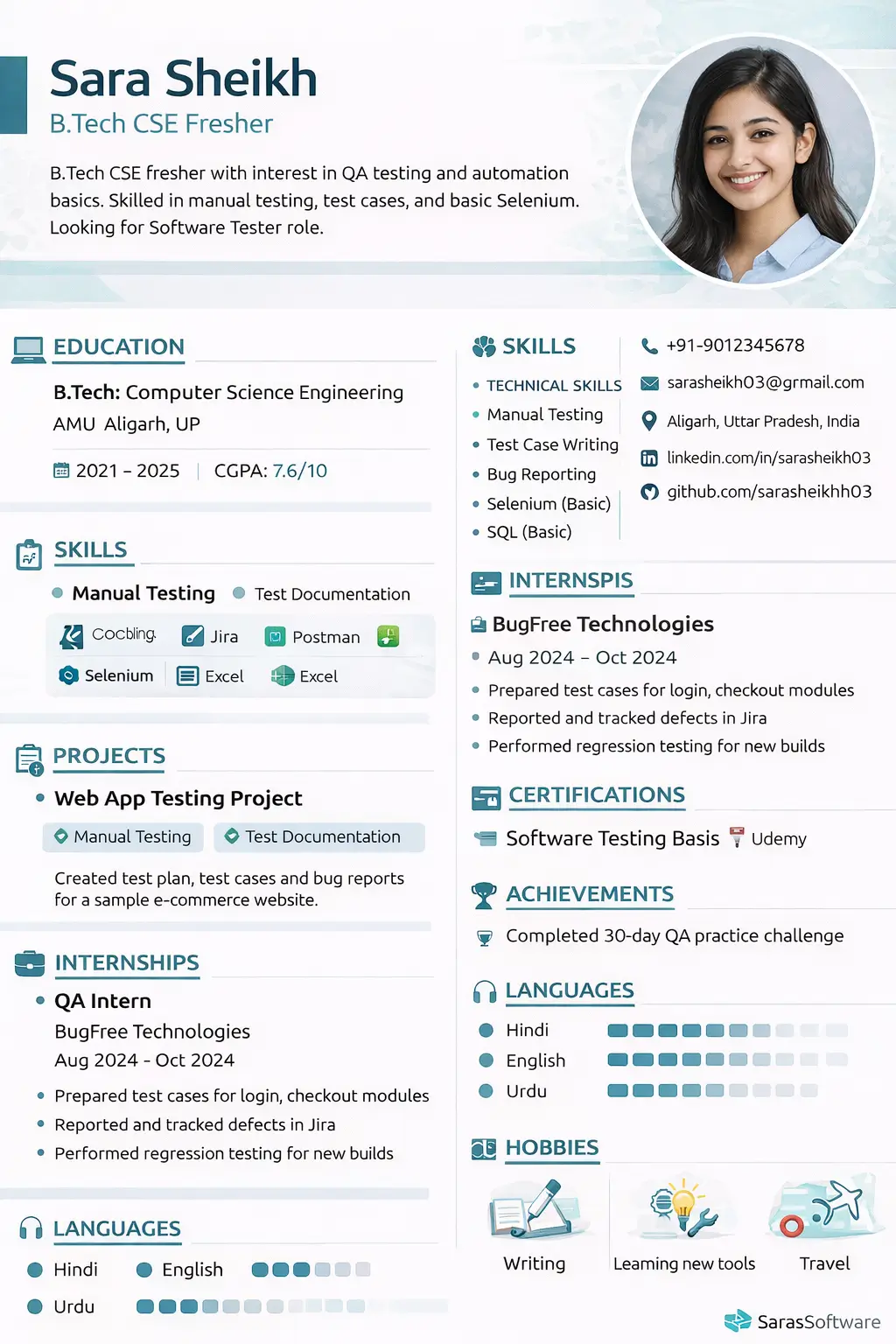
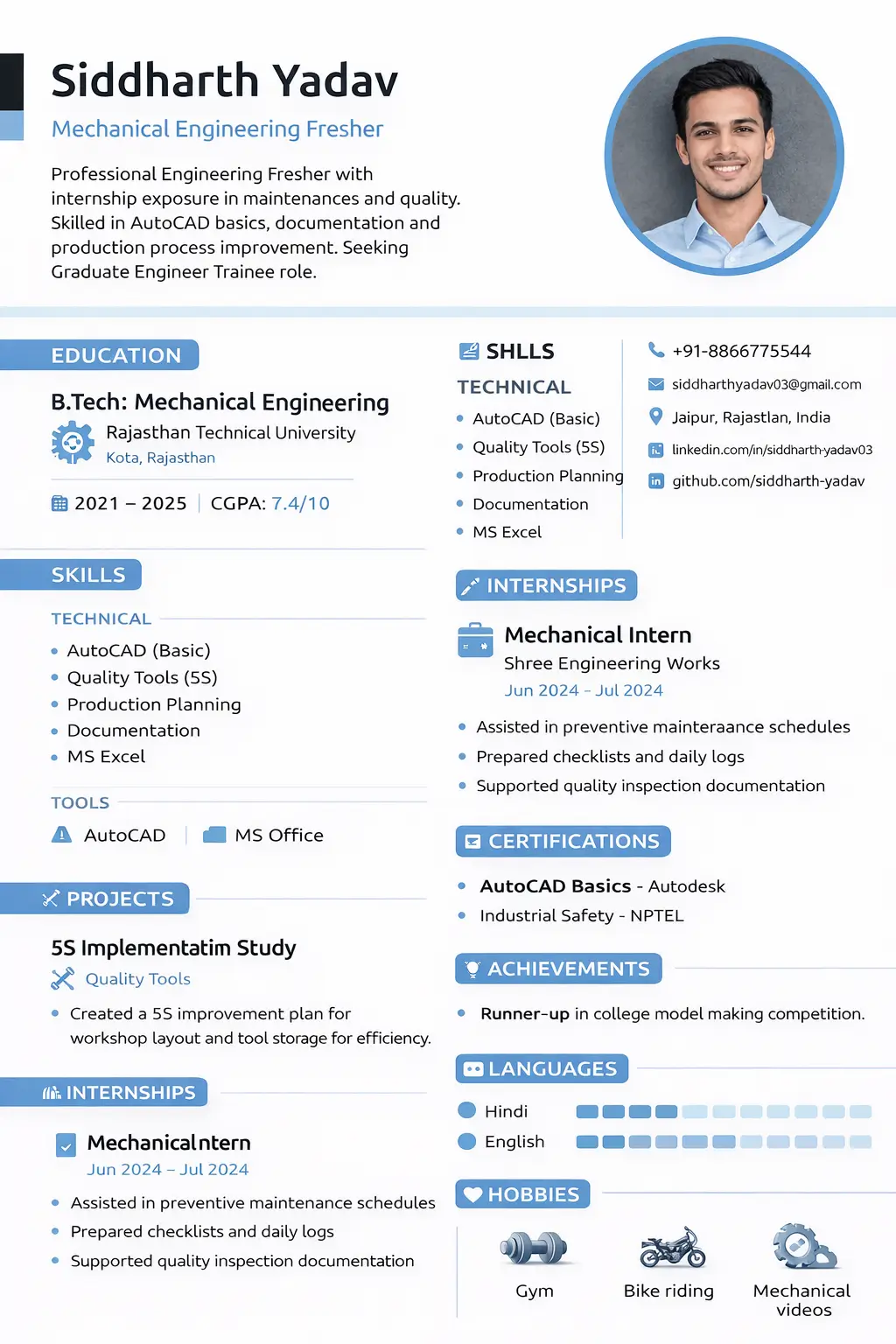
Understanding the Student Internship CV
A Student Internship CV is not merely a shortened version of a professional resume; it is a strategic document designed to answer a specific question: Can this student add value to our team despite limited work history? Recruiters reviewing internship applications are not looking for a decade of management experience. Instead, they are looking for aptitude, eagerness to learn, cultural fit, and the ability to apply theoretical knowledge to practical problems.
The primary goal of this document is to demonstrate potential. It serves as a marketing tool where the "product" is the student's raw talent and educational foundation. In many industries, particularly in technology, engineering, and finance, the internship is a pipeline for full-time employment. Therefore, the CV must be structured to pass the initial screening by automated systems and human recruiters who spend an average of six to seven seconds scanning a document before deciding to move forward.
Understanding the nuances of this document requires recognizing the shift in focus. While a standard resume emphasizes what you have done, a student internship CV emphasizes what you can do. This distinction dictates every section of your document, from the choice of headline to the formatting of your education section. For those unsure about the specific terminology or role hierarchies they are applying for, understanding the Job Title Meaning is the first step in tailoring your application correctly.
Why Internship CVs Differ from Standard Resumes
The fundamental difference between a standard professional resume and a Student Internship CV lies in the weight assigned to various sections. For a mid-level professional, the "Work Experience" section is the dominant feature, occupying 60-70% of the page. For a student, this section may be non-existent or occupy a minimal portion of the document. Consequently, the hierarchy of information must be inverted.
In a standard resume, education is often relegated to the bottom. In a Student Internship CV, the Education section is typically the first major block of information (after the header and summary). This is because your academic status is your most significant credential at this stage. Your university, your major, your GPA (if strong), and your relevant coursework are the primary evidence of your competency.
Furthermore, the language and tone differ. Professional resumes often use passive, result-oriented language focused on revenue, efficiency, or strategic outcomes. Student CVs must utilize action verbs that highlight learning, collaboration, problem-solving, and initiative. The narrative arc changes from "I achieved X result for Company Y" to "I applied academic concepts to solve problem Z in a project environment." This shift is critical for writing a resume with no work experience, as it redirects the recruiter's attention to your capacity for growth.
| Feature | Standard Professional Resume | Student Internship CV |
|---|---|---|
| Primary Focus | Proven track record and past results | Potential, academic foundation, and aptitude |
| Education Section | Placed at the bottom | Placed near the top, detailed with coursework |
| Experience Section | Dominant feature | Secondary or replaced by Projects/Extracurriculars |
| Tone | Authoritative, results-driven | Eager, learning-oriented, collaborative |
| Length | Often 2 pages for experienced roles | Strictly 1 page (unless extensive research/projects) |
Structuring Your CV for Maximum Impact
A logical flow is essential for readability. Recruiters scan documents in an F-pattern, moving from the top left to the top right, then down the left side. Your Student Internship CV must be structured to guide the eye to your strongest assets immediately. The following structure is the industry standard for 2026 and ensures that your most relevant information is never missed.
Header and Contact Information
Your header must be clean and professional. It should include your full name, a professional email address (avoid nicknames), a phone number, a LinkedIn profile URL (customized), and your city and state (full address is no longer necessary for privacy and space reasons). If you have a portfolio website or a GitHub repository for developers, include those links prominently. This section sets the tone; a messy header suggests a messy work ethic.
Professional Summary or Objective
While some argue that objectives are outdated, they remain highly effective for students who lack work history. A well-crafted summary or objective acts as your elevator pitch. It should be 2-3 sentences long, mentioning your degree, your key skills, and your career goal. For example: "Motivated Computer Science undergraduate with a strong foundation in Python and data structures, seeking a software engineering internship to leverage academic project experience in developing scalable web applications."
Education Section
This is the core of your document. List your university, degree, major, and expected graduation date. If your GPA is above 3.5 (or the equivalent in your region), include it. If you have relevant coursework, list 4-6 courses that align with the job description. If you have received academic honors, scholarships, or dean's list recognition, these must be included here. This section proves you have the theoretical knowledge required for the role.
Projects and Experience
When you lack formal employment, your "Projects" section becomes your work history. Treat academic or personal projects with the same rigor as a job. Include the project title, your role, the technologies used, and the outcome. If you have had any part-time jobs, volunteer work, or internships, list them here as well. The key is to focus on transferable skills. A retail job demonstrates customer service and time management; a coding project demonstrates technical proficiency and problem-solving.
Skills Section
Divide your skills into "Technical" (hard skills) and "Soft" (interpersonal skills). Technical skills should be specific (e.g., "Python," "Adobe Photoshop," "Financial Modeling," "SEO Analysis"). Soft skills should be supported by examples in your bullet points (e.g., "Leadership," "Communication," "Adaptability"). For a detailed breakdown of how to categorize these, refer to the Key Skills for Resume guide to ensure you are selecting the most relevant competencies.
How to Write a Student Internship CV with No Experience
The phrase "no experience" is often a misnomer. Students almost always have experience; it is just not in a traditional corporate setting. The art of writing a Student Internship CV lies in reframing non-traditional experiences as professional assets.
Leveraging Academic Projects
Academic projects are the closest equivalent to real-world work for students. When describing these, use the STAR method (Situation, Task, Action, Result). Instead of saying "Created a website," say "Designed and deployed a responsive e-commerce website using React and Node.js, resulting in a 20% improvement in page load speed during testing." This quantifies your achievement and demonstrates technical competence.
Volunteering and Leadership
Roles in student clubs, non-profits, or community organizations are gold mines for Student Internship CV content. If you organized a campus event, you demonstrated project management, budgeting, and team coordination. If you volunteered at a shelter, you showed empathy, communication, and reliability. These experiences prove you can handle responsibility and work in a team environment.
Part-Time Jobs and Freelance Work
Even if you worked as a barista or a tutor, these roles are relevant. They teach you about punctuality, customer interaction, conflict resolution, and handling pressure. When listing these, focus on the soft skills gained. For instance, "Managed cash transactions for 50+ daily customers, ensuring 100% accuracy and resolving customer complaints with a 95% satisfaction rate."
Reframing the Narrative
The mindset shift required is crucial. Do not apologize for a lack of experience. Instead, highlight your adaptability. Use phrases like "Rapidly learned," "Self-taught," "Applied," and "Collaborated." These words suggest that you are a quick learner, which is often more valuable to an internship employer than a static set of skills. For those navigating the transition from student to professional, the how to write a resume with no work experience in 2026 guide offers deeper insights into this specific challenge.
Crafting a Compelling Professional Summary
The professional summary (or objective) is the first thing a recruiter reads after your name. It is your only chance to hook them before they scan the rest of the document. A generic summary like "Hardworking student looking for an internship" will be ignored. A strong summary is specific, tailored, and value-driven.
The Formula for Success
A winning summary follows a simple formula: [Current Status] + [Key Skills/Expertise] + [Career Goal/Value Proposition].
Example 1 (Marketing Student): "Creative Marketing Junior with a strong foundation in social media strategy and content creation. Proficient in Canva and Google Analytics, with a proven track record of increasing engagement by 30% in university club campaigns. Seeking a Marketing Internship to apply data-driven insights to brand growth."
Example 2 (Engineering Student): "Mechanical Engineering student with expertise in CAD design and thermodynamics. Completed a capstone project optimizing HVAC efficiency, reducing energy consumption by 15%. Eager to contribute to a forward-thinking engineering firm as a Design Intern."
The summary must be tailored for every application. If the job description emphasizes "teamwork" and "Python," your summary must explicitly mention those keywords. This is a critical step in how to tailor your resume to a job description and boost your ATS score in 2026, ensuring your document passes the initial digital screening.
Showcasing Academic Projects and Coursework
For a Student Internship CV, the Projects section is often the deciding factor between an interview and a rejection. This is where you prove you can do the work. The key is to treat every project as a mini-case study.
Selecting the Right Projects
Do not list every project you have ever done. Select 3-5 projects that are most relevant to the job you are applying for. If you are applying for a data analysis role, highlight your statistics or data science projects, even if they were for a sociology class. Relevance is king.
Describing the Project
Structure each project entry with the following elements:
- Project Title: Clear and descriptive.
- Role: Your specific contribution (e.g., Lead Developer, Researcher, Team Lead).
- Technologies/Tools: A list of software, languages, or methodologies used.
- Outcome: What was the result? Did you build a working prototype? Did you publish a paper? Did you solve a specific problem?
Example of a Strong Project Entry
Capstone Project: Smart Home Automation System
Role: Lead Developer | Tools: Python, Arduino, MQTT Protocol
• Designed a fully functional IoT system allowing remote control of lighting and temperature via a mobile app.
• Programmed sensor integration to reduce energy usage by 20% in simulated environments.
• Led a team of four students, delegating tasks and conducting weekly code reviews to ensure project milestones were met on time.
• Presented the final prototype to a panel of professors and industry experts, receiving top marks for innovation.
This format demonstrates technical skills, leadership, and the ability to deliver results. It transforms a classroom assignment into professional evidence. For more inspiration on how to present these, explore the 50+ Example For Project on the Resume guide to see how different industries frame their academic work.
Highlighting Transferable Skills and Extracurriculars
Transferable skills are the universal abilities that apply across all industries and roles. For a student, these are often more important than specific technical skills because they indicate how you will behave in the workplace. Soft skills like communication, adaptability, critical thinking, and time management are highly valued by recruiters.
Identifying Your Transferable Skills
Reflect on your life outside of class. Have you organized a charity run? That is event planning and budget management. Have you tutored a peer? That is communication and patience. Have you played on a sports team? That is teamwork and discipline. These are all transferable skills.
Integrating Extracurriculars
Create a dedicated "Leadership & Activities" section if you have significant involvement in clubs or organizations. List the organization name, your title, and the dates. Use bullet points to describe your achievements. Avoid generic descriptions like "Member of the Debate Club." Instead, use "President of Debate Club: Managed a budget of $5,000, organized regional tournaments, and coached 15 junior members, leading the team to a state championship."
The Power of Collaboration
Recruiters want to know that you can work well with others. Highlighting group projects, team sports, or volunteer work demonstrates that you are not a lone wolf. It shows you understand the dynamics of a team and can contribute to a collective goal. This is particularly important for entry-level roles where teamwork is the primary mode of operation. To further understand how to present these skills effectively, review the Transferable Skills on a Resume guide for expert examples and phrasing.
Mastering the ATS for Internship Applications
Applicant Tracking Systems (ATS) are software tools used by companies to filter resumes before a human ever sees them. For a Student Internship CV, passing the ATS is non-negotiable. If your resume is not ATS-compliant, it will be rejected automatically, regardless of your qualifications.
How ATS Works
ATS software parses your resume, extracts keywords, and scores your application based on how well it matches the job description. It looks for specific hard skills, job titles, and educational qualifications. If your resume is formatted with complex graphics, columns, or tables, the ATS may fail to read it correctly, resulting in a low score or rejection.
Optimizing for Keywords
The most effective way to beat the ATS is to mirror the language of the job description. If the job posting asks for "Python," "Data Analysis," and "SQL," ensure these exact terms appear in your skills section and project descriptions. Do not use abbreviations if the full term is more common, and vice versa. For a comprehensive list of keywords for IT roles, refer to what keywords should I include in my resume to pass ATS screening for IT jobs in India.
Formatting for ATS
Use a clean, single-column layout. Avoid headers and footers for critical information, as some ATS systems cannot read them. Stick to standard fonts like Arial, Calibri, or Times New Roman. Do not use graphics, icons, or photos. While visual appeal is important for human readers, functionality is paramount for the bot. The ATS Friendly Resume guide provides a complete checklist to ensure your document is optimized for these systems.
The Importance of File Format
Unless explicitly requested otherwise, always submit your resume as a PDF. However, ensure the PDF is text-based, not an image. Some older ATS systems prefer Word documents (.docx). When in doubt, a Word document is often safer for parsing, but a well-formatted PDF is generally accepted by modern systems. Check the how to download a professional resume PDF for free guide to ensure you are saving your file correctly without corruption.
Formatting and Design Best Practices
While content is king, design is the queen. A poorly formatted CV can undermine even the best qualifications. For a Student Internship CV, the design must be professional, clean, and easy to scan.
Layout and White Space
White space is your friend. Do not crowd your page with text. Use margins of at least 0.5 to 1 inch. Use bullet points to break up text and make it scannable. A wall of text is intimidating and difficult to read. Ensure there is enough space between sections to create visual separation.
Font and Typography
Choose a professional font that is easy to read. Sans-serif fonts like Arial, Helvetica, or Calibri are modern and clean. Serif fonts like Times New Roman or Garamond are traditional and safe. Stick to one or two fonts maximum. Use bolding for section headers and job titles, but avoid underlining or using too many colors. Black text on a white background is the most readable and ATS-friendly combination.
Single-Column vs. Two-Column
For students, a single-column layout is generally recommended. It is the safest option for ATS parsing and ensures that your information flows logically from top to bottom. Two-column layouts can be visually appealing but sometimes confuse older ATS systems. If you choose a two-column layout, ensure it is simple and that the reading order is clear. For a detailed comparison, see the guide on how to choose between a single-column and two-column resume template as a fresher.
Length Considerations
Keep your CV to one page. Recruiters do not have time to read a two-page CV for an internship. If you have a lot of content, edit ruthlessly. Remove irrelevant coursework, outdated skills, or excessive descriptions. Every line must earn its place on the page.
Common Mistakes to Avoid
Even the most qualified students can lose opportunities due to common pitfalls. Being aware of these mistakes is the first step to avoiding them.
Typos and Grammatical Errors
Nothing disqualifies a candidate faster than a typo. It suggests a lack of attention to detail, which is a critical flaw for any intern. Proofread your CV multiple times. Read it backwards to catch spelling errors. Have a friend or mentor review it as well. The resume proofreading tips guide offers a systematic approach to catching these errors before you hit send.
Using a Generic Template
Submitting a generic template without customization is a missed opportunity. Every job is different, and your CV should reflect that. Tailor your summary, skills, and project descriptions to match the specific role. A generic CV screams "I am applying to everything," while a tailored CV says "I am the perfect fit for this specific role."
Focusing on Duties Instead of Achievements
Listing duties is passive. Listing achievements is active. Instead of saying "Responsible for data entry," say "Processed 50+ data entries daily with 100% accuracy." Quantify your results wherever possible. Numbers stand out and provide concrete evidence of your impact.
Irrelevant Personal Information
In the modern job market, you do not need to include your photo, age, marital status, or religious affiliation. In fact, including these can lead to bias and is often discouraged by recruitment best practices. Stick to professional information: name, contact details, education, and experience. For more on what to include, check the Resume Contact Information Guide 2026.
People Also Ask
What is a student internship CV and how is it different from a resume?
A student internship CV is a document specifically tailored for internship applications, emphasizing academic achievements, projects, coursework, and transferable skills over professional work history. Unlike a standard resume, which focuses on past job responsibilities and results, a student internship CV prioritizes potential and aptitude. It often places the Education section at the top, uses project-based bullet points, and includes extracurricular leadership roles as evidence of soft skills. The goal is to show recruiters that you have the foundation and drive to contribute, even without extensive experience.
How can I write a student internship CV with no work experience?
Focus on academic projects, volunteering, part-time jobs (even unrelated ones), and leadership roles in clubs or organizations. Use the STAR method (Situation, Task, Action, Result) to describe these experiences. Instead of a generic "Experience" section, create a "Projects" or "Leadership & Activities" section. Highlight transferable skills such as communication, teamwork, problem-solving, and time management. Be specific about tools and technologies you used, and quantify results where possible (e.g., "increased club membership by 20%"). This reframing shifts attention away from the absence of paid work and toward your capabilities.
Should I include my GPA on a student internship CV?
Include your GPA only if it is strong — typically 3.0 or above on a 4.0 scale. If your overall GPA is lower but your major GPA is higher, list the Major GPA instead (e.g., "Major GPA: 3.6"). If your GPA is below 3.0, it's generally better to omit it. Recruiters understand that grades don't reflect all abilities. Instead, let your projects, relevant coursework, and skills sections showcase your expertise. If you received academic honors or scholarships, those can be listed even if your GPA is not included.
How long should a student internship CV be?
A student internship CV should almost always be one page. Recruiters spend only seconds on the first scan. A concise, well-organized single page is more effective than a two-page document filled with fluff. Only extend to two pages if you have extensive research experience, multiple publications, or a significant history of relevant leadership roles that cannot be condensed without losing critical information. Even then, ensure the most important details appear on the first page.
What are the most important sections in a student internship CV?
The key sections are: Contact Information, Professional Summary/Objective, Education (with relevant coursework), Projects, Skills (hard and soft), and Leadership/Extracurricular Activities. If you have any work experience — even part-time or volunteer — add an "Experience" section as well. The order should reflect your strengths; typically, Education sits near the top, followed by Projects or Experience. An ATS-friendly, single-column layout is recommended to ensure all sections are parsed correctly.
How do I beat the ATS with a student internship CV?
To pass an Applicant Tracking System, mirror the exact keywords and phrases from the job description in your CV. Use standard headings like "Education," "Skills," and "Projects." Avoid graphics, tables, text boxes, or complex formatting that can confuse parsing software. Submit your CV as a PDF (or Word document if specified) with a clean, single-column layout. Customize your professional summary and skills section for each application, and ensure you include the specific hard skills (like programming languages or software tools) mentioned in the job listing.
Can I use a creative CV template for an internship application?
It depends on the industry. For creative fields like graphic design, marketing, or media, a visually unique layout can showcase your design skills and personality. However, for corporate, finance, engineering, or tech roles, a traditional, ATS-friendly format is safer and often preferred. Even when using a creative template, maintain readability and ensure that critical information is not lost in complex designs. Avoid using images, icons, or multi-column sections that might break ATS parsing. If you’re unsure, stick with a clean, professional template.
Conclusion
Crafting a student internship CV that stands out is not about exaggerating or pretending to have decades of experience. It’s about strategically framing your academic journey, projects, and personal strengths as professional assets. By inverting the traditional resume hierarchy — placing your education and projects at the top, using action-oriented language, and tailoring every bullet to the job description — you demonstrate not just your potential, but your readiness to contribute from day one.
Remember that your CV is a living document. Update it regularly as you complete new projects, learn new skills, or take on leadership roles. Customization is the key that unlocks interview doors. A generic submission will blend into the pile; a tailored, carefully constructed CV will rise to the top. Combine this with a clean, ATS-friendly format, and you’ve already won half the battle before a human ever reads it.
Finally, don’t underestimate the power of proofreading and a second opinion. Typos and grammatical errors signal carelessness, eroding the trust you’ve worked hard to build. Before you hit send, read your CV aloud, run a spell-check, and ask a mentor or career advisor to review it. The extra few minutes can be the difference between a rejection and a life-changing internship opportunity.
Ready to build your winning CV? Start by downloading our free Student Internship CV Template and tailor it to your dream role today.
Most people lose jobs before the interview — not because they lack skills,
but because their resume looks average.
Fix that in 5 minutes.
⚡ No signup required • 100% Free • Works on mobile
Pick a template → fill details → download resume.
You’re not failing.
Your resume is.
Get shortlisted faster