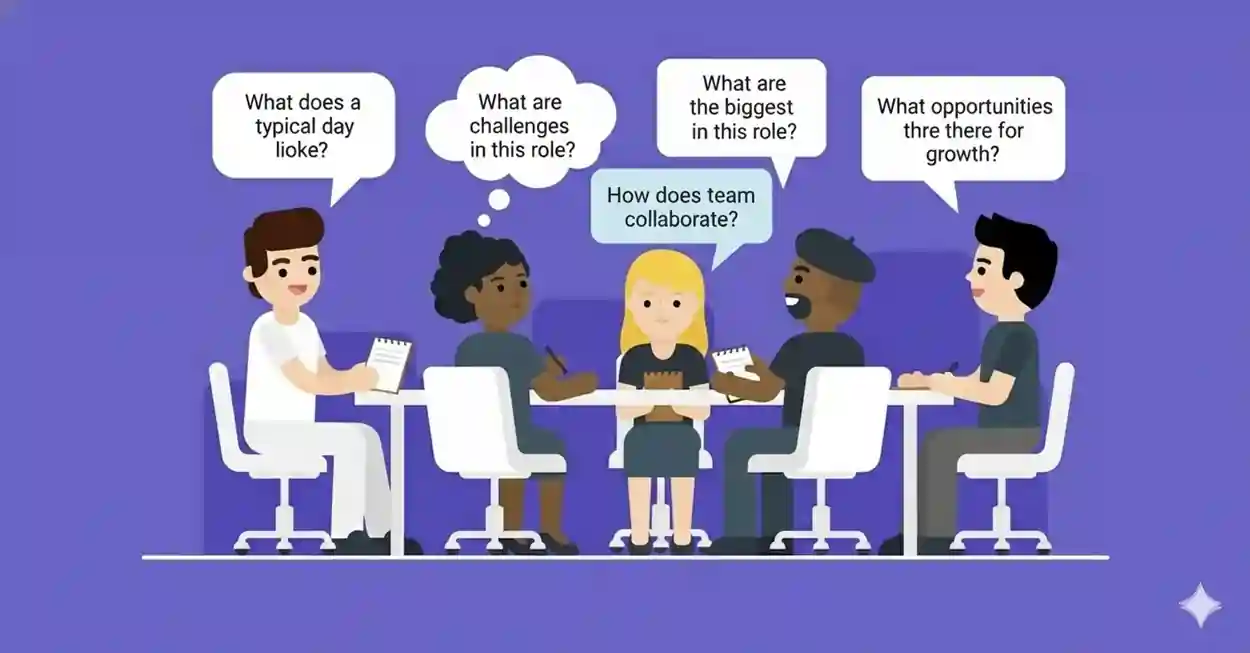
IT interviews me success sirf technical skills se nahi milti—jo candidates smart questions to ask at an IT interview leke aate hain, woh hiring managers pe lasting impression chodh jate hain. Jab interviewer poochta hai "Do you have any questions for us?", tab yahi woh moment hota hai jahan aap apni professionalism, research aur genuine interest demonstrate kar sakte hain.
Is comprehensive guide me hum 35+ practical questions to ask at an IT interview cover karenge along with unke detailed answers, taaki aap samajh saken ki kya expect karna hai. Chahe aap software developer ho, IT support specialist ho, ya fresher—ye questions aapko role, technology, culture aur growth opportunities ke baare me clear picture denge.
Agar aap interview ki overall preparation dekhna chahte hain including common behavioral aur technical questions, to ye guides bhi helpful honge:
Table of Contents
- Why Questions to Ask at an IT Interview Matter
- How Many Questions Should You Ask the Interviewer?
- Best Questions to Ask at an IT Interview (40+ Questions with Answers)
- Questions You Should Avoid in an IT Interview
- How to Customize Questions Using the Job Description
- Key Takeaways for IT Interview Success
- Conclusion
Why Questions to Ask at an IT Interview Matter
Strong questions to ask at an IT interview ye demonstrate karte hain ki aap job ko seriously le rahe hain aur long-term fit evaluate kar rahe hain—sirf paycheck nahi. Research shows ki jo candidates thoughtful questions poochte hain, unhe companies zyada engaged aur prepared candidate manti hain.
Ye questions aapko help karte hain:
-
Day-to-day responsibilities aur expectations ko clarify karne me
-
Tech stack, tools aur development practices ko samajhne me
-
Team dynamics aur company culture ko evaluate karne me
-
Career growth aur learning opportunities ko assess karne me
-
Work-life balance aur remote work policies ko verify karne me
Interview dono directions me evaluation process hai—company aapko judge kar rahi hai, aur aap bhi company ko judge kar rahe hain ki woh aapke career goals ke sath align karti hai ya nahi.
How Many Questions Should You Ask the Interviewer?
Typically, 5–7 questions to ask at an IT interview ready rakhna safe hota hai. Kuch questions ka answer interview ke dauran naturally mil jata hai, isliye end me aapko 2–3 strong questions poochne ka opportunity milta hai.
Final rounds ya hiring manager rounds me aapko 10–15 minutes tak exclusively questions poochne ka time mil sakta hai. Apne questions ko priority order me arrange karo:
-
First priority: Role-specific aur day-to-day work questions
-
Second priority: Team, technology stack aur engineering practices
-
Third priority: Growth, learning aur career development
-
Save for later: Salary, benefits aur leaves (final HR round ke liye)
Don’t let a weak resume decide your future.
Thousands of people are getting rejected — not because they’re bad, but because their resume doesn’t speak for them. Make a resume that actually gets shortlisted.
Your next job is closer than you think.
Start in 2 minutes.
No complicated forms. Just pick a template, fill details, download.
Create Resume Now →Best Questions to Ask at an IT Interview (40+ Questions with Answers)
Questions About Role & Day-to-Day Work
1. Is role me ek typical day ya week kaisa dikhta hai?
Expected Answer: Interviewer aapko daily standup meetings, sprint planning, coding time, code reviews, aur collaboration activities ke baare me batayega. Ek balanced answer me 50-60% coding time, 20-30% meetings, aur 10-20% planning/documentation hona chahiye. Ye answer aapko realistic workday expectations deta hai.
2. Agar main join karu, to pehle 3 months me aap mujhse kya expect karenge?
Expected Answer: Good companies 2-4 weeks ka structured onboarding plan batayengi jisme codebase familiarization, documentation review, aur small bug fixes shamil hote hain. First quarter me aap ko ek meaningful feature delivery karna expected hoga. Clear expectations organized team culture indicate karte hain.
3. Next 3–6 months me kaun se immediate projects par main kaam karunga?
Expected Answer: Interviewer specific project names ya initiatives mention karega jaise "mobile app redesign", "payment gateway integration" ya "microservices migration". Clear project pipeline ek organized team ka sign hai aur aapko immediate impact areas dikhata hai.
4. Is position me success ko kaise measure kiya jata hai?
Expected Answer: Metrics me code quality, on-time delivery, bug-free releases, peer review feedback, aur sprint velocity shamil ho sakte hain. Achhi companies balanced metrics use karti hain—sirf speed nahi, quality bhi. Ye clarity aapko performance expectations samajhne me madad karti hai.
5. Is role me sabse badi challenges kya hain jo aap chahte hain main solve karu?
Expected Answer: Honest answers me legacy code refactoring, technical debt reduction, performance optimization, ya team scalability challenges mention honge. Ye answer aapko team ki current pain points samajhne me help karta hai aur aapko focus areas dikhata hai.
6. Kya is role me cross-functional collaboration hoti hai? Main kiske saath zyada interact karunga?
Expected Answer: Aapko Product Managers, Designers, QA Engineers, DevOps team, aur other development teams ke saath regular interaction hogi. Modern software development collaborative hoti hai, isliye ye understanding zaroori hai ki aap kitne diverse stakeholders ke saath kaam karenge.
Questions About Tech Stack & Engineering Practices
7. Team ka current tech stack kya hai aur is stack ko choose karne ka reason kya hai?
Expected Answer: Complete tech stack mention hoga including frontend (React, Angular, Vue), backend (Node.js, Java, Python, Go), databases (PostgreSQL, MongoDB, Redis), aur cloud infrastructure (AWS, Azure, GCP). Decision rationale me scalability, team expertise, community support aur business requirements shamil honi chahiye.
8. Aap log production me kitni frequently deploy karte hain?
Expected Answer: Modern teams daily ya weekly deploys karte hain using CI/CD pipelines. Continuous deployment mature DevOps practices indicate karta hai. Agar answer "monthly" ya "quarterly" hai, to wo legacy processes indicate kar sakta hai jo slower innovation cycle create karta hai.
9. New technologies evaluate karne ka process kya hai? Final decision kaun leta hai?
Expected Answer: Structured evaluation process me proof-of-concept, team discussion, cost-benefit analysis, aur architecture review shamil hona chahiye. Decision collaborative hona chahiye—sirf top-down nahi. Ye democratic approach innovation aur team ownership encourage karta hai.
10. Engineering team feature requests aur technical debt ke beech balance kaise karti hai?
Expected Answer: Healthy teams 70-80% time features pe aur 20-30% time tech debt pe spend karte hain. Regular "tech debt sprints" ya dedicated time allocation ek good sign hai. Ye balance long-term code health aur short-term business needs dono ko address karta hai.
11. Code review, testing aur CI/CD ke around aapki best practices kya hain?
Expected Answer: Standard practices me mandatory peer reviews (har PR ko kam se kam 1-2 approvals chahiye), automated unit/integration tests (80%+ coverage target), aur automated deployment pipelines shamil hone chahiye. Manual deployments aur no code reviews red flags hain jo quality issues create kar sakte hain.
12. Production incidents handle karne ka escalation process kya hai?
Expected Answer: Clear on-call rotation system (typically 1 week per month), incident severity levels (P0-Critical, P1-High, P2-Medium, P3-Low), response time SLAs, aur post-mortem practices mention honi chahiye. Blameless post-mortems ek mature engineering culture indicate karte hain jo learning focus karta hai punishment pe nahi.
13. Aap log monitoring aur observability ke liye kaun se tools use karte hain?
Expected Answer: Modern stacks me Prometheus, Grafana, ELK Stack (Elasticsearch, Logstash, Kibana), Datadog, New Relic ya Splunk jaise tools hote hain. Comprehensive monitoring aur alerting system production reliability aur quick issue detection me help karti hai. Limited monitoring immature infrastructure ka sign hai.
14. Version control aur branching strategy kya follow karte hain?
Expected Answer: Git standard hai, aur branching strategies me Git Flow, GitHub Flow, ya Trunk-Based Development shamil ho sakte hain. Feature branches, release branches, aur hotfix processes clearly defined honi chahiye. Ye structured approach merge conflicts aur deployment issues reduce karta hai.
Questions About Team, Manager & Collaboration
15. Main kin logon ke saath sabse close work karunga? Team ka size aur structure kaisa hai?
Expected Answer: Clear team org chart batani chahiye including frontend/backend developers (5-8 members typical), QA engineers (1-2), DevOps engineers, aur product managers. Small to medium teams generally better collaboration allow karti hain. Very large teams (15+ members) coordination challenges create kar sakti hain.
16. Aap apne engineering culture ko kaise describe karenge?
Expected Answer: Positive indicators me "collaborative", "learning-focused", "innovation-driven", "ownership-oriented" aur "work-life balance supportive" jaise words shamil hain. Examples like hackathons, tech talks, knowledge sharing sessions culture ko concrete banate hain. Red flags me "fast-paced only", "high-pressure" ya "tight deadlines" exclusively focus hona.
17. Aapne khud is company me join karne ka decision kyun liya, aur aapko yahan kya cheez roke hui hai?
Expected Answer: Personal reasons jaise meaningful work, good team culture, learning opportunities, impactful products, work flexibility aur career growth honest lagenge. Specific examples (jaise "I've grown from mid-level to senior in 2 years") credibility add karte hain. Agar interviewer hesitate kare ya completely generic answer de, to red flag ho sakta hai.
18. Manager ka leadership ya management style kaisa hai?
Expected Answer: Good managers hands-on mentoring karte hain initially (first 2-3 months), phir gradually autonomy dete hain jaise team member comfortable ho jata hai. Regular 1-on-1s (weekly or bi-weekly), clear feedback, aur growth support important indicators hain. Micromanagement ya completely hands-off approaches dono problematic ho sakte hain.
19. Team conflicts ya technical disagreements ko normally kaise handle kiya jata hai?
Expected Answer: Healthy teams open discussion, data-driven decisions (performance benchmarks, scalability tests), design document reviews, aur consensus-building approach follow karte hain. "Manager decides everything" approach collaboration ki kami indicate karta hai aur team morale affect kar sakta hai.
20. Cross-functional teams (Product, Design, QA) ke saath collaboration kaise hota hai?
Expected Answer: Regular sync meetings, shared documentation (Confluence, Notion), agile ceremonies jaise sprint planning, daily standups, sprint reviews aur retrospectives mention hone chahiye. Product Requirements Documents (PRDs), design handoffs aur QA testing cycles clearly defined process indicate karte hain. Siloed teams communication problems aur delays create karte hain.
21. Remote aur office team members ke beech collaboration kaise ensure karte hain?
Expected Answer: Hybrid teams me clear communication protocols (Slack, Teams, Zoom), documented decisions, recorded meetings, aur inclusive meeting practices zaroori hain. Time zone considerations aur async communication tools (Loom videos, detailed written updates) distributed teams ke liye important hain.
Questions About Growth, Learning & Career Path
22. Is role ke liye growth path kaisa dikhta hai—next 2–3 saal me?
Expected Answer: Clear progression path mention hona chahiye jaise "Junior Developer → Mid-level Developer → Senior Developer → Tech Lead → Engineering Manager / Staff Engineer". Timeline realistic honi chahiye (typically 2-3 years per level depending on performance). Dual career tracks (management aur individual contributor) flexibility indicate karte hain.
23. Company upskilling ke liye kya resources provide karti hai—trainings, certifications, conferences?
Expected Answer: Good companies annual learning budgets provide karti hain (₹50,000-₹150,000 India me, $1000-$3000 internationally), online course subscriptions (Pluralsight, Udemy, Coursera), certification reimbursements (AWS, Azure, Google Cloud, Kubernetes), aur conference attendance support. Regular internal tech talks aur brown bag sessions bhi valuable hain. Zero learning budget growth opportunities ki kami indicate karta hai.
24. Performance review kitni frequently hoti hai, aur promotions kis basis par decide hote hain?
Expected Answer: Quarterly reviews with annual promotion cycles standard hain. Clear criteria mention hona chahiye jaise technical skills mastery, code quality, project impact, leadership qualities (mentoring juniors), communication skills aur business value delivery. Transparent rubrics aur leveling guides fair process indicate karte hain.
25. Aapki team me abhi tak jo log grow hue, unhone kya different kiya?
Expected Answer: Success stories me ownership lena (end-to-end feature delivery), mentorship karna (juniors ko guide karna), technical initiative dikhana (architecture improvements propose karna), cross-functional collaboration, aur consistent high-quality delivery common themes hone chahiye. Concrete examples generic "hard work" answers se zyada valuable hain.
26. Kya company me internal mobility hai? Kya log different teams ya roles me move kar sakte hain?
Expected Answer: Progressive companies internal transfers encourage karti hain typically 6-12 months minimum tenure ke baad. Backend se frontend, developer se DevOps, engineering se product management jaise transitions possible hone chahiye. Internal mobility retention aur employee satisfaction improve karta hai. Strict "no movement" policies growth limitations indicate karte hain.
27. Mentorship programs ya senior developers se learning opportunities kaise milti hain?
Expected Answer: Formal buddy systems (har new joiner ko ek buddy assign hota hai), pair programming sessions (especially for complex features), regular 1-on-1s with senior engineers, code review feedback loops, aur knowledge sharing sessions good signs hain. "Learn on your own" approach support ki kami indicate karta hai jo freshers ke liye especially challenging hai.
Questions About Culture, Remote Work & Work-Life Balance
28. Aap log work-from-home ya hybrid ka kya model follow karte hain?
Expected Answer: 2026 me most IT companies hybrid models follow kar rahe hain jaise 2-3 days office aur 2-3 days remote, ya fully remote with optional office access. Flexibility important hai—some teams allow employees ko choose karne dete hain ki woh kab office aana chahte hain. Strict "office only" policies post-pandemic outdated ho sakte hain aur talent attraction me problem create karte hain.
29. Is company me kaunsi cheez sabse unique hai jo aapko dusri jagah nahi mili?
Expected Answer: Unique perks ya practices jaise flexible hours (no mandatory 9-5), unlimited PTO ya generous leave policies (25-30 days annual), substantial learning budgets, employee stock options (ESOPs), innovation time (jaise Google's 20% time for side projects), sabbatical programs, mental health support, ya strong diversity initiatives mention hone chahiye.
30. Yahan work-life balance ko practically kaise support kiya jata hai?
Expected Answer: Concrete policies jaise "no meetings before 10 AM or after 5 PM", "no emails/Slack after work hours", "mandatory vacation days" (forcing people to take breaks), "no weekend work expectations", "flex time for personal commitments", aur "mental health days" actual support indicate karte hain. Generic "we value work-life balance" answer implementation ke bina hollow lag sakta hai.
31. On-call responsibilities kaise handle hoti hain? Weekend work ki expectations kya hain?
Expected Answer: Rotational on-call system fair hona chahiye (typically 1 week per month ya 1 week per quarter depending on team size), compensatory offs for weekend work, on-call allowances (extra pay), clear escalation paths, aur well-documented runbooks for common issues. 24/7 availability expectation without compensation burnout ka sign hai.
32. Aapke liye yahan ka sabse frustrating part kya hai?
Expected Answer: Honest but constructive answers jaise "slow decision-making sometimes due to stakeholder alignment", "legacy systems maintenance takes time", "growing pains during scaling phase", ya "we're still maturing some processes" realistic lagte hain aur transparency show karte hain. "Nothing, everything is perfect" unrealistic aur dishonest answer hai jo interviewer ki credibility question me dalta hai.
Questions for Different IT Roles
Software Developer / Software Engineer Questions
33. Codebase ki current biggest technical challenges kya hain?
Expected Answer: Common challenges me legacy code migration (monolith to microservices), performance bottlenecks (database query optimization, API response times), scalability issues (handling 10x traffic growth), security vulnerabilities remediation, ya technical debt reduction (improving code coverage, refactoring old modules) mention honge. Specific examples aur planned solutions honesty aur planning indicate karte hain.
34. Recent kisi major production incident ke baare me bata sakte hain, aur team ne usse kaise handle kiya?
Expected Answer: Detailed post-mortem me incident timeline (detection, response, resolution time), root cause (configuration error, third-party service failure, code bug), immediate fixes (hotfix deployment, rollback), long-term prevention measures (monitoring improvements, additional testing, architecture changes), aur lessons learned shamil hone chahiye. Blameless culture aur systematic learning mindset positive signs hain.
35. Architecture decisions ka process kaisa hai—kya developers ko bhi input dene ka mauka milta hai?
Expected Answer: Collaborative architecture reviews, RFC (Request For Comments) processes jahan koi bhi engineer design document propose kar sakta hai, architecture review board meetings, aur open discussions healthy engineering culture indicate karte hain. Junior developers ki bhi valuable input honi chahiye. Top-down only decisions (where architects decide everything without team input) innovation ko limit karte hain.
36. New feature ka lifecycle kya hota hai—idea se leke production tak?
Expected Answer: Clear stages mention hone chahiye: requirement gathering (product + engineering discussion) → design phase (technical design doc, UI/UX mockups) → development (feature branch, iterative development) → code review (peer review process) → QA testing (manual + automated tests) → staging environment testing → production deployment → monitoring & metrics tracking. Well-defined process predictability aur quality assurance provide karta hai.
37. Tech debt aur refactoring ke liye kya dedicated time allocate hota hai?
Expected Answer: Regular sprints me 20-30% capacity allocation ya quarterly "tech debt sprints" healthy practices hain. Some teams follow "boy scout rule" (leave code better than you found it) ya allocate every 4th sprint to tech debt. Clear prioritization framework (impact vs effort matrix) rational decision-making indicate karta hai. "We'll do it when we have time" approach technical debt accumulation ka sign hai jo long-term maintainability ko hurt karta hai.
IT Support / System Admin Questions
38. Aap log system health monitor karne ke liye kaun-kaun se tools use karte hain?
Expected Answer: Monitoring aur alerting tools jaise Nagios, Zabbix, SolarWinds, PRTG Network Monitor, ya cloud-native tools (AWS CloudWatch, Azure Monitor, Google Cloud Operations) mention hone chahiye. Infrastructure as Code tools (Terraform, Ansible) aur configuration management (Puppet, Chef) bhi modern practices hain. Manual monitoring modern standards se peeche hai aur proactive issue detection nahi kar pata.
39. Critical incidents ya outages ke during escalation process kya hota hai?
Expected Answer: Tiered support structure clearly defined hona chahiye (L1 handles basic issues, L2 handles complex issues, L3 senior engineers for critical architecture problems), clear SLAs (response time: 15 mins for critical P0, 1 hour for high P1, 4 hours for medium P2), incident management tools (ServiceNow, Jira Service Desk, PagerDuty), communication protocols (war rooms, status updates to stakeholders), aur post-incident reviews. Organized processes faster resolution enable karte hain.
40. Security & compliance ke liye standard practices kya follow hoti hain?
Expected Answer: Regular security audits (quarterly or annual), compliance certifications (ISO 27001, SOC 2, GDPR, HIPAA depending on industry), access controls (role-based access, principle of least privilege), encryption standards (data at rest aur in transit), vulnerability scanning tools, patch management processes, aur employee security training (phishing awareness, password hygiene) comprehensive security posture indicate karte hain.
Fresher / Entry-Level Questions
41. Fresher ke liye onboarding process aur initial training kitne weeks ka hota hai?
Expected Answer: Structured 2-4 weeks onboarding me company orientation, codebase walkthrough, development environment setup (laptop configuration, tools installation, access provisioning), documentation reading, architecture overview sessions, aur small starter tasks (documentation updates, minor bug fixes) shamil hone chahiye. Buddy assignment aur regular check-ins additional support provide karte hain. "Figure it out yourself" approach poor training indicate karta hai aur freshers ko overwhelm kar sakta hai.
42. Mentorship ya buddy system available hai kya, jo hume projects samajhne me help kare?
Expected Answer: Formal buddy assignment (typically ek mid-level ya senior developer jo first 3 months regularly guide kare), regular 1-on-1 check-ins (weekly initially, phir bi-weekly), code review feedback with explanations (not just "change this" but "why to change"), pair programming opportunities, aur open door policy for questions fresher-friendly environment indicate karte hain. Mentorship early career acceleration me bahut important role play karta hai.
43. First 6 months me aap ek fresher se kya realistic expectations rakhte hain?
Expected Answer: Reasonable expectations me codebase understanding (major modules aur their interactions), development process familiarity (Git workflow, PR process, testing practices), small feature contributions (under guidance), bug fixes (low to medium complexity), code quality awareness, aur team collaboration skills shamil hai. Immediate full-stack ownership, architectural decisions, ya complex feature leadership unrealistic aur overwhelming hai. Progressive responsibility increase healthy approach hai.
Questions You Should Avoid in an IT Interview
Kuch questions to ask at an IT interview negative impression create kar sakte hain ya unprofessional lag sakte hain:
Avoid early salary negotiations: First technical rounds me detailed salary, bonus, increment, variable pay discussions unprofessional lagte hain. Ye topics HR round ya offer negotiation stage ke liye appropriate hain. However, agar company pehle salary range poochhe, to honest answer dena theek hai.
Don't ask easily Googleable questions: "Company kya karti hai?", "Company ka headquarters kahan hai?", "Company ki founding kab hui?" type basic questions show karte hain ki aapne company website ya LinkedIn page bhi nahi dekha. Minimum research expected hai.
Avoid overly negative framing: "Yahan attrition itna high kyun hai?" ya "Kya yahan politics hoti hai?" aggressive lagta hai. Isko soften karke poochna better hai jaise "Team retention improve karne ke liye kya initiatives hain?" ya "Team dynamics ko healthy rakhne ke liye kya practices follow karte hain?"
Don't ask about perks first: Immediate focus on leaves, work-from-home, free lunch, gym facilities ya other benefits transactional mindset indicate karta hai. Pehle role, work, aur growth pe focus karo, benefits naturally baad me discuss honge.
Avoid yes/no questions: "Kya yahan remote work hai?" se zyada better hai "Remote work policy kya hai aur flexibility ka kya scope hai?" Open-ended questions deeper insights provide karte hain.
Don't ask about interviewer's personal life: "Aap kahan rehte hain?", "Aapki salary kya hai?" inappropriate aur unprofessional questions hain. Focus professional topics pe rakho.
How to Customize Questions Using the Job Description
Best questions to ask at an IT interview job description se directly derive hote hain. Ye customization aapki preparation aur genuine interest demonstrate karta hai:
Technology-specific questions: JD me agar "React, Node.js, MongoDB stack" mentioned hai, to targeted questions poochiye:
-
"React me aapka preferred state management approach kya hai—Redux, Context API, Zustand, ya kuch aur?"
-
"Node.js microservices me inter-service communication kaise handle karte hain—REST APIs, gRPC, ya message queues?"
-
"MongoDB scaling strategy kya hai—sharding, replication, ya both?"
Project-based questions: Agar JD me "greenfield project", "legacy system migration", ya "platform modernization" mentioned hai:
-
"Is greenfield project me technology choices ke behind kya reasoning hai?"
-
"Legacy migration ka timeline kya hai aur biggest technical risks kya hain?"
-
"Migration ke during legacy aur new system parallel kaise chalenge?"
Growth phase questions: Rapidly scaling companies (hiring aggressively, expanding to new markets) me poochiye:
-
"Rapid growth ke dauran code quality aur development processes stable kaise rakhte hain?"
-
"Team size 2x ya 3x hone pe communication aur collaboration kaise scale karte hain?"
-
"New team members ko quickly productive banane ka approach kya hai?"
Industry-specific questions: Fintech, healthcare, e-commerce jaise industries ke unique challenges hote hain:
-
Fintech: "Financial transaction security aur compliance (PCI-DSS) kaise ensure karte hain?"
-
Healthcare: "Patient data privacy (HIPAA) ke liye kya measures hain?"
-
E-commerce: "Peak traffic seasons (sales, festivals) ke liye kaise prepare karte hain?"
Apne experience se connect karo: Resume me mentioned projects se questions link karo:
-
"Maine pichle project me CI/CD pipeline implement ki thi using Jenkins aur Docker. Yahan deployment automation ka maturity level kya hai aur kaun se tools use hote hain?"
-
"Mere last role me microservices architecture pe kaam kiya tha. Yahan current architecture monolithic hai ya microservices, aur future plans kya hain?"
Ye approach do benefits deta hai: (1) Aapki expertise highlight hoti hai, (2) Relevant aur thoughtful questions poochte hain jo genuine interest dikhate hain.
Interview me success ke liye strong resume bhi zaroori hai. Agar aapne apna resume 2026 standards ke according optimize nahi kiya, to ye guides check karein:
Conclusion
Smart questions to ask at an IT interview aapki interview performance me game-changer ho sakte hain. Ye questions na sirf interviewer ko impress karte hain, balki aapko bhi empower karte hain ki aap informed decision le saken about joining the company. Remember, interview ek two-way street hai—company aapko evaluate kar rahi hai, aur aap bhi company ko evaluate kar rahe hain.
Is article me covered 40+ questions ko apne specific situation, role type (developer, support, fresher), aur company context ke according customize karo. Job description ko dhyan se padho aur usse relevant questions prepare karo. Jitna zyada targeted aur thoughtful aapke questions honge, utna better impression padega.
Key Takeaways for IT Interview Success
-
Har interview round ke liye 5-7 questions prepare karo
-
Role, tech stack, team dynamics aur growth opportunities pe focus karo
-
Early rounds me salary/benefits avoid karo
-
Easily Googleable basic questions mat poochho
-
Active listening karo aur genuine interest dikhao
-
Notes lena professional hai aur encouraged
-
Questions ka quality quantity se zyada important hai
Interview ki complete preparation ke liye sirf questions kaafi nahi hain—aapka resume bhi ATS-optimized aur impactful hona chahiye. Resume building aur interview preparation ke liye ye resources explore karein:
Ultimately, right questions to ask at an IT interview aapko ek passive candidate se engaged professional me transform kar dete hain. Ye questions poochna aapka right hai aur responsibility bhi—kyunki aap apne career ke next important step ke baare me decision le rahe hain. Confidence ke saath questions poochho, answers ko carefully evaluate karo, aur apne liye best fit company choose karo.
All the best for your IT interviews! ?