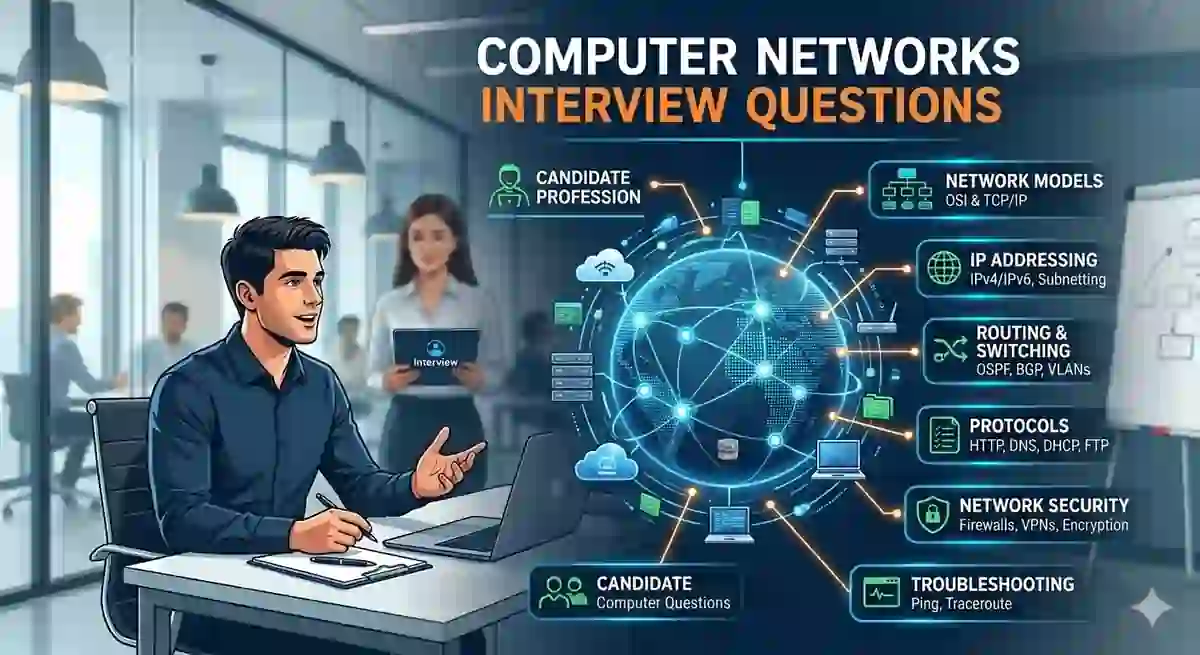
अगर आप 2026 में TCS, Infosys, Wipro, HCLTech, Tech Mahindra या किसी product-based company में Network Engineer, System Administrator, NOC Engineer, या Technical Support Engineer role के लिए apply कर रहे हैं, तो Computer Networks interview आपका सबसे बड़ा filter होगा। Indian IT recruiters, खासकर Naukri और LinkedIn पर hiring करने वाले, सबसे पहले यही check करते हैं कि क्या आपको OSI model, TCP/IP, IP addressing, subnetting, routing और network security के fundamentals clear हैं। Fresher हो या 3-4 साल का experienced candidate, interviewer घुमा-फिरा कर वही core concepts पूछता है, बस depth बदल जाती है। इस guide में हम Top 50+ Computer Networks interview questions को basic से advanced तक, बिल्कुल simple Hinglish में, real answer के साथ cover करेंगे, साथ ही ये भी बताएंगे कि इन skills को अपने resume में ATS-friendly format में कैसे दिखाना है ताकि shortlist होने के chances 3x बढ़ जाएं।
2026 में Computer Networks Interview का Pattern क्या है?
2026 में pattern काफी बदल गया है। पहले सिर्फ theory पूछते थे - OSI layers के नाम बता दो। अब Indian MNCs और startups scenario-based questions पूछते हैं। जैसे - "अगर एक user को website open करने में 10 second लग रहा है, तो आप कैसे troubleshoot करोगे?" या "AWS VPC में subnet कैसे design करोगे?" InterviewBit, Naukri और PerfectNotes जैसे sources के analysis से पता चलता है कि 2026 में 4 buckets में questions बंटे हैं - Fundamentals (30%), Protocols & Addressing (30%), Routing & Switching (20%) और Security & Cloud Networking (20%)।
Recruiter अब सिर्फ रटे हुए definition नहीं सुनना चाहता। वो देखना चाहता है कि क्या आप concept को real network से connect कर पाते हो। इसलिए हर answer के साथ एक छोटा example या use-case जरूर दें। जैसे DNS explain करते समय कहें - "जैसे हम phone में नाम से contact save करते हैं, वैसे ही DNS domain name को IP में convert करता है।" इससे interviewer को लगेगा कि आपका concept clear है।
Indian context में एक और बात - बहुत सी कंपनियां अभी भी service-based hiring में CCNA level knowledge को ही benchmark मानती हैं। अगर आपके resume पर CCNA, CCNP या N+ certified लिखा है, तो interviewer उसी level के questions पूछेगा। इसलिए resume में वही लिखें जो आप confidently explain कर सकें।
Basic Level Questions - Fresher Ke Liye Top 15 Questions
ये questions हर fresher से पूछे जाते हैं, चाहे आप B.Tech, BCA, MCA या Diploma background से हों। इनका purpose आपका base check करना है।
1. OSI Model क्या है और उसके 7 Layers कौन से हैं?
Answer: OSI (Open Systems Interconnection) model एक conceptual framework है जो बताता है कि कैसे data एक device से दूसरे device तक 7 layers से होकर जाता है। Layers हैं - 1. Physical (cable, signals), 2. Data Link (MAC address, switch), 3. Network (IP address, router), 4. Transport (TCP/UDP), 5. Session, 6. Presentation (encryption, compression), 7. Application (HTTP, FTP, DNS)। Interview में trick ये है कि interviewer पूछता है - "Switch किस layer पर काम करता है?" Answer है - L2 (Data Link), जबकि L3 switch Network layer पर भी काम करता है। Router हमेशा L3 पर।
2. IP Address, MAC Address और Port Number में क्या फर्क है?
Answer: IP Address logical address है जो Network layer पर device को identify करता है, जैसे 192.168.1.10, और ये change हो सकता है अगर network बदले। MAC Address physical address है जो Network Interface Card (NIC) पर factory से burn होता है, जैसे 00:1A:2B:3C:4D:5E, और ये permanent होता है। Port Number Transport layer पर application को identify करता है, जैसे HTTP के लिए 80, HTTPS के लिए 443। Simple analogy - IP = आपके घर का address, MAC = आपके आधार नंबर जैसा unique ID, Port = घर के अंदर कमरा नंबर।
अन्य Basic Questions जिनके Answers आपको तैयार रखने हैं:
- What is Computer Network? - दो या दो से ज्यादा devices का interconnection जो data और resource share करे, जैसे LAN, MAN, WAN।
- LAN, MAN, WAN में अंतर? - LAN (एक building/campus, 1km तक), MAN (एक शहर, 10-50km), WAN (देश/दुनिया, Internet सबसे बड़ा WAN)।
- Hub vs Switch vs Router? - Hub L1 पर broadcast करता है सबको भेजता है, Switch L2 पर MAC देखकर सही device को भेजता है, Router L3 पर IP देखकर different networks को connect करता है।
- What is Bandwidth and Throughput? - Bandwidth maximum capacity है (जैसे 100 Mbps pipe), Throughput actual data transfer speed है जो congestion से कम हो सकती है।
- What is Packet, Frame, Segment? - Segment (Transport layer), Packet (Network layer), Frame (Data Link layer)।
- Difference between TCP and UDP? - TCP reliable, connection-oriented, slow (जैसे registered post), UDP unreliable, connectionless, fast (जैसे normal post) - video streaming में UDP use होता है।
- What is DNS? - Domain Name System जो www.google.com को 142.250.190.14 में translate करता है।
- What is DHCP? - Dynamic Host Configuration Protocol जो device को automatic IP देता है, वरना हर बार manual IP देना पड़ता।
- What is Firewall? - Network का security guard जो unauthorized access को block करता है।
- What is Ping and Traceroute? - Ping connectivity check करता है (ICMP), Traceroute रास्ते में कौन-कौन से routers हैं वो दिखाता है।
Intermediate Level - TCP/IP, Subnetting, DHCP, DNS और VLAN
अगर आपने basic clear कर लिया, तो interviewer intermediate पर आता है। यहाँ Indian recruiters subnetting और VLAN से सबसे ज्यादा questions पूछते हैं क्योंकि ये practical networking का core है।
Subnetting और CIDR को Simple तरीके से कैसे समझें?
Question: What is Subnetting and CIDR?
Answer: Subnetting एक बड़े network को छोटे-छोटे sub-networks में बांटना है ताकि IP wastage रुके और management आसान हो। जैसे आपके पास 192.168.1.0/24 है (254 IPs), लेकिन आपको 4 department के लिए 4 अलग network चाहिए, तो आप /26 में divide कर दोगे - हर subnet में 62 IPs। CIDR (Classless Inter-Domain Routing) वही notation है - /24 मतलब 24 bits network के लिए, 8 bits host के लिए। Indian interviews में अक्सर पूछते हैं - "192.168.10.0/28 में कितने usable hosts हैं?" Answer - 2^(32-28) - 2 = 14 hosts। Formula याद रखें - Usable hosts = 2^host bits - 2 (एक network address, एक broadcast)।
Question: IPv4 vs IPv6 में क्या अंतर है?
Answer: IPv4 32-bit है (4.3 billion addresses, जैसे 192.168.1.1), IPv6 128-bit है (340 undecillion addresses, जैसे 2001:0db8:85a3::8a2e:0370:7334)। IPv4 में NAT की जरूरत पड़ती है, IPv6 में NAT की जरूरत नहीं। 2026 में Jio, Airtel और बड़ी IT कंपनियां dual-stack (IPv4+IPv6) पर shift हो रही हैं।
VLAN, VPN और NAT में क्या फर्क है? Interviewer हमेशा Confuse करता है
Answer: VLAN (Virtual LAN) एक physical switch को logically कई virtual switches में बांटना है। जैसे एक ही switch पर HR का VLAN 10 और Finance का VLAN 20, दोनों का traffic अलग रहेगा बिना extra switch खरीदे। VPN (Virtual Private Network) public internet पर secure private tunnel बनाता है, जैसे Work From Home में office network access करना। NAT (Network Address Translation) private IP (192.168.x.x) को public IP में convert करता है ताकि कई devices एक ही public IP से internet use कर सकें। घर का WiFi router NAT का सबसे common example है।
और Important Intermediate Questions:
- TCP 3-Way Handshake क्या है? - SYN -> SYN-ACK -> ACK। Client SYN भेजता है, Server SYN-ACK से reply करता है, Client ACK भेजकर connection establish करता है।
- What is ARP and RARP? - ARP IP से MAC निकालता है, RARP MAC से IP निकालता है (अब DHCP ने replace कर दिया)।
- DHCP Process (DORA)? - Discover, Offer, Request, Acknowledge - 4 steps में IP मिलता है।
- What is DNS Lookup Process? - Browser -> OS Cache -> Router Cache -> ISP DNS -> Root Server -> TLD -> Authoritative Server।
- Difference between Static and Dynamic Routing? - Static manual entry है (छोटे network के लिए), Dynamic protocols (OSPF, BGP) automatic best path चुनते हैं।
- What is SSL/TLS? - Data को encrypt करने का protocol, HTTPS में use होता है, port 443।
- What is Proxy Server? - Client और Internet के बीच middleman जो caching और filtering करता है।
Advanced Level - Routing Protocols, Network Security और Cloud Networking
Experienced candidates (2+ years) या M.Tech/CCNP level interviews में यही section decide करता है कि selection होगा या नहीं। यहाँ theory से ज्यादा troubleshooting और design पूछते हैं।
Routing Protocols - OSPF, BGP, RIP में से कब क्या Use होता है?
Question: Explain OSPF vs BGP vs RIP
Answer: RIP (Routing Information Protocol) सबसे पुराना, hop count (max 15) से best path चुनता है, छोटे LANs में use होता था अब obsolete है। OSPF (Open Shortest Path First) link-state protocol है जो Dijkstra algorithm से shortest path निकालता है, एक ही organization (Autonomous System) के अंदर use होता है, fast convergence। BGP (Border Gateway Protocol) path-vector protocol है जो different AS (जैसे Airtel, Jio, Google) के बीच routing करता है, Internet का backbone BGP पर ही चलता है। Interview में पूछ सकते हैं - "OSPF area क्या होता है?" - बड़े network को छोटे areas में बांटना ताकि routing overhead कम हो।
अन्य Advanced Questions:
- What is DDoS Attack and How to Prevent? - Distributed Denial of Service में हजारों bots से server पर traffic flood किया जाता है। Prevention - Rate limiting, Anycast, Firewall, Cloudflare जैसे mitigation।
- What is Load Balancer? - Traffic को कई servers में distribute करता है ताकि कोई एक server overload न हो। Types - L4 (Transport) और L7 (Application)।
- What is CDN? - Content Delivery Network जो content को edge servers पर cache करता है ताकि user को nearest server से data मिले, speed बढ़ती है।
- What is SDN (Software Defined Networking)? - Control plane और Data plane को अलग करना ताकि network को software से centrally manage किया जा सके।
- Explain TCP Congestion Control (Slow Start, AIMD)? - Network में congestion होने पर TCP window size को घटा-बढ़ा कर manage करता है।
- What is Subnet Mask 255.255.255.0 का मतलब? - /24, 24 bits network, 8 bits host।
- Leaf-Spine Architecture क्या है? - Modern data center design जहां हर leaf switch हर spine से connected होता है, predictable latency और horizontal scaling के लिए perfect, cloud और hyper-converged infra में use होता है।
- What is NAT Types? - Static NAT (1-to-1), Dynamic NAT (pool से), PAT/NAPT (many-to-one, port के साथ)।
- What is QoS? - Quality of Service जो Voice/Video traffic को priority देता है ताकि call में lag न हो।
| Topic | Fresher से क्या पूछते हैं | Experienced से क्या पूछते हैं |
|---|---|---|
| OSI Model | 7 layers के नाम और function | Encapsulation/Decapsulation और real packet flow |
| IP & Subnetting | IPv4 vs IPv6, Class A/B/C | CIDR design, VLSM, supernetting |
| Routing | Static vs Dynamic का definition | OSPF LSA types, BGP attributes, troubleshooting |
| Security | Firewall क्या है | DDoS mitigation, SSL handshake, IPS/IDS difference |
| Cloud Networking | Basic definition | VPC, Subnet, Security Group, Load Balancer design |
| Troubleshooting | Ping क्या है | Scenario - packet loss हो रहा है तो Wireshark से कैसे debug करोगे |
Resume में Computer Networks Skills को सही Format में कैसे दिखाएं - ATS Guide
Technical knowledge होना एक बात है, और उसे resume में सही format में दिखाना दूसरी बात। Indian ATS (Applicant Tracking System) जैसे Naukri ATS, Taleo, Workday सिर्फ keywords नहीं, बल्कि structure भी scan करते हैं। अगर आपका resume Word में बनी हुई fancy table वाला है, तो ATS उसे read ही नहीं कर पाएगा।
ResumeEra.xyz पर हमने देखा है कि Network Engineer resume के लिए सबसे ज्यादा shortlist होने वाला format Reverse-Chronological + Skills Matrix है। इसमें सबसे ऊपर Profile Summary (2-3 lines), फिर Core Skills (bullet में - TCP/IP, DNS, DHCP, VLAN, OSPF, Wireshark), फिर Experience/Projects, फिर Certifications (CCNA, CCNP), और अंत में Education।
Resume में Skills कैसे लिखें - सही vs गलत:
- गलत: "Knowledge of networking" - बहुत vague है, ATS rank नहीं करेगा।
- सही: "Configured VLAN, Inter-VLAN routing & DHCP on Cisco Catalyst 2960; Troubleshot OSPF adjacency issues using Wireshark & ping/traceroute" - specific tool + action + result।
- गलत: सिर्फ "CCNA" लिखना।
- सही: "CCNA Certified (Cisco ID: XXXXX, Valid till 2027) - Scored 920/1000" - credibility बढ़ती है।
PDF vs Word - क्या भेजें? Naukri और LinkedIn Easy Apply पर PDF best है क्योंकि formatting intact रहती है, लेकिन कुछ old ATS (जैसे कुछ PSU portals) Word (.docx) ही मांगते हैं। Best practice - दोनों ready रखें। ResumeEra पर आप एक ही resume को PDF और Word दोनों में download कर सकते हैं, बिना layout बिगड़े। Font - Calibri/Arial 10-11pt, margin 0.7 inch, और एक page fresher के लिए, दो page experienced के लिए।
Keywords जो 2026 में ATS पकड़ता है: अपने resume में ये terms जरूर रखें अगर आपने काम किया है - TCP/IP, OSI Model, Subnetting, VLAN, VPN, NAT, DHCP, DNS, OSPF, BGP, Wireshark, Cisco IOS, Firewall, AWS VPC, Load Balancer, Network Troubleshooting। लेकिन keyword stuffing मत करें, हर skill के साथ एक छोटा proof लिखें - जैसे "Implemented NAT overload for 50+ users"।
7 Steps में Computer Networks Interview की तैयारी कैसे करें
Random YouTube videos देखने से selection नहीं होगा। एक structured plan follow करें:
- Step 1 - Syllabus को 4 हिस्सों में बांटें (Day 1): Fundamentals, IP Addressing, Routing/Switching, Security+Cloud। हर हिस्से के लिए एक notebook बनाएं।
- Step 2 - OSI और TCP/IP को Diagram से समझें (Day 2): हर layer का PDU (Data, Segment, Packet, Frame, Bits) और device (Router, Switch, Hub) याद करें। खुद से diagram बनाकर explain करने की practice करें।
- Step 3 - Subnetting की Daily Practice (Day 3): रोज 10 subnetting questions solve करें - जैसे 10.0.0.0/22 में कितने subnet और hosts। Binary conversion fast करें।
- Step 4 - Practical Lab करें (Day 4): Cisco Packet Tracer या GNS3 पर VLAN, DHCP, Static Routing configure करें। Interviewer पूछता है - "Packet Tracer पर किया है क्या?" तो आप confident होकर बता पाएंगे।
- Step 5 - Wireshark और Ping Tools सीखें (Day 5): अपने laptop पर Wireshark install कर DNS query capture करें, ping, tracert, nslookup, netstat commands चलाएं और output समझें।
- Step 6 - Mock Interview और STAR Technique (Day 6): हर answer को STAR (Situation, Task, Action, Result) में बोलें। जैसे - "College project में हमने 3 router वाला network बनाया (S), मुझे OSPF configure करना था (T), मैंने area 0 बनाया (A), connectivity 100% achieve हुई (R)।"
- Step 7 - Resume Tailoring और Company Research (Day 7): जिस company में interview है, उसके tech stack के हिसाब से resume customize करें। अगर company cloud पर है तो VPC, Security Group highlight करें। ResumeEra.xyz के ATS-friendly templates से 10 मिनट में tailored resume बनाएं और PDF में export करें।
Common Mistakes जो Indian Candidates Interview में करते हैं
हमने 500+ mock interviews के feedback से ये mistakes नोट की हैं:
- Mistake 1 - Definition रट लेना, Example न देना: सिर्फ "TCP is reliable" बोलने से काम नहीं चलेगा। Example दें - "जैसे bank transaction में TCP use होता है क्योंकि data loss नहीं होना चाहिए, जबकि YouTube live में UDP चलता है क्योंकि speed ज्यादा जरूरी है।"
- Mistake 2 - Port Numbers भूल जाना: Interviewer अक्सर पूछता है - FTP (21), SSH (22), DNS (53), HTTP (80), HTTPS (443), DHCP (67/68) के ports। ये रट कर जाएं।
- Mistake 3 - OSI vs TCP/IP में Confuse होना: OSI 7 layers, TCP/IP 4 layers (Application, Transport, Internet, Network Access)। बहुत से fresher 5 layers वाला hybrid model भी बता देते हैं और confuse हो जाते हैं। Clear रखें - interview में OSI पूछे तो 7, TCP/IP पूछे तो 4।
- Mistake 4 - Resume में झूठा Skill लिखना: "Expert in BGP" लिख दिया पर basic question पर अटक गए तो negative marking। सिर्फ वही लिखें जो आप whiteboard पर explain कर सकें।
- Mistake 5 - Troubleshooting Steps न बताना: जब पूछे "Internet नहीं चल रहा तो क्या करोगे?" तो systematic बताएं - 1. Physical check (cable), 2. IP check (ipconfig), 3. Gateway ping, 4. DNS ping (8.8.8.8), 5. Traceroute। Random नहीं।
- Mistake 6 - Resume का Format ATS-Unfriendly रखना: Canva के colorful infographic resume ATS parse नहीं कर पाता। Indian recruiters 80% cases में Naukri ATS use करते हैं जो simple Word/PDF parsing करता है। इसलिए clean, single-column, text-based format use करें।
- Mistake 7 - Salary और Location पर पहले ही अटक जाना: Technical round में package पूछना unprofessional लगता है। पहले skills prove करें, HR round में negotiation करें।
FAQs - Computer Networks Interview Questions
Q1. Fresher के लिए Computer Networks में सबसे ज्यादा पूछे जाने वाले 5 questions कौन से हैं?
Top 5 हैं - 1) OSI model के 7 layers, 2) TCP vs UDP difference, 3) IP vs MAC address, 4) What is DNS and DHCP, 5) Hub vs Switch vs Router। इनके साथ हमेशा एक example तैयार रखें। जैसे TCP vs UDP में real-life analogy दें तो interviewer impress होता है।
Q2. क्या 2026 में IPv6 से questions पूछे जा रहे हैं?
हां, बिल्कुल। Jio और Airtel के 5G rollout और cloud adoption के कारण IPv6 अब hot topic है। पूछते हैं - IPv6 address कितने bits का है (128-bit), IPv4 से क्या फायदे हैं, और dual-stack क्या होता है। Basic definition और address format (hexadecimal, 8 groups) याद रखें।
Q3. Computer Networks interview के लिए कौन सा certification सबसे valuable है?
India में fresher के लिए CCNA (Cisco Certified Network Associate) सबसे ज्यादा value देता है, experienced के लिए CCNP या AWS Certified Advanced Networking। Naukri पर 70% Network Engineer jobs में CCNA preferred लिखा होता है। लेकिन certificate के साथ practical knowledge भी दिखाना जरूरी है।
Q4. Wireshark से क्या पूछते हैं interview में?
पूछते हैं - Wireshark क्या है, 3-way handshake को Wireshark में कैसे देखोगे, DNS query कैसे capture करोगे। Answer - Wireshark packet sniffer है जो real-time traffic capture करता है। Filter जैसे tcp.port==80 या dns से specific packets देख सकते हैं। अगर आपने lab में use किया है तो जरूर बताएं।
Q5. Resume में Computer Networks projects कैसे दिखाएं?
Project section में इस format में लिखें - Project Title | Tools: Cisco Packet Tracer, Wireshark | Description: 3-router, 2-switch वाला campus network design किया, VLAN और OSPF configure किया, 99% uptime achieve किया। इससे recruiter को आपका hands-on पता चलता है और ATS keywords भी cover होते हैं। ResumeEra.xyz पर D-FORMAT templates में project section पहले से ATS-optimized होता है।
Q6. TCP 3-way handshake क्यों जरूरी है?
क्योंकि TCP reliable connection है। 3-way handshake से दोनों devices confirm करते हैं कि वो data भेजने और receive करने के लिए ready हैं, sequence numbers sync होते हैं, और duplicate packets से बचा जाता है। इसके बिना data loss या wrong order में data पहुंच सकता है।
Q7. Interview में subnetting का question solve नहीं हुआ तो क्या करें?
घबराएं नहीं, step-by-step approach बताएं। जैसे - "Sir, मैं पहले host bits निकालूंगा, फिर 2^n से hosts निकालूंगा।" Process बताने से भी half marks मिलते हैं। और पहले से 10-15 subnetting sums की practice करके जाएं ताकि speed बनी रहे।
Q8. क्या Computer Networks interview में coding पूछते हैं?
Core networking roles में coding नहीं पूछते, लेकिन अगर role Network Automation या DevOps है तो Python basics (socket programming, ping script) पूछ सकते हैं। Fresher IT support roles में सिर्फ networking theory और troubleshooting ही पूछते हैं।
Computer Networks interview में selection का मंत्र है - concept को रटना नहीं, समझना और example से जोड़ना। 2026 में companies ऐसे candidates ढूंढ रही हैं जो theory के साथ-साथ Packet Tracer, Wireshark और basic cloud networking (VPC, subnet) भी जानते हों। अपने answers को छोटा, structured और real-life से connected रखें, और हर skill को resume में proof के साथ दिखाएं। एक clean, ATS-friendly resume ही आपका पहला interview है - recruiter उसे 6 सेकंड में scan करता है। इसलिए ResumeEra.xyz के tested templates में अपना networking resume बनाएं, PDF और Word दोनों में ready रखें, और हर interview से पहले company-specific tailoring जरूर करें। तैयारी systematic होगी तो 50 questions क्या, 100 questions भी आप confident होकर crack कर देंगे। All the best!