Table of Contents
-
India’s job market in 2026
-
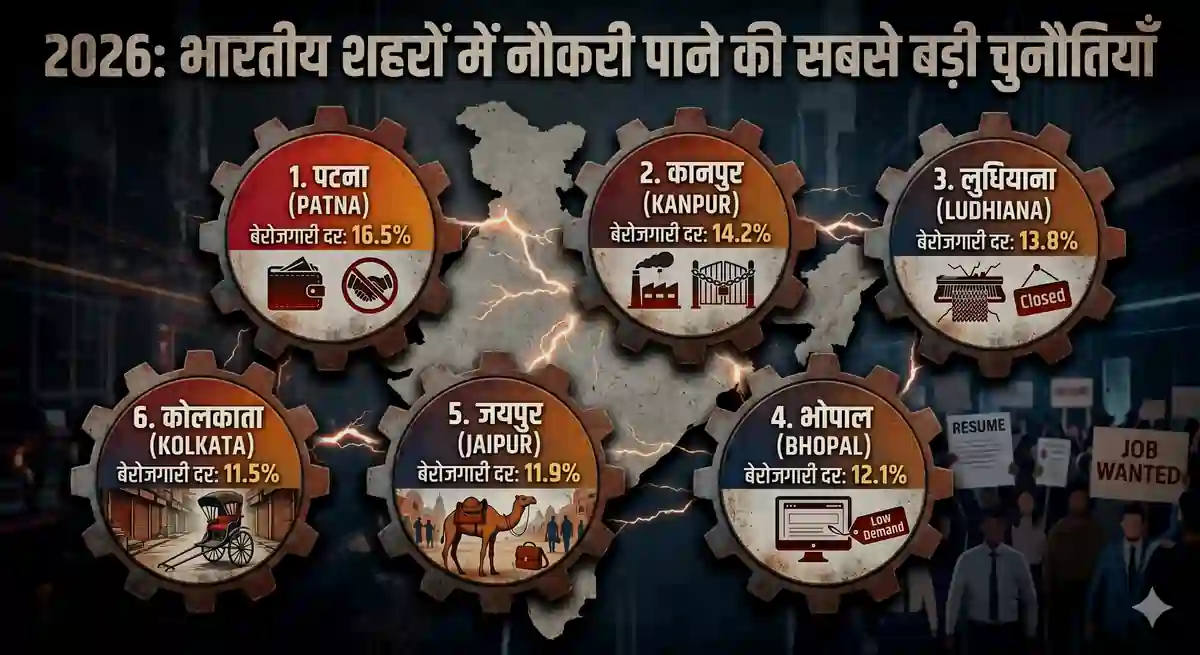
Cities where job hunting is toughest
-
Cities where jobs feel easier
-
Why some metros are “harder” than others
-
How competition varies across Indian cities
-
What this means for job seekers in 2026
-
How Resumeera (free resume builder) improves your chances
-
Frequently Asked Questions (FAQ)
-
Conclusion
India’s job market in 2026
2026 mein India ka job market city‑level par ek mixed picture dikhata hai. Periodic Labour Force Survey (PLFS) ke latest April 2026 bulletin ke mutabik, India ka overall unemployment rate 5.2% hai, lekin urban unemployment 6.6 %tak pahunch chuka hai — matlab cities mein job pressure suburbs ya rural areas se zyada hai. Youth unemployment (15–29 saal) 15.3% ki level par hai, jo young graduates aur freshers ke liye extra competition create karta hai.
Ek parallel trend bhi dekhna zaroori hai: formal jobs ka majority ab non‑metro areas se aata hai. Ek report ke hisaab se, India ka formal workforce ka lagbhag 70% tier‑2/3 cities aur smaller towns mein concentrated hai, jahan local hiring hota hai. Iska matlab: “sirf Mumbai‑Delhi‑Bengaluru se job milega” ka purana cliché 2026 mein thoda outdated ho chuka hai.
Isliye, aaj job search ki difficulty ka asli measure urban‑only unemployment + cost of living+competition density teeno combine karke nikalta hai.
Cities where job hunting is toughest
U.S.‑style “JOLTS‑like” metro‑level data India mein publicly available nahi hai, isliye hum ek qualitative hardness index use karte hain jo yeh elements combine karta hai:
-
High cost of living (Numbeo‑type indices)
-
High talent density (IT, finance, services hubs)
-
Hiring growth trends vs. applicant growth trends
Is lens se toughest‑feeling metros generally yeh hain:
| City | Why it feels hard | Related Resumeera blog (for application tips) |
|---|---|---|
| Mumbai | India ki sabse mehange cities mein se ek, aur banking, media, advertising, consulting jaise sectors ke liye pan‑India competition. | How to write a resume for a part‑time job in 2026(for side roles while main search in progress) |
| Delhi NCR (Delhi, Gurugram, Noida) | Large corporate & IT ecosystem, par saath‑saath Delhi‑based portals ke analytics ke hisaab se high applicant volume. | How to write a resume in 2026– generic guide, but metro‑friendly. |
| Bengaluru | India’s top tech & startup hub, salaries high, lekin competition bhi intense — especially freshers vs. experienced pool. | Fresher resume format for India |
| Pune | IT, automotive, manufacturing, services mix se pan‑India students/graduates attract ho jaate hain. | Resume work experience– for those adding internships/internships/internships‑to‑experience‑ratio‑boost. |
| Hyderabad & Chennai | Stable tech + services hubs, but entry‑level roles mein graduate glut lagta hai. | ATS‑friendly resume format for beginners |
Ek typical scenario:
-
Candidate A: Mumbai, high rent + high competition → 6–9 mahine ki job search sustain karne ke liye bada emergency fund chahiye.
-
Candidate B: Similar profile, Coimbatore, Indore, Lucknow jaise city mein → same time‑to‑hire, lekin kam rent + kam daily expenses ke wajah se zyada calm, realistic search.
Cities where jobs feel easier
“Easier” ka matlab yahan‑par:
-
Lower cost of living (Numbeo indices ke hisaab se cheaper than Tier‑1 metros)
-
Good hiring growth, especially in tier‑2/3 hubs (IT services, manufacturing, education, government, logistics, retail).
Easier‑feeling metros / tier‑2 cities generally yeh hain:
-
Coimbatore– Growing IT/industrial base + comparatively low cost of living.
-
Indore– Business growth + lower living cost se ideal landing spot for relocation‑open professionals.
-
Jaipur– Tourism, education, services + lower cost vs. Delhi NCR.
-
Lucknow– Government jobs, healthcare, education, logistics mein steady hiring, and affordable lifestyle.
-
Kochi / Visakhapatnam– Port‑driven, services + IT support, moderate cost of living.
Non‑metro tilt:
Reports batate hain ki formal jobs ka 70% ab non‑metro regions se aa raha hai, jahan tier‑3 cities alone 40% employment share rakhti hain.
Iska matlab: smaller cities, district headquarters, aur industrial towns mein long‑term job search sustain karna often cheaper + competitive‑pressure‑less hota hai compared to megacities.
Why some metros are “harder” than others
2026 mein why Mumbai/Delhi/Bengaluru/Pune “harder” lagte hain, iska simple math yeh hai:
-
High cost of living→ Insurance, rent, food, transport, education, healthcare sab mehange, jisse search‑time per rupee ka pressure badhta hai.
-
High competition→
-
Top metros IT, finance, consulting, media, e‑commerce, startups ke global/focus‑hubs hain.
-
Iska effect: same role ke liye pan‑India + abroad‑based candidates bhi apply kar sakte hain.
-
-
Hiring cycles
Isliye, “hardness” ka actual formula roughly aisa ho sakta hai:
Job‑search‑hardness ≈ (Cost‑of‑living pressure) × (Competition density) ÷ (Local hiring depth)
High metro + high competition + low local‑hiring depth = high hardness.
Low‑cost + medium competition + steady hiring = relatively easier environment.
How competition varies across Indian cities
PLFS + cost‑of‑living + hiring‑trend data ko milakar, yeh broad pattern dekha ja sakta hai:
-
High‑competition metros (Mumbai, Delhi, Bengaluru, Hyderabad, Pune, Chennai, Gurugram, Noida):
-
Maximum roles in IT, fintech, consulting, media, sales, HR, etc.
-
Isliyeentry‑levelaurmid‑career dono levels par number of applicants per openinghigh ho sakta hai.
-
-
Mid‑competition tier‑2(Ahmedabad, Jaipur, Coimbatore, Visakhapatnam, Ludhiana, Bhopal, Vijayawada):
-
IT services, manufacturing, education, logistics, retail, semi‑government roles.
-
Hiring growth double‑digit dikhaya gaya hai, isliye time‑to‑hire kabhi‑kabhi lower hota hai.
-
-
Lower‑competition, lower‑cost(Lucknow, Indore, Bhubaneswar, Agartala, regional capitals):
-
Government, education, healthcare, state‑level corporates, local retailers.
-
Isme hiring pace stable hota hai, lekin opportunities bhi limited hote hain, isliye search karna slow maar‑maar lag sakta hai.
-
Isliye, “hardest city” = often Mumbai ya Delhi‑NCR,
Par “easiest path to job” = kabhi‑kabhi mid‑cost tier‑2 jaise Coimbatore, Indore, Lucknow, Jaipur.
What this means for job seekers in 2026
Is data ko practical steps mein convert karo:
-
If you are in a high‑difficulty metro(Mumbai, Delhi, Bengaluru, Pune, Gurugram):
-
Realistic search horizon:6–10 months.
-
Emergency fund: ideally6–10 months’ living costs.
-
Focus on role‑specific, ATS‑friendly resumes (seeATS‑friendly resume format for beginnersand5 ways to get your resume past ATS in 2026).
-
-
If you are open to relocation or remote:
-
Consider Coimbatore, Indore, Jaipur, Lucknow, Kochi, Visakhapatnam jaise cities where cost of living lagta hai, but hiring growth strong hai.
-
Use lifestyle‑focussed blogs likeIndian cities where your salary goes the furthest in 2026to plan relocation.
-
-
If you are a fresher or career‑changer:
-
Tier‑1 metros mein competition intense hai, isliye customised resume zaroori.
-
UseHow to write a resume in 2026+Resume format 2026+ Resumeera (free resume builder) ko milkar powerful, role‑specific resume banao.
-
Career‑change ke liye,How to change careers – a complete guide for Indian professionalsdekhna helpful ho sakta hai.
-
-
Increase your odds:
-
ATS‑check karo →Free ATS resume checkerse test karo.
-
Interview prep karo →16 proven tips to ace your job interview and land your dream role in 2025,20 situational job interview questions answers.
-
How Resumeera (free resume builder) improves your chances
Zyada job pressure + high competition →survival ka factor resume quality hota hai.
Resumeera, ek100% free resume builder, aapko yeh cheezein achieve karne mein madad karta hai:
-
ATS‑friendly templates built‑in, jo BLS/industry‑style ATS rules ke saath compliant hote hain.
-
Quick role‑specific customisationfor:
-
Tech roles →Tech industry resume format 2026
-
Freshers →Fresher resume format for India
-
Engineers, accountants, lab‑techs, teachers, hotels, etc. →Civil engineer resume format,Accountant resume format 2026,Lab technician resume format guide,Resume format for fresher teacher.
-
-
Free ATS resume checker integration (viafree ATS resume checker) so you can debug format issues.
-
No watermark, no hidden fees→Free resume builder with no hidden feese compare karo, lekin Resumeera ka core valuetruly freeATS‑friendly document bana sakna hai.
High‑difficulty metros mein jab competition 100‑1000 applicants per opening dega, toh Resumeera ke structure‑driven, role‑specific templates aapko advantage de sakte hain.
Conclusion
India mein 2026 ka job market uneven hai:
-
High‑difficulty metros(Mumbai, Delhi, Bengaluru, Pune, Gurugram) mein job search feel tough hota hai, kyunki cost of living + applicant competition + hiring cycles teeno combo hota hai.
-
Easier‑feeling cities(Coimbatore, Indore, Jaipur, Lucknow, Kochi, Visakhapatnam) mein cost of living kam + hiring growth strong→ search zyada financially sustainable lagta hai.
Aap Mumbai ya Delhi jaise city mein ho ya Coimbatore/Indore mein, Resumeera(a free resume builder) aapkometro‑level ATS‑friendly, role‑specific resumes banana mein madad kar sakta hai, jisse aapko high‑competition markets mein extra edge mil sakta hai.
Agar aap chaho, next step:
-
Tier‑2 focus: “Top 10 Indian cities where job search is easier” focused article (with more data‑driven examples).
-
Data‑based ranking: ek post jisme PLFS + Numbeo + hiring reports ko combine karke “Top 10 hardest Indian cities for job seekers” list banaayi jaye (with clear disclaimers).
Aapkadecision?
-
Answer 1—Yes, banao Top 10 hardest‑cities focused article bhi
-
Answer 2—No, bas isko aur thoda SEO‑tune karo
-
Answer 3—Guide banao ki kaise kisi bhi job‑post ke liye Resumeera se resume banayein