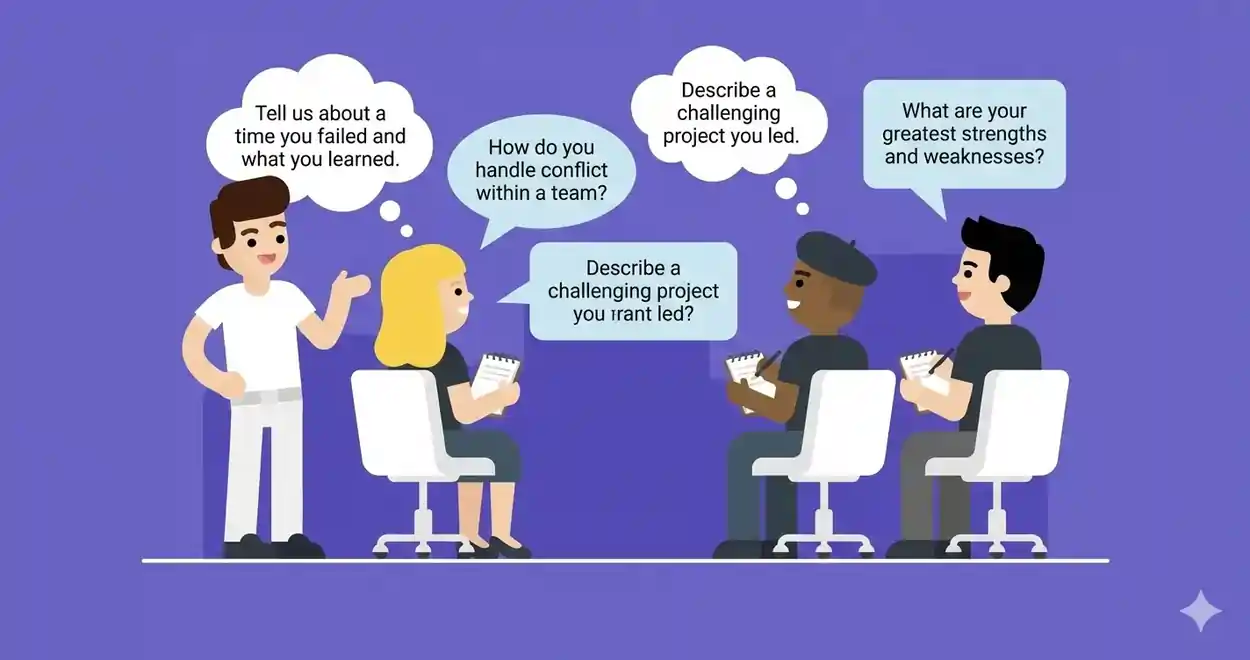
Ace your next job interview by mastering experience questions. Discover key strategies that will elevate your confidence and showcase your skills effectively.
Agar aap interview ke बाकी सवालों की भी practice करना चाहते हैं, तो पहले हमारी 200+ job interview questions and answers की list देख सकते हैं, इससे आपको overall pattern samajh आएगा.
Understanding Interview Experience Questions
Experience questions, often referred to as behavioral interview questions, are designed to understand how you've handled various professional situations in the past. They are grounded in the belief that past behavior is the best predictor of future performance. Therefore, employers use these questions to gauge your suitability for the role based on your previous experiences.
At their core, experience questions require you to provide specific examples from your work history. These examples should highlight your skills, decision-making processes, and the outcomes of your actions. The goal is to paint a clear picture of your capabilities and how they align with the requirements of the job you’re applying for.
Experience questions can be challenging because they demand detailed and structured answers. Unlike straightforward questions about your qualifications or aspirations, these require introspection and the ability to articulate complex scenarios succinctly. As such, preparing for them involves not only recalling relevant experiences but also presenting them in a coherent and compelling manner.
Table of Contents
-
Understanding Interview Experience Questions
-
The Importance of Experience Questions in Interviews
-
Common Types of Experience Questions
-
How to Prepare for Experience Questions
-
Structuring Your Responses: The STAR Method
-
Industry-Specific Behavioral Interview Questions
-
Sales Role Interview Questions
-
IT and Software Development Interview Questions
-
Marketing Manager Interview Questions
-
Customer Service Role Interview Questions
-
Project Manager Interview Questions
-
-
Tailoring Your Experiences to the Job Description
-
Examples of Strong Responses to Experience Questions
-
Tips for Handling Unexpected Experience Questions
-
Practicing Your Answers: Mock Interviews and Role-Playing
-
Conclusion: Building Confidence for Interview Success
- Frequently Asked Questions (FAQs)
Don’t let a weak resume decide your future.
Thousands of people are getting rejected — not because they’re bad, but because their resume doesn’t speak for them. Make a resume that actually gets shortlisted.
Your next job is closer than you think.
Start in 2 minutes.
No complicated forms. Just pick a template, fill details, download.
Create Resume Now →The Importance of Experience Questions in Interviews
Experience questions hold significant weight in the interview process for several reasons. First and foremost, they provide a window into your real-world problem-solving abilities. Employers are not just interested in what you know; they want to see how you apply that knowledge in practical situations. Your responses to experience questions demonstrate your capacity to handle challenges, work under pressure, and deliver results.
Moreover, these questions help interviewers assess your soft skills, such as communication, teamwork, and leadership. For instance, a question about a time you resolved a conflict at work not only reveals your conflict resolution skills but also your ability to maintain professional relationships. These insights are invaluable for employers looking to build a cohesive and effective team.
Finally, experience questions allow employers to gauge your cultural fit within the organization. By discussing your past experiences, you provide clues about your values, work ethic, and professional demeanor. This information helps employers determine whether you align with the company's culture and whether you will thrive in their work environment.
Releted Article:- common interview questions
Common Types of Experience Questions
Experience questions come in various forms, each designed to probe different aspects of your professional background. Some of the most common types include questions about challenges, achievements, teamwork, leadership, and conflict resolution.
Questions about challenges typically ask you to describe a difficult situation you've faced at work and how you handled it. These questions assess your problem-solving skills, resilience, and ability to learn from adversity. For example, an interviewer might ask, "Can you tell me about a time when you had to overcome a significant obstacle at work?"
Achievement-related questions focus on your accomplishments and contributions. They are an opportunity to showcase your successes and the impact you've made in your previous roles. An example of this type of question is, "What is your greatest professional achievement, and how did you accomplish it?"
Teamwork and leadership questions explore your ability to collaborate with others and lead projects or teams. These questions might include, "Describe a time when you worked as part of a team to achieve a goal," or "Can you give an example of a time when you had to take on a leadership role?"
Conflict resolution questions are designed to understand how you handle interpersonal difficulties in the workplace. They often ask you to provide examples of how you've resolved disagreements or managed difficult colleagues. For instance, "Tell me about a time when you had a conflict with a coworker and how you resolved it."
Releted Article:- job interview questions
How to Prepare for Experience Questions
Preparation is key to successfully answering experience questions. Begin by reviewing the job description and identifying the key skills and competencies required for the role. This will help you anticipate the types of experience questions you might be asked and select relevant examples from your work history.
Next, take some time to reflect on your past experiences and identify specific situations that demonstrate your abilities in the areas highlighted in the job description. Think about challenges you’ve faced, projects you’ve led, teams you’ve worked with, and conflicts you’ve resolved. Make a list of these experiences and jot down key details, such as the context, your actions, and the outcomes.
Once you’ve identified your examples, practice structuring your responses using the STAR method (Situation, Task, Action, Result). This technique will help you organize your thoughts and present your experiences in a clear and logical manner. Practice delivering your answers out loud, either in front of a mirror or with a trusted friend or colleague. This will help you gain confidence and ensure you’re able to articulate your responses effectively during the interview.
Yahan ek important step यह भी है कि aap apne resume work experience section ko bhi इन examples के साथ align करें, ताकि jo aap bol रहे हैं वो resume पर दिख भी रहा हो. (link: resume work experience)
Structuring Your Responses: The STAR Method
The STAR method is a powerful tool for structuring your responses to experience questions. It stands for Situation, Task, Action, and Result, and provides a framework for organizing your answers in a logical and compelling way.
Begin with the Situation: Describe the context of your experience. This sets the stage for your story and provides the interviewer with the necessary background information. Be specific about the circumstances, such as the company you were working for, your role, and any relevant details about the situation.
Next, outline the Task: Explain the specific challenge or responsibility you were facing. This helps to clarify your role in the situation and the objectives you were working towards. Make sure to focus on your individual contributions, even if you were part of a team.
Then, detail the Action: Describe the steps you took to address the challenge or achieve the objective. This is where you highlight your problem-solving skills, decision-making processes, and any strategies you employed. Be thorough in your explanation, but avoid getting bogged down in unnecessary details.
Finally, discuss the Result: Share the outcomes of your actions. Quantify your results whenever possible, using metrics or specific achievements to demonstrate the impact of your efforts. This helps to underscore the value you brought to the situation and reinforces your suitability for the role.
Industry-Specific Behavioral Interview Questions
Sales Role Interview Questions
Common Sales Behavioral Questions:
-
Describe a time when you turned a difficult prospect into a loyal customer. What approach did you use?This question assesses your persistence, problem-solving abilities, and relationship-building skills.
-
Tell me about a situation where you missed your sales target. How did you respond?Employers want to understand your resilience, accountability, and ability to learn from setbacks.
-
Can you share an example of when you had to negotiate a complex deal with multiple stakeholders?This evaluates your negotiation skills, strategic thinking, and ability to manage conflicting interests.
-
Describe a time when you received negative customer feedback. How did you handle it?This reveals your customer service orientation and ability to turn challenging situations into opportunities.
STAR Example for Sales:
Situation: At my previous role with ABC Tech Solutions, I was assigned a prospect who had rejected our services three times over two years.
Task: My goal was to understand their objections and demonstrate how our updated product suite could address their specific pain points.
Action: I conducted thorough research on their business challenges, scheduled a personalized demo focusing on their industry-specific needs, and offered a pilot program with measurable KPIs. I maintained regular follow-ups and addressed every concern with data-driven solutions.
Result: The prospect signed a 12-month contract worth $150,000, which later expanded to a three-year partnership. This became one of our top-performing accounts, generating 25% repeat business.
IT and Software Development Interview Questions
Technical roles require both hard technical skills and soft skills like collaboration, problem-solving, and adaptability. Behavioral questions for IT professionals often focus on debugging challenges, team collaboration, and managing technical complexity.
Common IT Behavioral Questions:
-
Describe the most difficult technical bug you've fixed in the past six months. How did you approach it?This assesses your analytical thinking, persistence, and technical problem-solving methodology.
-
Tell me about a time when you had to explain a complex technical concept to a non-technical stakeholder. How did you ensure they understood?This evaluates your communication skills and ability to bridge technical and business perspectives.
-
Can you share an example of when you disagreed with a team member about a technical decision? How did you resolve it?This reveals your collaboration skills, openness to feedback, and conflict resolution abilities.
-
Describe a project where you had to learn a new technology quickly to meet a deadline. What was your approach?This assesses your learning agility, time management, and adaptability.
STAR Example for IT:
Situation: During a critical product launch at XYZ Software, our application experienced a severe performance degradation affecting 10,000+ users.
Task: As the lead developer, I needed to identify the root cause and implement a fix within 24 hours to prevent customer churn.
Action: I assembled a cross-functional team, conducted systematic log analysis, identified a memory leak in our caching layer, implemented a hotfix, and deployed it after thorough testing. I also documented the incident and created automated monitoring alerts to prevent recurrence.
Result: We restored full functionality within 18 hours, retained 98% of affected users, and reduced similar incidents by 70% over the next quarter. The documentation I created became part of our standard troubleshooting protocol.
Marketing Manager Interview Questions
Marketing roles require creativity, data-driven decision-making, cross-functional collaboration, and strategic vision. Behavioral questions assess your ability to manage campaigns, work within budget constraints, and deliver measurable results.
Common Marketing Behavioral Questions:
-
Tell me about a marketing campaign that underperformed. What did you do to improve it?This evaluates your analytical skills, adaptability, and ability to pivot strategies based on performance data.
-
Describe a time when you had to manage a campaign with limited budget. How did you maximize impact?This assesses your resourcefulness, creativity, and understanding of cost-effective marketing tactics.
-
Can you share an example of when you had to align conflicting priorities between sales, product, and creative teams?This reveals your cross-functional collaboration skills and diplomatic approach.
-
Tell me about your most successful integrated marketing campaign. What made it effective?This allows you to showcase your strategic planning, execution capabilities, and results orientation.
STAR Example for Marketing:
Situation: At Digital Growth Agency, our client's social media campaign achieved only 40% of projected engagement in the first two weeks.
Task: I needed to diagnose the issues and relaunch the campaign to meet our quarterly engagement goals.
Action: I conducted A/B testing on messaging, analyzed audience demographics to refine targeting, shifted budget from underperforming channels to high-engagement platforms, and incorporated user-generated content to boost authenticity. I presented data-backed recommendations to stakeholders weekly.
Result: Within four weeks, engagement increased by 85%, surpassing our original target by 20%. The campaign generated 3,500 qualified leads and achieved a 150% ROI, earning recognition as the agency's campaign of the quarter.
Customer Service Role Interview Questions
Customer service positions prioritize empathy, problem-solving, patience, and communication skills. Behavioral questions focus on how you handle difficult customers, resolve complaints, and maintain professionalism under pressure.
Common Customer Service Behavioral Questions:
-
Describe a time when you dealt with an extremely upset customer. How did you handle the situation?This assesses your emotional intelligence, de-escalation skills, and ability to maintain composure.
-
Tell me about a situation where you went above and beyond to help a customer. What was the outcome?This reveals your service orientation, initiative, and commitment to customer satisfaction.
-
Can you share an example of when you had to say "no" to a customer request? How did you communicate that?This evaluates your boundary-setting abilities while maintaining positive customer relationships.
-
Describe a time when you received criticism about your service. How did you respond?This shows your receptiveness to feedback, professionalism, and growth mindset.
STAR Example for Customer Service:
Situation: While working as a customer support representative at TechGear Solutions, I received a call from a customer whose product malfunctioned right before an important business presentation.
Task: The customer was extremely frustrated and demanded an immediate replacement, but our standard policy required 3-5 business days for processing.
Action: I actively listened to understand the urgency, empathized with their situation, escalated the case to my supervisor, arranged for same-day local pickup of a replacement unit from our nearest store, and personally followed up to confirm delivery. I also provided a discount on their next purchase as a goodwill gesture.
Result: The customer received the replacement within four hours, successfully completed their presentation, and later wrote a glowing review mentioning my exceptional service. This case was used as a training example for our team on proactive problem-solving.
Project Manager Interview Questions
Project management roles require leadership, organizational skills, risk management, and stakeholder communication. Behavioral questions explore your ability to manage timelines, budgets, team dynamics, and unexpected challenges.
Common Project Manager Behavioral Questions:
-
Tell me about a project that went off track. How did you get it back on schedule?This assesses your problem-solving abilities, adaptability, and crisis management skills.
-
Describe a situation where you had to manage conflicting priorities among team members. How did you handle it?This evaluates your conflict resolution skills, diplomacy, and ability to align team objectives.
-
Can you share an example of when you had to deliver bad news to stakeholders? How did you communicate it?This reveals your transparency, communication skills, and ability to manage expectations.
-
Tell me about a time when team morale was low during a project. What did you do to motivate the team?This assesses your leadership style, emotional intelligence, and team-building capabilities.
STAR Example for Project Management:
Situation: During a software implementation project at Enterprise Solutions Inc., our lead developer unexpectedly resigned two weeks before the critical delivery deadline.
Task: I needed to redistribute responsibilities, maintain team morale, and still meet our client's deadline.
Action: I immediately held a team meeting to address concerns transparently, redistributed the developer's tasks among capable team members based on their strengths, brought in a contract specialist for knowledge transfer, adjusted the project timeline for non-critical features, and increased daily stand-ups for better coordination. I also communicated proactively with the client about our mitigation plan.
Result: We delivered the core functionality on time, delayed only two minor features by one week with client approval, and maintained a 95% client satisfaction rating. The team appreciated my transparent communication, and three members received promotions based on their performance during this challenge.
Tailoring Your Experiences to the Job Description
To make the most of your experience questions, it’s crucial to tailor your responses to the specific job you’re applying for. This involves aligning your examples with the skills and competencies outlined in the job description and highlighting how your past experiences make you a strong fit for the role.
Start by thoroughly reviewing the job description and identifying the key qualifications and attributes the employer is seeking. Pay attention to both the technical skills and soft skills required for the position. This will help you select the most relevant examples from your work history to discuss during the interview.
When tailoring your responses, focus on illustrating how your experiences directly relate to the job you’re applying for. For instance, if the role requires strong project management skills, choose examples that showcase your ability to plan, execute, and oversee projects. Emphasize the specific skills and competencies that are most relevant to the position.
Additionally, consider the company’s culture and values when preparing your responses. Research the organization’s mission, vision, and core values, and think about how your experiences align with these principles. This will help you demonstrate not only your qualifications but also your cultural fit, which is often a key factor in the hiring decision.
Examples of Strong Responses to Experience Questions
Providing strong responses to experience questions requires a combination of relevant examples, clear structure, and compelling storytelling. Here are a few examples to illustrate how you can effectively answer common experience questions using the STAR method.
Example Question: Can you tell me about a time when you had to overcome a significant obstacle at work?
Response:
Situation: In my previous role as a project manager at XYZ Company, I was leading a critical project with a tight deadline. Midway through the project, one of our key vendors experienced a major supply chain disruption, which threatened to delay our timeline significantly.
Task: My task was to find an alternative solution to ensure that we could meet our project deadline without compromising on quality.
Action: I quickly assembled a cross-functional team to brainstorm potential solutions. We identified several alternative vendors and conducted a thorough evaluation to determine the best fit. I also negotiated with our original vendor to expedite the remaining deliveries and coordinated with our internal teams to reallocate resources as needed.
Result: Through our collaborative efforts, we were able to secure a new vendor and rework our project plan. We successfully met our original deadline and delivered the project on time, which resulted in a 15% increase in client satisfaction and a renewal of our contract for the following year.
Example Question: Describe a time when you worked as part of a team to achieve a goal.
Response:
Situation: While working as a marketing coordinator at ABC Corporation, I was part of a team tasked with launching a new product line. Our goal was to create a comprehensive marketing campaign to generate buzz and drive sales.
Task: My specific responsibility was to manage the social media aspect of the campaign, including content creation, scheduling, and engagement with our audience.
Action: I collaborated closely with our content creators, graphic designers, and analytics team to develop a cohesive social media strategy. I organized regular brainstorming sessions to generate creative ideas and ensured that our content was aligned with the overall campaign objectives. I also monitored our social media channels daily to engage with our audience and respond to any inquiries or feedback.
Result: Our social media campaign was highly successful, resulting in a 30% increase in online engagement and a 20% boost in sales within the first month of the product launch. Our team’s collaborative effort and strategic approach were recognized by senior management, and we received an award for our outstanding performance.
Tips for Handling Unexpected Experience Questions
Despite your best preparations, you may encounter unexpected experience questions during an interview. These questions can catch you off guard and challenge your ability to think on your feet. However, with the right approach, you can handle them with confidence and poise.
First, take a moment to gather your thoughts before responding. It’s perfectly acceptable to pause for a few seconds to collect your ideas. This brief pause can help you formulate a coherent and structured answer. If needed, you can also ask the interviewer to repeat or clarify the question to ensure you understand it fully.
When faced with an unexpected question, try to draw on the same principles you used in your preparations. Think about the STAR method and how you can apply it to the new scenario. Even if the question is unexpected, you likely have relevant experiences that you can adapt to fit the context of the question.
If you genuinely don’t have an applicable experience to share, be honest with the interviewer. You can pivot by discussing a related experience or how you would approach the situation if you encountered it in the future. This demonstrates your problem-solving abilities and willingness to learn, even if you haven’t faced the exact scenario before.
Practicing Your Answers: Mock Interviews and Role-Playing
Practice is essential for mastering experience questions and building confidence for your interview. One of the most effective ways to practice is through mock interviews and role-playing exercises. These methods allow you to simulate the interview experience and receive constructive feedback on your performance.
Start by enlisting the help of a friend, family member, or mentor to conduct a mock interview with you. Provide them with a list of common experience questions and ask them to pose these questions as if they were the interviewer. Practice answering each question using the STAR method and focus on delivering your responses clearly and confidently.
After the mock interview, ask for feedback on your answers, body language, and overall presentation. Identify areas where you can improve and work on refining your responses. Repeat the process until you feel comfortable and confident in your ability to handle experience questions.
In addition to mock interviews, consider role-playing exercises where you take on different scenarios and practice responding to various types of questions. For example, you can simulate a situation where you need to discuss a challenging project, a conflict with a coworker, or a leadership experience. Role-playing helps you think on your feet and adapt your responses to different contexts, which is invaluable for handling unexpected questions during the actual interview.
Conclusion: Building Confidence for Interview Success
Mastering interview experience questions is a critical component of your job search success. By understanding the importance of these questions, preparing thoroughly, and practicing your responses, you can showcase your skills and experiences effectively. Remember to use the STAR method to structure your answers and tailor your examples to the specific job you’re applying for.
Building confidence for your interview involves not only practicing your responses but also cultivating a positive mindset. Believe in your abilities and the value you bring to the table. Approach each interview as an opportunity to share your unique experiences and demonstrate why you are the best candidate for the role.
With the right preparation and a confident attitude, you can navigate experience questions with ease and leave a lasting impression on your interviewers. Good luck on your journey to interview success!